• Login
  • Register
Nairametrics
  • Home
  • Exclusives
    • Recapitalization
      • Access Holdings Offer
      • Fidelity Bank Offer
      • GTCO Offer
      • Zenith Bank Offer
    • Financial Analysis
    • Corporate Stories
    • Interviews
    • Investigations
    • Metrics
    • Nairalytics
  • Economy
    • Business News
    • Budget
    • Public Debt
    • Tax
  • Markets
    • Currencies
    • Cryptos
    • Commodities
    • Equities
      • Company Results
      • Dividends
      • Public Offer & Right Issues
      • Stock Market News
    • Fixed Income
    • Funds Management
    • Securities
  • Sectors
    • Agriculture
    • Aviation
    • Company News
    • Consumer Goods
    • Corporate Updates
    • Corporate deals
    • Corporate Press Releases
    • Energy
    • Entertainment
    • Financial Services
    • Health
    • Hospitality & Travel
    • Manufacturing
    • Real Estate and Construction
    • Renewables & Sustainability
    • Tech News
  • Financial Literacy
    • Career tips
    • Personal Finance
  • Lifestyle
    • Billionaire Watch
    • Profiles
  • Opinions
    • Blurb
    • Market Views
    • Op-Eds
    • Research Analysis
  • Home
  • Exclusives
    • Recapitalization
      • Access Holdings Offer
      • Fidelity Bank Offer
      • GTCO Offer
      • Zenith Bank Offer
    • Financial Analysis
    • Corporate Stories
    • Interviews
    • Investigations
    • Metrics
    • Nairalytics
  • Economy
    • Business News
    • Budget
    • Public Debt
    • Tax
  • Markets
    • Currencies
    • Cryptos
    • Commodities
    • Equities
      • Company Results
      • Dividends
      • Public Offer & Right Issues
      • Stock Market News
    • Fixed Income
    • Funds Management
    • Securities
  • Sectors
    • Agriculture
    • Aviation
    • Company News
    • Consumer Goods
    • Corporate Updates
    • Corporate deals
    • Corporate Press Releases
    • Energy
    • Entertainment
    • Financial Services
    • Health
    • Hospitality & Travel
    • Manufacturing
    • Real Estate and Construction
    • Renewables & Sustainability
    • Tech News
  • Financial Literacy
    • Career tips
    • Personal Finance
  • Lifestyle
    • Billionaire Watch
    • Profiles
  • Opinions
    • Blurb
    • Market Views
    • Op-Eds
    • Research Analysis
Nairametrics
Home Business News

Nigeria’s foreign reserves to increase by $150 billion in 10 years – FG 

Bamidele Samuel Adesoji by Bamidele Samuel Adesoji
August 25, 2019
in Business News, Politics
FG foreign reserves Nigeria Yemi-Osinbajo, FG negotiates with Governors on bail-out fund, as NEC approves 100 billion for NLTP, bail-out fund States Governors, FG earns N28.6 trillion from VAT, others , Ease of doing Business: States must partner with Federal Government – Osinbajo , AfCFTA: Nigeria’s financial footprints to be extended across Africa – Osinbajo , FG seeks partnership with National Council of Registered Insurance Brokers, here’s why , Osinbajo says FG’s investment to take advantage of Africa’s $200bn tourism potential is massive, Pres. Buhari’s plan to tax US tech companies might provoke US trade war https://www.yemiosinbajo.ng/vps-lecture-at-the-national-defence-college-course-28-lecture-event/ https://punchng.com/digital-firms-to-pay-tax-under-new-finance-act-osinbajo-2/ https://www.nytimes.com/2020/01/31/business/economy/digital-tax-oecd.html Nigeria at risk of trade war with United States as the Nigerian Government says it will impose taxes on technology companies like Facebook, Google, and other digital companies that have been escaping tax payment in Nigeria due to their lack of presence within the country. The US has threatened tariffs on imports from countries that impose such digital taxes. The tech companies with heavy revenue footprint in Nigeria now have their backs against the wall because President Muhammadu Buhari-led administration want to tax them to grow Nigeria’s revenue; which has led to the development of the Finance Act. The Finance Act is the solution of President Buhari to the revenue problem which the Finance Minister, Ahmad Zainab, said Nigeria has. The Nigerian government is looking to grow its revenue through taxes, and one of such is the digital tax which Vice President, Yemi Osinbajo, said will commence despite the threat of the US which is aimed at protecting the silicon companies. No more back door operation: Facebook, Google, Amazon, YouTube and many more digital businesses have a sizeable market in Nigeria, but don’t have a physical structure for their operations; this has cost Nigeria tax revenue. These companies are known to prefer situating their companies in tax havens where taxes are low compared to other African and European countries. Ireland and Bermuda are some of the tax havens for these multinational companies. But according to Osinbajo, the period of making gains from their operation in Nigeria without paying tax is over. Osinbajo, while speaking at The National Defence College, Course 28 Lecture Event, said that, “Let me also briefly mention the new provisions on Taxation of Digital Economy and Non-Resident Companies. This is a very important aspect of our taxation policy. Before the Finance Act, only companies that had a physical presence or a fixed base in Nigeria could be taxed. “So, most digital companies, I mean any of the big technology companies, or multi-national digital companies, that did not have physical offices in Nigeria, made significant income from Nigeria from online activities, such as advertising, movie streaming, online gaming and e-commerce from subscribers in Nigeria, but paid no taxes whatsoever because they did not have a physical base in Nigeria. So now we are no longer relying on the fixed base or physical address criterion.” He added that, “Under the Finance Act, once you have a Significant Economic Presence (SEP) in Nigeria, you are liable to tax. Whether you are a resident here or you are not resident as a company, as long as your economic presence is significant, you are liable to tax. If you are streaming online, advertising using Google adverts, whether you are resident here or not, you are now subject to tax. “So, non-residents who previously had no fixed base and no Nigerian tax liability will now be liable to tax based on the SEP criterion. The Minister of Finance is empowered to issue a regulation defining what Significant Economic Presence means. So, she just defines the scope of what we will be looking out for in terms of Significant Economic Presence.” Osinbajo explained. Nigeria is not alone in this crusade: Nigeria is not the only country trying to tax these technology companies. The European Union have also been coming after them for taxes. The EU is also stating that if the technology companies are making economic gains through their operation despite the lack of physical presence in several European countries, then the tech conglomerates should be taxed. This has led to review of tax laws by the EU. According to a report by New York Times, new rules to tax these multinational companies are being discussed by about 130 countries through the Organization for Economic Cooperation and Development. The review has become necessary as digital economy begins to open new revenue sources. Should Nigeria tread carefully? The United States has threated to hit any country imposing taxes on the technology companies - which are mostly American – with tariffs on import. This put Nigeria at a rather impossible position, as the country is not economically strong enough to enter a trade war or go on a tit for tat battle with the US. According to Q3 report, the US is the fifth biggest export destination for Nigeria, having imported N322.2 billion (6.28%) goods from Nigeria, with crude oil constituting N329.8 billion. Although, the US is behind Ghana, India, Netherlands and Spain, it doesn’t change the significance of the US market to the Nigerian economy. Meanwhile, Nigeria’s top import sources include the U.S, accounting for N747 billion in H1 2019. Franch had moved to tax the online businesses but have now delayed the plan this year after a meeting with the US; the US has also paused its tariff threat against France. Britain is also one of the digital tax drivers. With such threat hanging over the digital tax, it’s unlikely Nigeria will go ahead taxing these technology companies, as US feels such tax is discriminatory against US firms, and have suggested these companies be allowed to decide if they want to operate with the new tax standards., FG will provide succor for daily wage earners as lockdown continues – Osinbajo

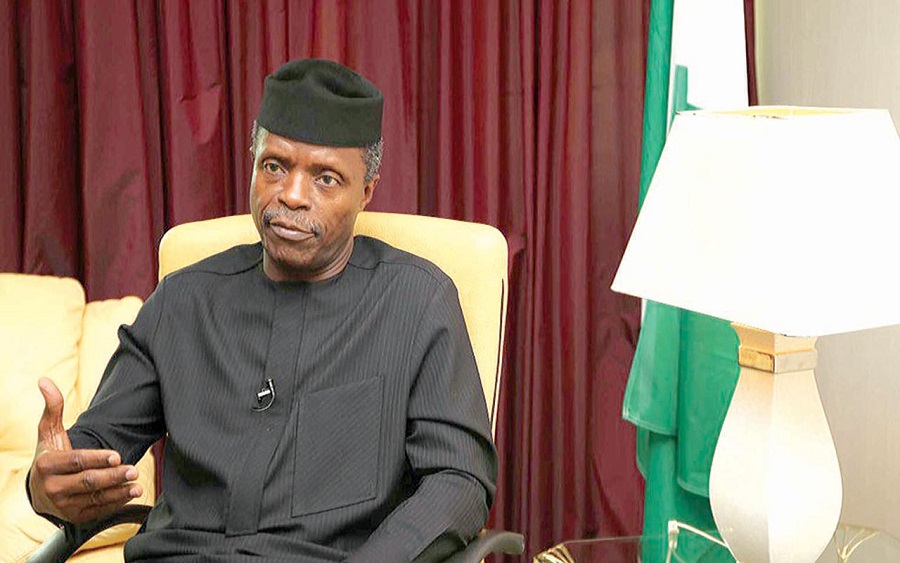
Vice President, Yemi-Osinbajo

Share on FacebookShare on TwitterShare on Linkedin

The Federal Government of Nigeria (FGN) has disclosed that the country’s foreign reserve is expected to increase by $150 billion in the next 10 years through the ‘Zero oil plan’ initiative.  

This is contained in the report presented to the National Economic Council (NEC), chaired by the Vice President, Prof. Yemi Osinbajo, on Friday.  

The details: The latest announcement by NEC to build reserves by $150 billion in ten years, represents a review against an earlier statement credited to the Executive Director of the Nigerian Export Promotion Council, Olusegun Awolowo, that Nigeria has 22 products that will attract $150 billion into the country in 20 years.   

MoreStories

Federal High Court

Court jails two Chinese 46 years for N3.4bn, $2.5m cyberterrorism and internet fraud  

February 11, 2026
NAFDAC orders ban of sachet alcohol and bottles below 200ml from December 2025 

NAFDAC refutes suspension claims, says sachet alcohol ban stands

February 11, 2026

At the NEC meeting, the Governor of Jiagawa State Alhaji Mohammed Badaru Abubakar, speaking on behalf of the Committee on export promotion, disclosed that the Zero Oil Plan envisioned in the Economic Recovery and Growth Plan (ERGP) will add at least extra $150 billion to Nigeria’s foreign reserves cumulatively from non-oil exports over the next 10 years. 

President Buhari signing 2019 Budget, List of President Buhari's Cabinet members, Ministries Departments and Agencies of Nigeria, Governors federal allocation
President Buhari and his first tenure cabinet members 

[READ MORE: FRAUD: FG threatens to extradite accused Nigerians]

The Committee also stated that the Zero Oil Plan would provide 500,000 jobs annually for the country, with 20 million Nigerians out of poverty.  

The achievements:  Specifically, the Nigerian Export Promotion Council (NEPC) introduced the Zero-Oil Plan in October 2016, during the nadir of the oil price slump. It was basically an effort to mobilise public and private resources towards boosting the country’s meagre non-oil exports. 

  • While providing further updates on the achievement so far through the Zero Oil Plan, Abubakar stated that non-oil exports (excluding natural gas) had risen from U$1.17 billion in 2016 to US$3.16 billion in 2018, and this means that Strategic sectors identified in the Zero Oil Plan have seen growth.  
  • It was further disclosed that a State Export Development Fund has also been created through N50 billion debenture to be disbursed by NEXIM, in which the Central Bank of Nigeria (CBN) has invested.  
  • According to the report of the Committee, the Fund offers long–term loan at single-digit interest rate to qualifying export-oriented projects under the State Export Development Programme and the Anchor exporter scheme. 

The Nigerian economy: Delivering updates on the economy, the Honourable Minister of Finance, Budget and National Planning, Zainab Ahmed informed NEC that the Nigerian macroeconomic environment has stabilized in recovering gradually. 

According to Ahmed, there has been eight (8) successive month of economic growth since emerging from recession and ERGP remains the basis for the Medium Term fiscal strategy for the economy.  

 [READ ALSO: Shell’s OML 11: FG ordered to renew licence for 20 years]


Add Nairametrics on Google News
Follow us for Breaking News and Market Intelligence.
Tags: Economic Recovery and Growth PlanFGNational Economic CouncilNEXIMNigeria's foreign reservesOn the Money
Bamidele Samuel Adesoji

Bamidele Samuel Adesoji

Samuel is an Analyst with over 5 years experience. Connect with him via his twitter handle

Next Post
Meet Chinedu Echeruo, whose company was bought by Apple for $1bn

Meet Chinedu Echeruo, whose company was bought by Apple for $1 billion

Leave a Reply Cancel reply

Your email address will not be published. Required fields are marked *

rabafast

nairametrics


DUNS

Follow us on social media:

  • HOME
  • ABOUT NAIRAMETRICS
  • CONTACT US
  • DISCLAIMER
  • ADs DISCLAIMER
  • COPYRIGHT INFRINGEMENT

© 2026 Nairametrics

Welcome Back!

Login to your account below

Forgotten Password? Sign Up

Create New Account!

Fill the forms below to register

All fields are required. Log In

Retrieve your password

Please enter your username or email address to reset your password.

Log In
Social Media Auto Publish Powered By : XYZScripts.com
No Result
View All Result
  • Home
  • Exclusives
    • Recapitalization
      • Access Holdings Offer
      • Fidelity Bank Offer
      • GTCO Offer
      • Zenith Bank Offer
    • Financial Analysis
    • Corporate Stories
    • Interviews
    • Investigations
    • Metrics
    • Nairalytics
  • Economy
    • Business News
    • Budget
    • Public Debt
    • Tax
  • Markets
    • Currencies
    • Cryptos
    • Commodities
    • Equities
      • Company Results
      • Dividends
      • Public Offer & Right Issues
      • Stock Market News
    • Fixed Income
    • Funds Management
    • Securities
  • Sectors
    • Agriculture
    • Aviation
    • Company News
    • Consumer Goods
    • Corporate Updates
    • Corporate deals
    • Corporate Press Releases
    • Energy
    • Entertainment
    • Financial Services
    • Health
    • Hospitality & Travel
    • Manufacturing
    • Real Estate and Construction
    • Renewables & Sustainability
    • Tech News
  • Financial Literacy
    • Career tips
    • Personal Finance
  • Lifestyle
    • Billionaire Watch
    • Profiles
  • Opinions
    • Blurb
    • Market Views
    • Op-Eds
    • Research Analysis
  • Login
  • Sign Up

© 2026 Nairametrics