 Follow Us on Google Discover
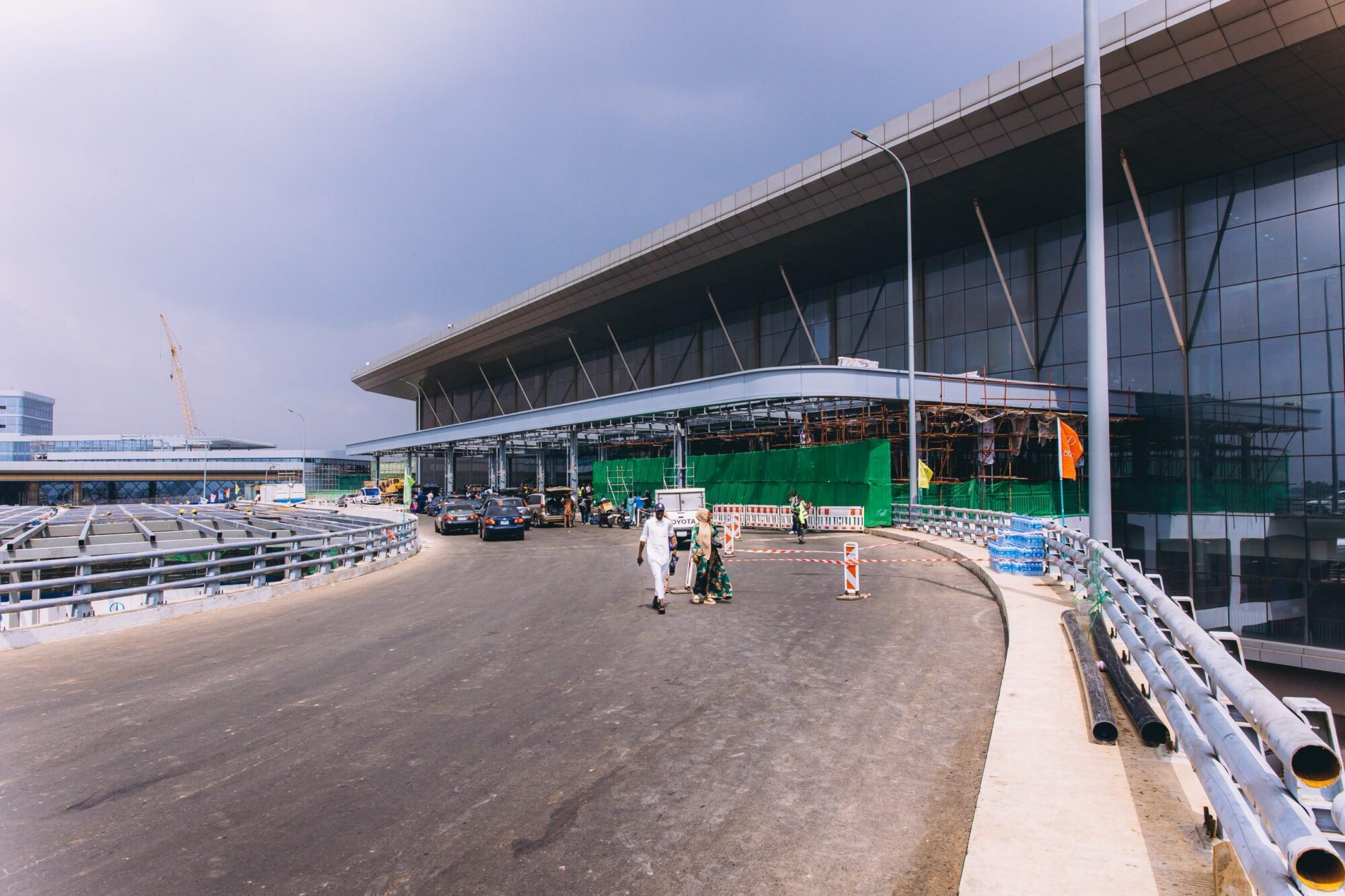
The Federal Airports Authority of Nigeria (FAAN) has opened a new Departure Bridge at the Murtala Muhammed International Airport (MMIA), Lagos, to ease passenger movement and reduce congestion ahead of the festive season.
This is according to a statement issued by FAAN on Friday and seen by Nairametrics.
The bridge gives departing passengers direct access to the Departure Level, removing the previous need to pass through the Arrival Hall and use elevators to reach the departure area.
FAAN opens new Lagos airport departure bridge
FAAN said the new facility separates the movement of arriving and departing passengers, addressing overlapping foot traffic within the international airport terminal.
Also Read
- “The Federal Airports Authority of Nigeria (FAAN) has commissioned a newly built Departure Bridge at Murtala Muhammed International Airport (MMIA) in Lagos, creating a direct route to the Departure Level as part of the airport’s ongoing upgrade,” the statement read in part.
Before the bridge was opened, departing passengers entering through the bridge had to pass through the Arrival Hall before accessing the Departure Level because there was no direct connection to the departure floor. This meant arriving and departing passengers shared the same entry point, contributing to congestion within the terminal.
The new Departure Bridge is part of the N712.26 billion rehabilitation and modernisation programme at MMIA, which also covers the reconstruction and expansion of Terminals 1 and 2, alongside improvements to airport access infrastructure.
Under the new arrangement, departing passengers can access the Departure Level directly, while arriving passengers continue to use the dedicated Arrival Bridge. FAAN said the separate routes are expected to improve passenger movement during the festive season, when airport traffic increases.
What the N712 billion MMIA upgrade covers
The N712.26 billion rehabilitation programme extends beyond the new Departure Bridge to include upgrades to the airport’s terminals, aircraft parking facilities and access infrastructure.
According to FAAN Managing Director Olubunmi Kuku, the project includes the rehabilitation and expansion of Terminal 1, with structural improvements to the building’s exterior and interior, as well as upgrades to its plumbing, mechanical and electrical systems.
Other components include:
- Expansion of Terminal 2, including its boarding bridge area and apron, to accommodate more wide-body aircraft, with the relocation of existing hangars.
- A redesigned airport road network to ease traffic congestion.
- A connection building and skywalk linking Terminals 1 and 2 with the car park.
- A redesigned central square in front of the terminals.
- An 8,000-square-metre temporary departure hall with three boarding gates, VIP lounges, medical support facilities and accessibility features to accommodate passengers while Terminal 1 is closed for rehabilitation.
The new Departure Bridge is one component of the broader programme. The overall work is intended to improve connections within the airport complex and expand the facilities available to passengers and airlines.
Experts assess N712 billion MMIA upgrade
The opening comes amid the broader N712.26 billion rehabilitation and modernisation programme at MMIA, which aviation experts have described as a necessary investment in the airport.
- In an earlier interview with Nairametrics, Tonami Playman, an independent transport researcher who studies African transit systems, argued that the cost of the overhaul was reasonable compared with similar airport projects globally.
- Playman cited Ghana’s $350 million investment in the construction of Terminal 3 at Kotoka International Airport in 2018, noting that the facility was smaller than Lagos’ international terminal.
- He also argued that rebuilding the existing terminal was more practical than constructing an entirely new airport, which he estimated would cost at least $2 billion and take a minimum of five years.
Alikwe Ortega, Country Ambassador for ITAerea Aeronautical Business School, also said the N712 billion investment reflected the high cost of modern airport infrastructure, particularly requirements relating to safety, technology and passenger experience.
The experts noted that MMIA, which began operations in 1979, had gone more than four decades without a comprehensive overhaul.