 Follow Us on Google Discover
Remittance inflows to Nigeria through International Money Transfer Operators (IMTOs) have now reached N$1 billion monthly, meeting the target the Central Bank of Nigeria (CBN) set two years ago.
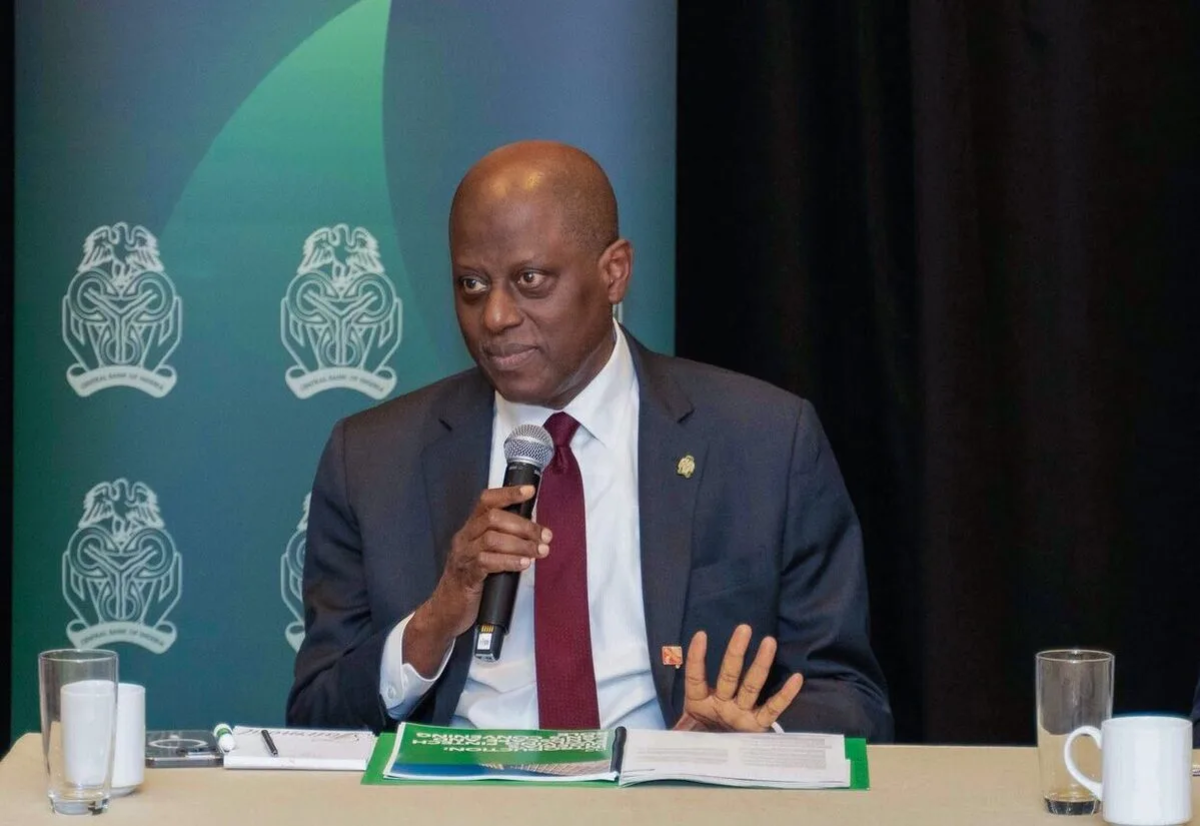
The CBN Governor, Olayemi Cardoso, disclosed this on Friday night while speaking during the 61st Chartered Institute of Bankers of Nigeria (CIBN) Annual Bankers Dinner in Lagos.
With this milestone, Cardoso said the country has now set a target of $1.5 billion in monthly remittance inflows to be achieved by half-year 2027.
CBN sets new remittance target
The latest milestone comes after the CBN Governor announced last year that the bank was targeting monthly remittance inflows of $1 billion, as part of efforts to improve foreign exchange liquidity and reduce dependence on informal channels.
Also Read
- “Last year, I spoke of our ambition to increase monthly remittances to 1 billion US dollars a month. I am pleased to report that this milestone has been achieved. We are now working towards increasing monthly remittances to 1.5 billion US dollars by the end of the first half of 2027,” he said.
He commended licensed International Money Transfer Operators (IMTOs) for investing in technology, strengthening transparency and expanding formal remittance channels, particularly across Asia.
The CBN Governor attributed the increase in remittance inflows to reforms introduced over the past three years to eliminate distortions in the foreign exchange market and improve transparency, price discovery and market conduct.
According to him, Nigeria has moved away from an opaque multiple exchange rate system, where access to foreign exchange was disproportionately available to a few participants, towards a more transparent and market-driven framework.
He said the reforms have improved certainty for businesses, restored investor confidence, eased international payment obligations and encouraged more Nigerians in the diaspora to use formal channels to send money home.
Cardoso also highlighted improved access to international payment services, noting that Nigerians can now use their naira-denominated bank cards to make payments abroad.
He credited Nigerian banks for enabling the development, saying the reforms had restored the dignity of Nigerians travelling abroad, who previously faced difficulties making international payments.
CBN targets deeper FX market liquidity
Beyond remittance growth, Cardoso said the next phase of Nigeria’s financial sector reforms would focus on deepening liquidity, broadening market participation and expanding the range of financial instruments available to businesses and investors.
He disclosed that the naira had strengthened by approximately 6% over the past year, while daily foreign exchange market turnover had, at times, exceeded $1 billion.
In the fixed income market, turnover averages N1.5 trillion, supported by a credible and tradable benchmark yield curve extending to 10 years.
According to him, these developments indicate growing confidence in Nigeria’s financial markets, although he cautioned that a market-driven exchange rate should be allowed to fluctuate in response to economic fundamentals and global developments.
Cardoso noted that emerging market currencies, including the naira, had experienced volatility amid changes in the United States interest rate environment and global investor risk sentiment.
He, however, maintained that Nigeria was now better positioned to withstand external shocks than it was three years ago, citing improved external buffers and the CBN’s capacity to deploy reserves when necessary to maintain orderly market conditions.
- “Our responsibility as a central bank is not to target a particular exchange rate level, but to safeguard market stability, deepen liquidity, and support orderly price discovery,” he said.
CBN seeks stronger risk management in banking sector
Cardoso also urged banks to strengthen their treasury operations, expand appropriate hedging and risk management products, support exporters and improve services to businesses involved in international trade.
He said the introduction of the Nigeria Overnight Financing Rate (NOFA) as a pricing benchmark earlier in 2026 was another step towards strengthening Nigeria’s financial market infrastructure.
The benchmark is expected to provide a more transparent reference point for financial transactions and improve the management of interest rate risks.
He added that the CBN would work towards improving liquidity management and longer-term financing arrangements while reducing reliance on the apex bank for functions that market participants could perform effectively.
The Governor also highlighted opportunities to strengthen Nigeria’s connections to international financial markets through improved cross-border payment and settlement arrangements, deeper banking relationships and increased engagement with financial institutions across Asia.
What you should know
In August, Nairametrics reported that Nigeria recorded $947 million in remittance inflows through IMTOs in July 2026 and that came as the highest monthly inflow ever recorded through formal channels.
At the time, the figure brought the country $53 million short of the $1 billion monthly remittance target set by CBN Governor Olayemi Cardoso.
According to the apex bank, remittance inflows through IMTOs reached $3.8 billion in the first seven months of 2026, representing a 50.2% increase compared with the same period in 2025.