Follow Us on Google Discover
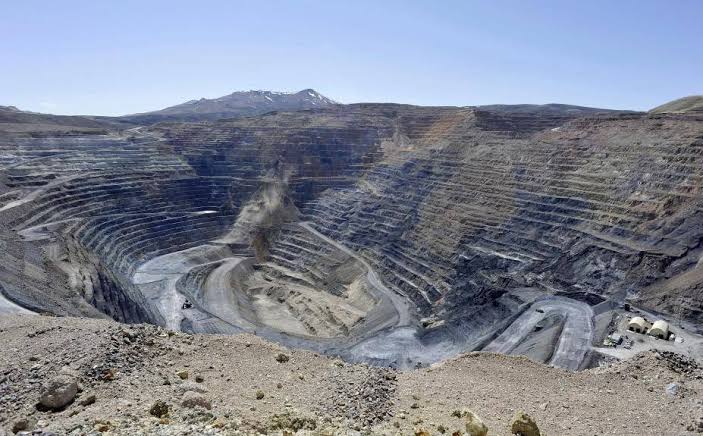
Gold Fields Ghana Limited is projecting a $7.5 billion capital injection into its Tarkwa Mine, outlining a long-term investment plan to sustain production and improve mining operations.
The company’s Senior Vice President and Managing Director, Elliot Twum, disclosed the plan during an interview on Channel One TV on Monday, November 23, 2026.
The proposed spending represents the next phase of investment in the mine, where Gold Fields has already committed more than $5 billion over the past three decades. The company is seeking to renew its mining leases, which are due to expire in April 2027.
Gold Fields targets $7.5 billion Tarkwa investment
The planned expenditure will cover the next phase of operations, spanning 20 to 21 years, as Gold Fields seeks to maintain production and improve efficiency at the facility.
Also Read
Speaking on Channel One TV, Twum explained that mining requires substantial capital investment, making the adoption of technology important for improving operational performance.
- “Mining is capital intensive. And so over time, what we’ve tried to do is to employ technology to make it more effective and to make it more efficient,” he said.
He noted that the company had invested more than $5 billion in the Tarkwa Mine over the past 30 years.
According to Twum, a further $7.5 billion would be required to fund the mine’s next phase of operations.
The proposed investment comes as the company works to secure the mine’s future beyond the expiration of its existing leases, with continued spending expected to support its long-term operational capacity.
Gold Fields spends $4.6 billion on local procurement
Beyond its investment in mining operations, Gold Fields highlighted its contribution to Ghana’s economy through procurement from local businesses and communities hosting its activities.
Twum disclosed that the company spent $4.6 billion on local and host-community procurement over the last five years, reflecting the scale of its engagement with businesses and communities in the country.
- “What’s most important, and I need to also call out, is that in the last five years, we have spent $4.6 billion through local procurement and host community procurement,” he said.
He added that 74 per cent of every dollar generated from the company’s operations is retained within the Ghanaian economy.
Twum said the level of local retention demonstrates the economic value generated by the company’s activities beyond its direct mining operations.
- “As I speak to you now, Bernard, every dollar that is generated out of our operation returns $0.74 into the local Ghanaian economy. $0.74 retained in-country for every dollar that we generate,” he said.
Nigeria’s mining sector records growth
Nigeria has also been recording increased activity in its solid minerals industry as the government pushes to expand mineral production, attract investment and strengthen local processing.
Nairametrics reported on September 15, 2026, that the country’s solid mineral exports rose by 83.4% year-on-year to N249.70 billion in the first half of 2026, compared with N136.17 billion recorded in the corresponding period of 2025.
The increase comes amid efforts to develop domestic mineral processing, with Nigerian mining company Japaul Gold & Ventures commencing test runs of its pilot gold processing plant in Niger State in February 2026.
These developments reflect efforts to deepen activity in West Africa’s mining industry, with countries seeking to increase mineral production, attract investment and capture more value through local processing.