Follow Us on Google Discover
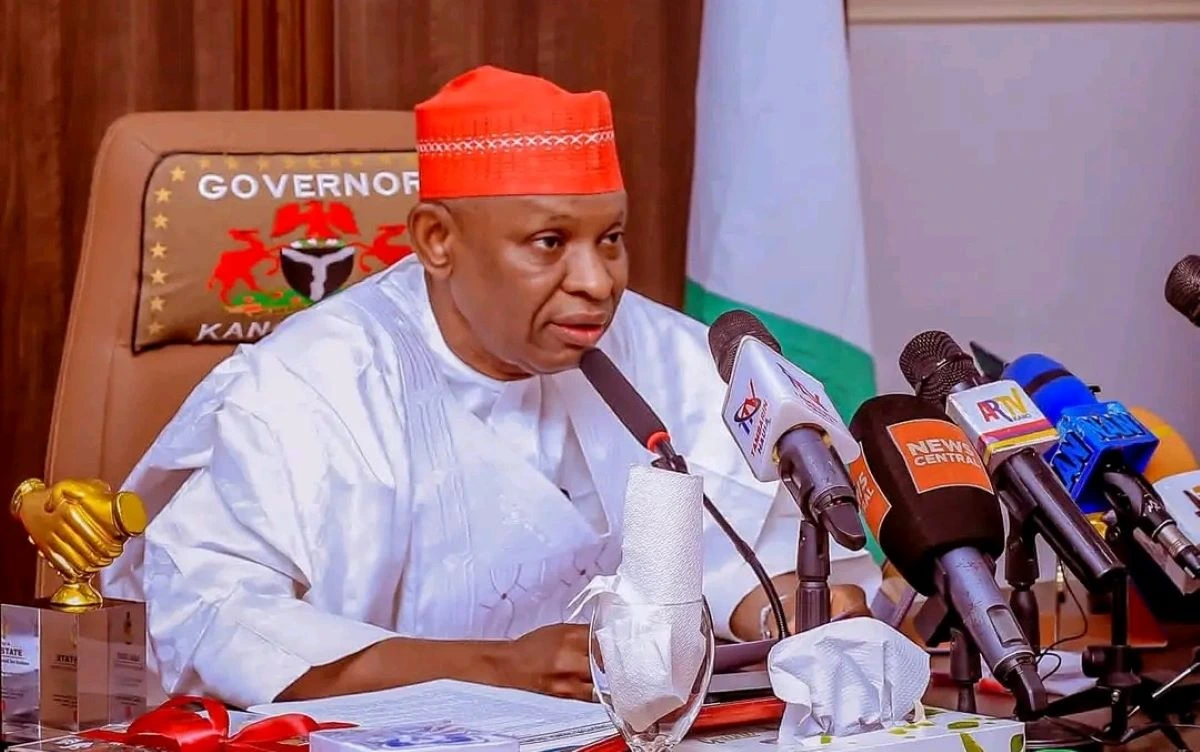
The Kano State House of Assembly has approved a reduction of approximately N276 billion in the state’s 2026 budget, citing a significant shortfall in revenue allocations from the Federation Account Allocation Committee (FAAC).
The decision, reported by the News Agency of Nigeria (NAN) on Monday, October 19, 2026, followed the presentation and consideration of a report on the 2026 Appropriation Amendment Bill by the House Committee on Appropriation.
The amendment reduced the state’s approved budget from over N1.47 trillion to N1.21 trillion, representing a downward adjustment of approximately 18.7% as the government seeks to align expenditure with available revenue.
FAAC shortfall forces Kano spending cuts
The Chairman of the House Committee on Appropriation, Abdulhamid Abdul-Minjibir (APC-Minjibir), attributed the budget reduction to lower-than-anticipated FAAC inflows, which have affected the state’s capacity to finance its original spending plans.
Also Read
He explained that the implementation of federal tax reforms, alongside prevailing macroeconomic conditions, had affected the revenue assumptions underpinning the 2026 budget.
- Abdul-Minjibir noted that revising the expenditure framework would help the government maintain fiscal discipline, minimise borrowing and concentrate available resources on priority development programmes.
- Under the revised N1.21 trillion budget, the state allocated N390 billion to recurrent expenditure, covering administrative and other running costs, while N820 billion was earmarked for capital expenditure, including infrastructure and development projects.
Following deliberations, the House adopted the committee’s recommendations and adjourned its sitting until Tuesday.
FAAC receipts fall below budget projections
A review of Kano State’s original 2026 approved budget by Nairametrics shows that the government projected N909.94 billion in revenue from FAAC, representing approximately 62% of its N1.478 trillion spending plan.
The original budget also projected N138.44 billion from internally generated revenue, alongside N186.77 billion in grants and N140.42 billion in capital development fund receipts.
However, FAAC disbursement data for the first half of 2026 shows that Kano received N152.57 billion, compared with N120.04 billion in the corresponding period of 2025.
- The state’s allocation increased by N32.52 billion, representing a 27.09% year-on-year increase, despite remaining significantly below the pace implied by its annual budget projection.
- Kano maintained its position as the sixth-largest recipient of FAAC allocations among Nigerian states, unchanged from the first half of 2025.
- Its disbursements included N63.49 billion in net statutory allocations, N79.42 billion in Value Added Tax (VAT) revenue and N5.98 billion in non-oil revenue augmentation.
The N152.57 billion received during the six-month period represented approximately 16.77% of the state’s N909.94 billion annual FAAC revenue projection.
- Although the state’s FAAC receipts increased year-on-year, the figures suggest that allocations were running considerably below the level required to meet the original annual projection.
- If the first-half disbursement rate were maintained throughout the year, Kano would receive approximately N305.14 billion, significantly below its original FAAC revenue target.
However, this comparison is indicative rather than definitive, as the budget’s Federation Account revenue projection and the reported net FAAC disbursement figures may differ in accounting coverage and treatment of deductions.
Kano infrastructure projects face funding pressure
Kano State’s heavy reliance on FAAC revenue could have implications for infrastructure delivery, particularly as the government had originally earmarked more than N1 trillion for capital expenditure in 2026.
The revised budget reduces capital spending to N820 billion, potentially limiting the resources available to finance development commitments, including several major projects approved since the beginning of the year.
- In January, the Kano State Executive Council approved N8.5 billion for projects spanning infrastructure, healthcare and education across the state.
- In February, Governor Abba Kabir Yusuf approved a road intervention exceeding N3 billion to expand and rehabilitate important access routes around Singer Market, one of the state’s major commercial centres.
- In April, the state government approved N21.29 billion for the rehabilitation of the Tamburawa and Challawa water treatment plants and associated facilities to address persistent water supply challenges.
- By August, the government had awarded contracts worth N27.8 billion for the construction of Information and Communication Technology (ICT) and Computer-Based Test (CBT) centres across the state’s 44 local government areas.
Although the government has not specified which projects may be affected by the spending cuts, the reduction in capital expenditure could necessitate the reprioritisation or rescheduling of some development initiatives.