Follow Us on Google Discover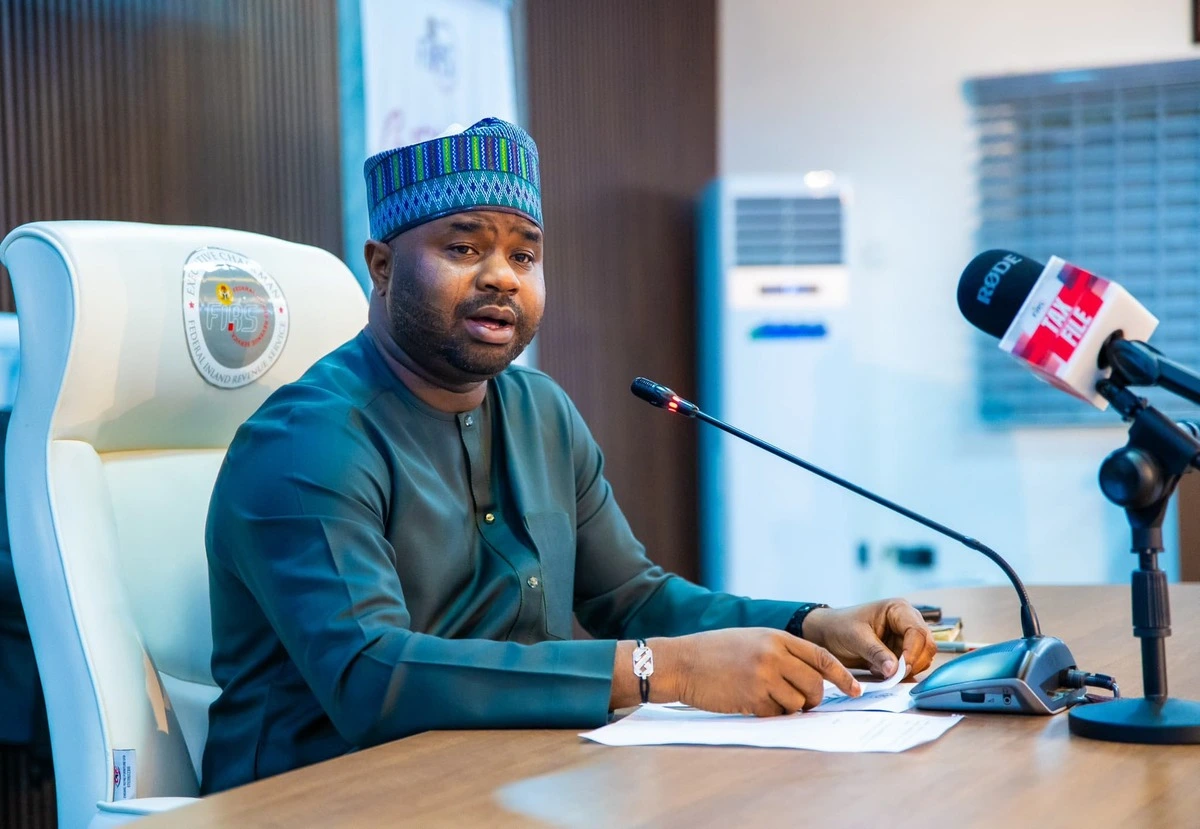
The Chairman of the Nigeria Revenue Service (NRS), Zacch Adedeji, has argued that Nigeria’s poverty situation would have been significantly worse if President Bola Tinubu’s economic reforms had not been implemented, saying the number of people falling into poverty could have doubled without the government’s intervention.
Adedeji made the remarks during an interview on Channels Television on Sunday night with Seun Okinbaloye.
During the interview, Adedeji defended the president’s economic policies, saying they had delivered measurable progress and strengthened government revenue.
He said the NRS had generated almost as much revenue in the first half of 2026 as it collected in the whole of 2025, putting the agency on track to exceed N40 trillion in revenue this year.
Also Read
What Adedeji is saying
Responding to IMF estimates that Nigeria’s poverty rate had risen to 63% under the national poverty line and that about 27 million Nigerians were projected to face food insecurity in the fall of 2025, Adedeji pushed back against Okinbaloye’s suggestion that more Nigerians had become poor under Tinubu.
He argued that the situation would have been considerably worse without the administration’s reforms.
- “If you remember where we are coming from, if we had not done what we were supposed to do, possibly double that population would have gone into poverty. I’m telling you that progress is what we should measure. Where are we coming from? That is the point I’m making,” Adedeji said.
The NRS chairman maintained that the government’s economic reforms should be assessed against the conditions it inherited rather than current hardship alone.
Nairametrics had earlier reported that Nigeria’s tax revenue rose sharply in the first five months of 2026, significantly outperforming government projections as tax reforms and higher collections from key sectors, including petroleum and mining, boosted revenue performance.
Adedeji argued that the increase in government revenue had also translated into benefits for citizens, citing improved state government finances, the student loan programme, expanded credit access for civil servants, and the strong performance of the Nigerian stock market.
He said state governments were no longer depending on the federal government for salary support, while more than one million students had received education loans.
He also pointed to the introduction of credit scores for civil servants and the rise in market capitalisation from about N30 trillion to N150 trillion as evidence that the reforms had created wealth and expanded economic opportunities.
Get up to speed
The debate follows recent IMF assessments of Nigeria’s economy.
- In June, the IMF said that although Nigeria’s economic reforms had improved macroeconomic stability and strengthened the country’s resilience, poverty and food insecurity had worsened, with 27 million Nigerians falling into poverty in the fall of 2027.
- The Fund said reforms had produced better fiscal and external sector outcomes, but many Nigerians continued to face severe cost-of-living pressures. It warned that higher global prices for fuel, food, and fertiliser could improve government revenues while also increasing inflationary pressures and hardship for vulnerable households.
The Federal Government responded by saying its priority was to ensure that recent macroeconomic gains translated into tangible improvements in the welfare of ordinary Nigerians.
The IMF later reiterated concerns that Nigeria’s social protection system remained insufficient to adequately cushion vulnerable households from the impact of ongoing economic reforms.
What you should know
Nigeria’s tax reforms, which took effect in January 2026, have significantly increased government revenue.
- Revenue collected by the Nigeria Revenue Service between January and May 2026 rose to about N15.8 trillion, compared with N10.6 trillion during the same period of 2025.
- Even without revenue from newly introduced taxes, collections still increased by about 15%, exceeding the government’s baseline growth target.
The NRS has said the reforms have positioned the agency to generate more than N40 trillion in taxes and royalties in 2026, a substantial increase from the N28.23 trillion collected in 2025.
 Follow Us on Google Discover