
 Follow Us on Google Discover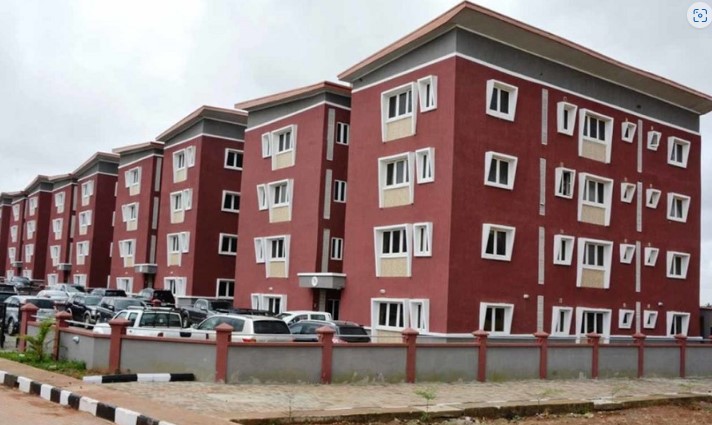
“Markets can remain irrational longer than you can remain solvent.” John Maynard Keynes
Investors commonly quote this to support their theories and results online.
The quote has a different meaning in Nigerian real estate, where “irrational” pricing is the norm.
Markets aren’t crazy. This is structural. Waiting for it to be rectified is the most costly investment option.
Also Read
The assumption that didn’t hold
In 2023, I analyzed Pinnock Beach Estate’s N1.1 billion duplex, analyzing developers’ use of greater plot sizes to justify premium pricing. Adjusting for inflation, these properties’ dollar-equivalent values remained relatively unchanged.
But what stayed with me were talks with prospective purchasers who believed the pricing couldn’t last, that a correction was inevitable, and patience would pay off.
It wasn’t. Prices keep rising. Waiters were priced out.
The pattern goes beyond Lagos real estate. After the 2022 dip, an investor who waited for additional decreases missed cumulative gains of 53% through early 2026 (S&P 500 Historical Annual Gains, Macrotrends).
In Lagos, the cost of waiting has been even steeper: land prices across prime corridors appreciated by 50% in 2023 alone, with locations like Ogudu and Abraham Adesanya recording cumulative growth of 275% and 254% respectively between 2018 and 2023 (NIESV Lagos Land Price Appreciation Index, 2024).
Patience is now a Cost
Four structural forces conspire to make waiting costly:
1. Inflation’s silent capital tax
In December 2023, Nigeria’s inflation rose to 28.92% from 21.34% (National Bureau of Statistics, CPI Reports 2022–2023). Naira-denominated savings accounts, which earn 4–6%, lost over 20% of their real purchasing power annually.
After two years of “waiting for the right time,” an investor’s cash fell 40% before investing. The naira worsened this, as the exchange rate depreciated about 300% from N420/$1 in early 2022 to N1,800/$1 by late 2023.
2. Land scarcity, concentrated development
Lagos is not making more land. The development pipeline is mostly in Lekki-Epe, Victoria Island, and Ikoyi, where plots are few and diminishing. The Estate Intel Lagos Real Estate Development Pipeline Report (2025/2026) lists 34,800 active units in development, but 1.8 million units are insufficient to meet a 2.7 million-unit gap.
Land reclamation, daily JV signings, and construction activity intensity, mostly along the same routes. Ikorodu, Badagry etc., which may absorb demand, is underdeveloped because of infrastructure deficiencies and institutional neglect.
3. The invisible markup: Landowners and JVs
Landowners’ structural advantage in Lagos real estate pricing is rarely considered in public investment analysis. Developers must form joint ventures to build flats in Ikoyi or Victoria Island, where undeveloped land is ‘finished”
The conventional structure involves a 50/50 split between landowner and developer, with upfront “premium” payments up to N800 million before laying a single block. The final unit price includes these costs, which the buyer cannot see.
Landowners receive 50% of completed apartments and sell them at full market price minus the developer’s development costs.
This structural arrangement creates a pricing floor that does not respond to demand fluctuations. The developer cannot price below their all-in cost (land premium + construction + 50% unit transfer), and the landowner has no incentive to reduce pricing when they carry no construction risk. The result: prices in established corridors have a structural floor that rises with each new JV, independent of buyer sentiment.
4. Government: Missing regulator
Every factor above is either created or enabled by governance failures. Infrastructure neglect elsewhere causes viable development in a restricted corridor. A road, water, or rail connection to Ikorodu, Badagry, or Epe would spread demand and moderate pricing in established corridors.
Instead, Lagos faces a regulatory vacuum. Agent commission structures remain unregulated despite published guidelines that are widely ignored.
Construction permits are issued and then reversed through demolition. Most critically, there is no building density regulation that matches the city’s spatial constraints. Neighborhoods like Yaba, Shomolu, and Bariga — which should be functioning as starter-home corridors for young professionals with minimum 5-floor density requirements — remain underdeveloped and unplanned.
The Lagos State Housing Market Report (2025) documents the consequence: a housing deficit of 3.4 million units, up 15% from 2.95 million in 2016, with annual housing need estimated at 227,576 units against delivery that has never approached that figure. Over 70% of Lagos residents remain renters (The Guardian Nigeria, July 2025).
What developers are telling the market
Developers are giving the market exactly what it keeps buying, even when buyers say it’s overpriced. A N9 billion home in Banana Island lists POP ceilings and Bluetooth speakers as premium features — and it sells.
That tells you everything. Buyers at this level aren’t paying for quality. They’re paying for location, because the supply of land in these corridors is finite and shrinking.
Developers have responded rationally — why invest in premium finishes when white paint and a contemporary design is enough to sell? They don’t need to compete on quality to attract hesitant buyers. They just need to be in the right location, because the buyer who waits doesn’t get a better deal. They get priced out.
Here’s the rewritten closing:
Who’s left holding the bag?
There’s an irony buried in this market. Everyone is rushing to buy because waiting means being priced out — but the moment you move in, the clock starts working against you.
Lagos real estate is obsessed with new. When developers aren’t competing on quality — when POP and white paint is the standard — the only thing differentiating your property from the next one is how recently it was built.
A brand-new unit in Lekki sells at a premium today. That same unit in five years, with the same POP ceilings and the same Bluetooth speakers, is no longer new — but the developer next door is selling something that is.
This creates a depreciation trap. Your home’s resale value doesn’t grow at the rate the market is moving. When you try to sell, the proceeds don’t buy the next thing — not without adding a significant amount or downsizing. The asset you rushed to buy to avoid being priced out has, in practical terms, priced you out of your next move.
Some owners hold on, hoping to eventually use the property as a JV contribution. But the math is difficult. A 600 sqm plot supports maybe 8 units of flats — a modest proposition that limits your negotiating position with developers who are chasing larger sites in the same corridor.
And then there’s the neighbourhood itself. The same infrastructure deficit that concentrates development into narrow corridors also degrades those corridors faster than they mature. Roads deteriorate. Drainage fails. Construction dust from the next project never settles.
Within a few years, your neighbourhood looks tired — and buyers move on to the next shiny development on the next reclaimed plot. Round and round it goes.
The market punishes those who wait to buy. But it also punishes those who buy without understanding what they’re actually holding. The winners in this cycle aren’t the patient or the impulsive. They’re the ones who understood the structure before they entered it.
- Olabisi Odusanya is a real estate investment analyst with nearly a decade of experience applying data-driven methodologies to investment and development decisions across Nigeria’s residential market.



patiently waiting for the said structural mechanics to be distilled