Follow Us on Google Discover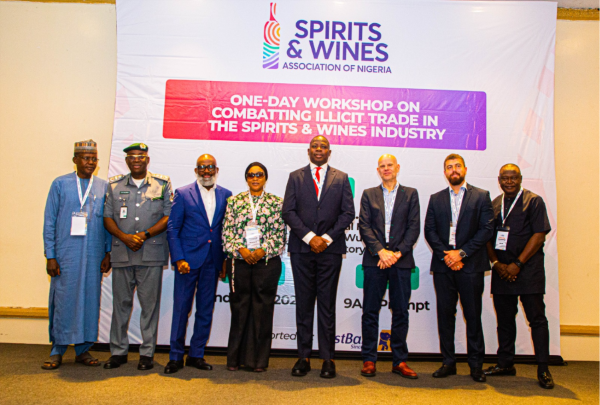
Across Nigeria, wines and spirits occupy an important place at Nigerian events, whether we are talking about weddings, birthdays, naming ceremonies, business engagements, launch events or weekend gatherings.
They play important roles in moments of connection and celebration, often fostering shared experiences.
Against this backdrop, the Spirits and Wines Association of Nigeria (SWAN) has called for stronger multi‑stakeholder collaboration to address illicit trade in the spirits and wines sector, following a high‑level workshop held in Abuja.
The engagement brought together regulators, enforcement agencies, industry players, media, and development partners to align on practical steps to tackle illicit trade and strengthen the integrity of the market.
Also Read
SWAN is made up of notable organisations including Bacardi, Diageo, Guinness Nigeria, Moët Hennessy, Nigerian Breweries, Pernod Ricard Nigeria, Nigerian Bottling Company Ltd., William Grants & Sons and Brian Munro Limited.
Speaking at the event, Michael Ehindero, Managing Director of Pernod Ricard and President of SWAN, described illicit trade as a direct threat not only to business integrity but to human life.
“Illicit trade, defined as the production, importation, or sale of goods outside regulatory frameworks, continues to pose risks to consumer protection, government revenue, and legitimate businesses.
“This includes counterfeiting, smuggling, illegal production, tax evasion, and the diversion of legitimate products into unauthorised channels. It is a global challenge that cuts across multiple sectors in the consumer goods industry, food and beverages, pharmaceuticals, tobacco, cosmetics, and alcohol, with significant consequences for public health, government revenues, and economic development,” he stated.
“Beyond the human cost, illicit trade has a devastating impact on our economy. Governments lose billions in tax revenue, funds that should be supporting education, healthcare, infrastructure, and public safety. Legitimate businesses that invest in compliance, quality, and employment are unfairly undercut. Jobs are lost. Investor confidence is shaken. This is not a victimless crime, it weakens entire value chains and slows national development,” Ehindero added.
Tony Okwoju, SWAN Director-General, called for stronger stakeholder-led enforcement against illicit trade due to its impact on lives, legitimate business and government revenue.
David Francis, Managing Director of the Alliance Against Counterfeit Spirits (AACS), provided a global perspective while highlighting the increasing sophistication of counterfeit operations regarding fake packaging materials often mass-produced abroad and shipped into local markets.
“They’re becoming organised into gangs, well-organised networks and becoming really sophisticated. The quality of the things we are seeing coming from China into this market are making it increasingly challenging for consumers to spot fake goods, whether they’re bad or good, or whatever the fundamentals are.
“So, you’ll see the labels, you’ll see the cartons, you’ll see the bottles, and you’ll see the caps. This is a do-it-yourself counterfeiting kit coming into the domestic market. All you need to find is the liquid. And we all know that the liquid is relatively easy to source in any domestic market around the world. So again, I just want to highlight how important it is that we stop these things getting into the market,” Francis said.
At the regulatory level, agencies acknowledged the growing threat of illicit trade while outlining ongoing interventions. The Federal Competition and Consumer Protection Commission (FCCPC) described the situation as a serious public health and economic challenge. In his keynote address, Tunji Bello, Executive Vice Chairman of FCCPC, warned that illicit alcohol trade is a “multi-dimensional crisis” affecting consumer safety, market integrity, and public revenue.
“It is not merely an industry problem,” Bello said, stressing that the issue touches on “consumer protection, health protection, public revenue, public safety, and indeed the overall integrity of our market.
A key outcome of the session was the shared recognition that no single stakeholder can address the challenge alone. Participants emphasized the importance of improved enforcement and intelligence sharing, enhanced regulatory coordination and sustained consumer awareness and education while promoting transparency across the supply chain.
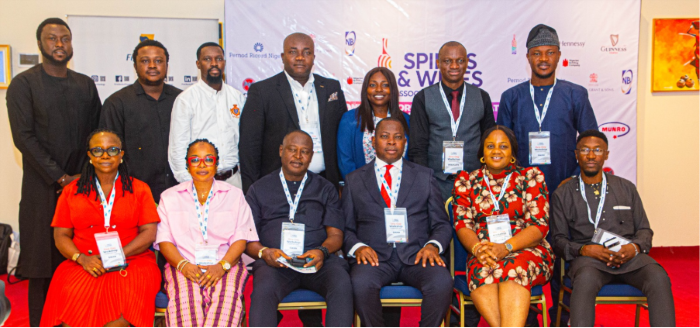
SWAN equally highlighted the critical role of informed consumer choices, encouraging the public to purchase products only from reputable and authorized outlets. Stakeholders noted that this remains one of the most effective ways to protect consumers while supporting legitimate businesses and maintaining trust in the market.
The workshop also reinforced the role of responsible, legitimate industry players in supporting safe consumption and contributing positively to society. Across the industry, companies continue to invest in initiatives that promote consumer awareness, responsible drinking, and community wellbeing.
These efforts include public education campaigns on responsible alcohol consumption and drink‑driving prevention, initiatives that encourage safer roads, as well as sustainability programmes such as glass bottle collection and recycling to reduce environmental impact. Such interventions reflect a broader commitment by compliant industry players to operate responsibly, uphold standards, and contribute to long‑term value creation.
The event also underscored the need to strengthen Nigeria’s broader ecosystem through improved policy alignment, technology‑driven traceability solutions, and ongoing public‑private cooperation
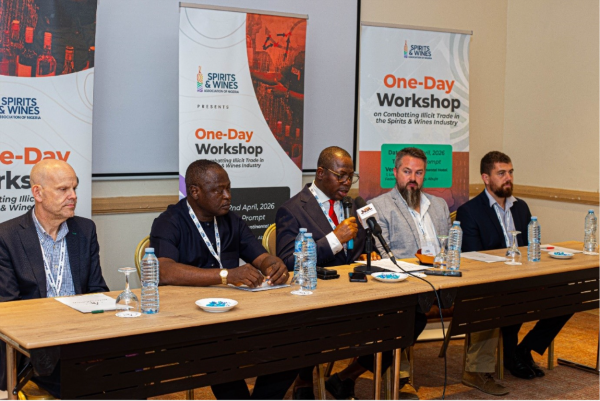
With participation from the Federal Competition and Consumer Protection Commission (FCCPC), Nigeria Customs Service, Standards Organisation of Nigeria (SON), Nigeria Police Force, Nigeria Security and Civil Defence Corps (NSCDC), alongside media, civil society organisations, diplomatic partners, and industry representatives, the engagement marked an important step towards building a more secure and transparent market.
SWAN reaffirmed its commitment to working with all stakeholders to drive long‑term, sustainable solutions. The consensus from the session was clear: only a unified and collaborative approach will effectively address illicit trade, protect consumers, and support the growth of a responsible and thriving industry.