Follow Us on Google Discover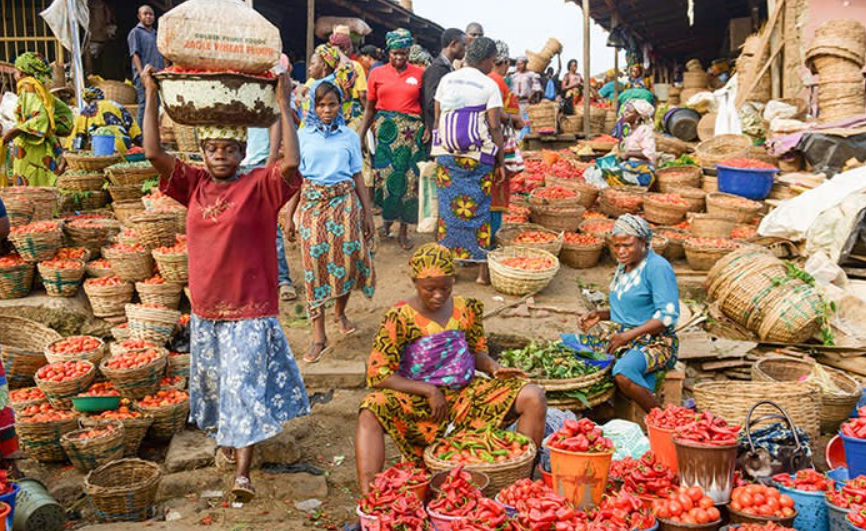
Nigeria’s food inflation rate rose above the country’s all-item inflation rate in April 2026 for the first time in eight months, signalling renewed pressure on household food costs despite broader moderation in headline inflation.
Analysis by Nairametrics using data compiled by Nairalytics from the National Bureau of Statistics (NBS) Consumer Price Index (CPI) reports showed that food inflation stood at 16.06% in April 2026, slightly higher than the all-item inflation rate of 15.69%.
The development marked the first time since August 2025 that food inflation exceeded headline inflation.
What the data shows
Data reviewed by Nairametrics showed that food inflation stayed below headline inflation for seven straight months between September 2025 and March 2026.
Also Read
- In August 2025, food inflation was 25.30% compared to all-item inflation of 23.14%. Since September 2025, headline inflation had consistently remained above food inflation until the reversal recorded in April 2026.
- In September 2025, food inflation was recorded at 20.16% compared to all-item inflation of 20.98%. The gap widened further in the following months as food inflation slowed faster than overall consumer prices.
- By January 2026, food inflation had dropped to 8.89% while headline inflation remained significantly higher at 15.10%, representing the widest divergence within the reviewed period.
However, the trend reversed in the first quarter of 2026. Food inflation climbed from 12.12% in February to 14.31% in March before reaching 16.06% in April 2026.
In contrast, headline inflation moved at a slower pace, rising from 15.06% in February to 15.38% in March and 15.69% in April.
The April crossover suggests that food prices are now rising faster than the broader basket of consumer goods and services captured in Nigeria’s inflation index.
Food inflation rate jumps 80.6% in four months
Further analysis of the inflation trend showed that food inflation recorded a significantly sharper increase than headline inflation between January and April 2026.
Food inflation rose from 8.89% in January 2026 to 16.06% in April 2026, representing an increase of 7.17 percentage points or approximately 80.6% within four months.
In contrast, all-item inflation increased marginally from 15.10% in January to 15.69% in April, reflecting a rise of 0.59 percentage points or about 3.9% over the same period.
The data highlights how food prices accelerated much faster than broader consumer prices during the first four months of 2026, reinforcing concerns over renewed pressure on household purchasing power and food affordability.
What drove the increase
According to the NBS, the rise in food inflation was driven by increases in the average prices of staple food items, including millet, yam flour, fresh ginger, beef, garri, yam tuber, fresh pepper, crayfish, cassava tuber, beans, Irish potatoes, tomatoes, wheat grain, soybeans and plantain.
The agency stated that food inflation rose to 16.06% year-on-year in April 2026 from 14.31% recorded in March, although the month-on-month food inflation rate moderated slightly to 3.63% from 4.17% in March.
At the broader level, headline inflation rose marginally to 15.69% in April 2026 from 15.38% in March, reflecting a 2.9-point increase in the Consumer Price Index from 135.4 to 138.3.
The NBS also noted that food and non-alcoholic beverages remained the largest contributor to headline inflation, accounting for 6.40 percentage points of the overall inflation figure. Restaurants and accommodation services contributed 3.56 percentage points, while transport contributed 1.70 percentage points.
State-level pressures persist
Despite the overall moderation in inflation compared to 2025 levels, food price pressures remained elevated across several states.
NBS data showed that Enugu recorded the highest food inflation rate at 32.67% in April 2026, followed by Kwara at 30.77% and Adamawa at 30.14%.
On a month-on-month basis, Niger recorded the sharpest increase in food inflation at 8.53%, followed by Bauchi at 6.78% and Kogi at 6.72%.
What you should know
While Nigeria’s inflation environment has cooled significantly from the elevated levels seen in 2025, the latest data suggests that food supply pressures and rising costs of staple items continue to weigh heavily on household spending.
The renewed rise in food inflation above headline inflation may also reinforce concerns that food prices could once again become the dominant driver of inflationary pressures in the months ahead.