Follow Us on Google Discover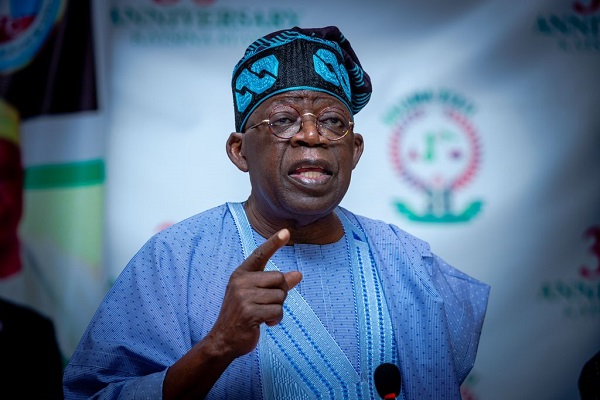
President Bola Tinubu’s 2026 budget may be a pointer to a change from the 2025 economic stabilisation approach to a more expansionary and infrastructure-driven policy, as the administration humps up spending despite rising debt and widening fiscal deficits.
This is according to analysts , who shared their views on the budget with Nairametrics.
A comparison of the 2025 and 2026 federal budgets, based on data from BudgiT Foundation, suggests that the Tinubu administration is evolving from managing the impacts of tough restructurings to pursuing broader economic consolidation through hefty public investment, increase in security spending, and strengthening government institutions.
The 2025 N54.99 trillion budget, tagged the “Budget of Restoration,” was essentially concentrated around rebuilding economic confidence sequel to the removal of fuel subsidy, exchange rate reforms, and inflationary pressures that defined Tinubu’s early economic agenda.
Also Read
On the other hand, the 2026 N68.32 trillion budget, labeled as the “Budget of Consolidation,” reflects a presidency increasingly fixated on infrastructure delivery, state capacity expansion, and long-term economic reform.
The difference is most obvious in capital expenditure.
What they are saying
While the 2025 budget allocated N23.96 trillion to capital projects, the 2026 budget ramped up capital spending to N32.28 trillion, including N5.71 trillion for unfunded capital obligations carried over from 2025.
Economists say the increase indicates that the administration is moving past economic stabilisation toward tangible developmental projects intended to stimulate growth and reinforce public confidence.
- “The 2025 budget was largely defense and stabilisation-oriented. The 2026 agenda is more aggressive, expansionary, and focused on infrastructure,” noted a financial economist at Nnamdi Azikiwe University, Dr. Felix Echekoba.
Security spending was upped from N4.91 trillion in 2025 to N5.41 trillion in 2026, a reflection, according to Echekoba, of continued concerns over insecurity’s bearing on farming, investment, and economic productivity.
Compared to the 2025 budget, the administration also marginally increased allocations to education and health.
Education spending accreted from N3.50 trillion in 2025 to N3.52 trillion in 2026, while the health budget accreted from N2.40 trillion to N2.48 trillion.
Echekoba queried that the increases in social spending stayed modest compared to the sharp upswing in overall expenditure and borrowing.
- A major contrast between both budgets lies in fiscal sustainability. In spite of higher fiscal allocations in 2026, expected revenue plummets from N36.35 trillion in 2025 to N34.33 trillion in 2026, expanding the budget deficit.
- The budget deficit rises from N13.39 trillion in 2025 to N23.85 trillion in 2026, indicating a much accentuated dependence on borrowing.
- Consequently, debt servicing costs is projected to rise from N14.32 trillion in 2025 to N15.80 trillion in 2026, underlining growing pressure on public finances.
More insights
The chief executive of the Center for the Promotion of Private Enterprise, Dr. Muda Yusuf says the figures suggest that the Tinubu’s economic approach in 2026 became more risk-tolerant and driven by borrowing, compared to the relatively cautious posture of 2025.
- “The government now appears more willing to use deficit spending as a development tool. The challenge will be ensuring that the borrowed funds translate into productive infrastructure and economic growth,” said Yusuf.
He said the 2026 budget is much more ambitious than last year’s. He said there are a number of commonalities, and it’s about the realism of assumptions.
- “It’s the revenue assumptions that determine the size of the budget. Those assumptions could not stand in 2025, that’s why we had a major shortfall in revenue, and that affected budget implementation.
- “This year the assumptions are looking a bit optimistic, so there are concerns about whether those assumptions will still stand for the rest of the year. If the assumptions collapse, then the revenue expectation will drop.
- “Another concern for me is the cost of debt service, which is very high. It’s a major concern when we look at the proportion of debt service to revenue.
- “Unfortunately, we keep borrowing more, although, maybe the current borrowing has been factored into the budget for debt service; but the key issue is that the debt service cost is too high, and it’s crowding out expenditure for other aspects of the budget,” he said.
Yusuf added that the only upsides that we are expecting in 2026 are the higher price of crude oil and the tax reform, which is expected to increase revenue into government coffers. On the revenue side he expects an improvement over what was recorded in 2025.
Similarly, a financial economist and president of the Independent Shareholders Association of Nigeria, Moses Igbrude, cautioned that the expanding deficit and growing debt burden could exacerbate fiscal vulnerabilities if revenue generation fails to improve significantly.
Speaking on the issue, the chief executive of Economic Associates, Dr. Ayo Teriba, noted that the difference between the 2025 budget of N55 trillion and 2026 budget of N68 trillion is more apparent than real because the 2026 N68 trillion includes more or less 70% of the capital budget of 2025, which is yet to be implemented.
- “The current budget includes the unfunded part of the last budget; so, maybe we should not be comparing because one has swallowed part of the other – it still includes a significant chunk of last year’s.
- “Last year’s budget was not fully funded; you have maybe N25 trillion of it being subsumed into the current budget. So if you subtract the N25 trillion from N68 trillion, which is the current year’s budget, it’s only N43 trillion, which would have been less than the 2025 N55 trillion; but if you add what was unfunded last year to it, then it looks bigger than last year’s,” he said.
What you should know
Nigeria’s annual budgets have experienced significant growth, particularly between 2023 and 2026, shifting from a focus on recurrent expenditure to larger capital allocations and high deficit financing.
Annual Budget Summary (2016–2026) include: 2016: N6.08 trillion; 2017: N7.44 trillion; 2018: N9.12 trillion; 2019: N8.92 trillion; 2020: N10.59 trillion; 2021: N13.59 trillion; 2022: N17.13 trillion; 2023: N21.83 trillion; 2024: N28.78 trillion; 2025: N54.99 trillion; 2026: N68.32 trillion.