Follow Us on Google Discover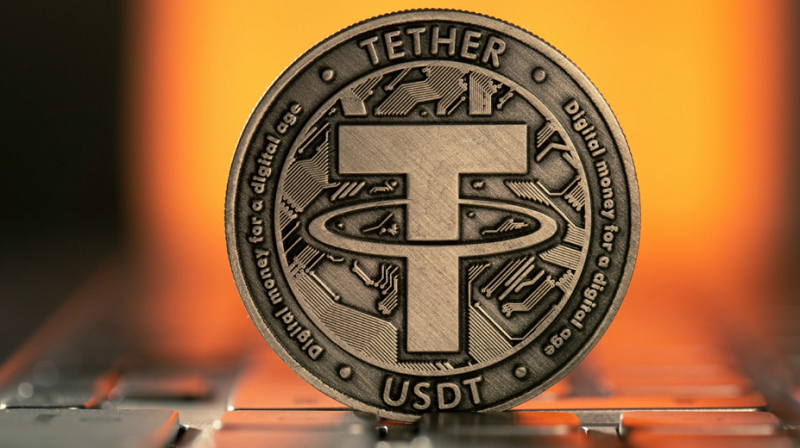
Nigeria’s interest in USDT (Tether) and other dollar-pegged stablecoins has increased in 2026, solidifying the nation’s position as a global leader in harnessing the power of digital assets.
Stablecoins have become essential financial infrastructure due to the need to hedge against Naira and move toward digital dollarization.
Google Trend data showed Nigeria is ranked sixth globally but leads in Africa in USDT (the most widely used USD stablecoin) interests on an annual spectrum.
USDT is a digital asset that provides a more efficient and affordable way of transferring funds more conveniently than the traditional financial system.
Small and medium-sized Nigerian businesses leverage USDT l for international transactions amid limited access to foreign currency through official bank channels.
According to a survey by the international fintech company BVNK, stablecoins are becoming increasingly popular in Africa due to geopolitical tensions and the rapid pace of global digitalization. The strongest growth engines for these assets in Africa are South Africa and Nigeria.
Why Nigerians embrace stablecoins
Crypto-savvy Nigerians mostly use them for transactions and hedging. This guard against naira’s unpredictability and offers a cash alternative. Another important factor is remittance. Foreign workers frequently send USDT or USDC to family members to avoid delays and expensive conversion fees.
Stablecoin demand is bolstered by retail payments and peer-to-peer transfers compared with traditional banking; they offer a quick, reliable, and affordable alternative. The survey results show that practical use outweighs speculative trading.
“These assets help manage real financial needs in everyday life,” said BVNK. “Nigeria leads the world in USDT and USDC ownership.” This illustrates its dominance in the adoption of stablecoins.
The use of stablecoins to manage financial uncertainty and fight inflation is growing despite recent stability in the Nigerian naira. Stablecoin ownership rates are typically higher in nations with an history of unstable currencies.
The trend across Africa
Data from the Stablecoin Utility Report 2026 highlighted that Africa had the strongest forward intent to purchase stablecoins (76%) and the highest stablecoin ownership (79%) among the seven regions.
Young Africans residents especially those in Nigeria, are more interested in receiving payment for their labor in stablecoins rather than fiat. Artemis, Coinbase, and market research firm YouGov collaborated to compile the report, which contained responses from more than 4,650 respondents in 15 different countries.
Africa had the highest percentage of stablecoin ownership (79%) and the strongest forward intent to purchase stablecoins (76%).
Stablecoins are currently owned by nearly 80% of South Africans and Nigerians, and over 75% of them intend to increase their holdings in the coming year. Remarkably, 95% of Nigerian respondents stated they would rather receive payment in stablecoins than naira.
Practical financial necessity is the foundation of Nigeria’s dominance in the rankings. Many users are turning to dollar-pegged digital assets as a store of value and a means of conducting cross-border transactions amid the ongoing devaluation of the naira.
According to Yellow Card, Nigeria’s stablecoin market reached $22 billion in transaction value in the last year, making up 43% of all cryptocurrency transactions in Sub-Saharan Africa.
However, the Bank for International Settlements stated that stablecoins might lead to de facto dollarization, posing a threat to the monetary sovereignty of the Central Bank of Nigeria.
Nigerian Web3 founders raised $43 million in 2025, twice as much as the $20 million raised in 2024. This is a significant change because, according to the report, capital became more concentrated in fewer, higher-impact industries, and there were early indications that Series A funding would be returning.
According to Hashed Emergent, stablecoin deposits in Nigeria increased by 9,000% between 2018 and 2025, and the nation recorded the highest 24-hour stablecoin P2P transfer volume on centralized exchanges in 2025, totaling $48.2 million.