Follow Us on Google Discover
Most investment losses do not begin with failed assets. They begin with misunderstood structures.
When investors do not fully understand what they are entering, how ownership works, how returns are generated, and how operations are managed, even viable opportunities eventually create friction.
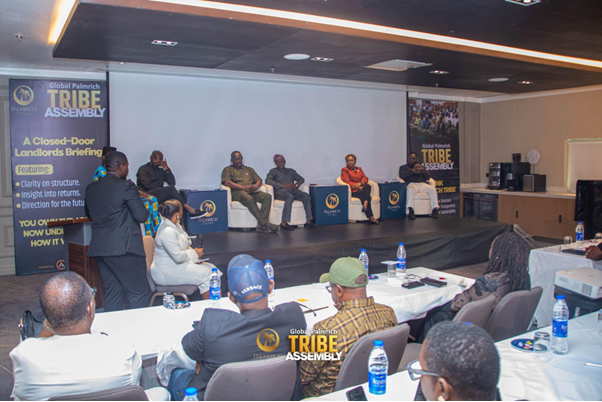
That thinking shaped The Palmrich Tribe Assembly, hosted by Assetrise Limited on May 1, 2026, at the Lagos Marriott Hotel, Ikeja, bringing together investors, regulators, board members, and technical partners for a broader conversation around transparency, governance, and long-term agricultural investing.
With over 1,000 participants, the discussions centred less on projections and more on structure: what it takes to build an asset system capable of scaling sustainably.
Also Read
Understanding the Palmrich Structure
At the centre of that conversation was Palmrich, an oil palm model built around land ownership, plantation development, and long-term agricultural production.
Unlike speculative investment systems focused on quick returns, Palmrich was presented as a structured participation model where investors own the land asset while Assetrise manages cultivation, harvesting, processing, and operational execution across the plantation lifecycle.
The distinction matters because oil palm is not a short-cycle crop. Plantations typically begin meaningful fruiting after about 2.5 to 3 years, with peak productivity stabilising years later. That production timeline naturally shifts the conversation away from short-term returns and toward long-term asset performance.
One of the most discussed aspects of the model was its revenue-sharing framework.
Under the structure presented at the assembly:
- Investors receive 60% of the net profit as landowners
- While Assetrise retains 40% service charge as the plantation operator
But beyond the percentages themselves, the more important distinction was the decision to structure distributions around net profit, after operational cost have been removed rather than gross revenue.
The logic is simple: when returns are tied to actual profitability, both investor and operator remain aligned around the same outcome, plantation performance.
This approach mirrors joint-venture structures commonly seen in sectors such as oil and gas, where operators and asset owners share value based on realised returns rather than projected turnover.
Governance, Risk, and Long-Term Participation
Governance was also a central theme throughout the engagement.
Former Securities and Exchange Commission (SEC) Director-General and Assetrise Board Advisor, Mary Uduk, stressed the importance of compliance, transparency, and institutional oversight in maintaining long-term investor confidence.
To reinforce this, the structure incorporates both cooperative participation and an independent trustee system facilitated through Cidrus Group, creating external verification around production and distribution processes rather than relying solely on internal reporting.
The broader message was clear: credibility in structured investments is increasingly tied to transparency and independently verifiable systems.
Technical insights from the Nigerian Institute for Oil Palm Research (NIFOR) added further context to the discussion.
According to presentations made during the event:
- Oil palm plantations can yield between 20-35 tonnes per hectare annually, depending on seed quality and management
- Fruiting begins after approximately 2.5-3 years
- While peak production is typically achieved from around year 7.
At the same time, agricultural realities such as weather conditions, pricing cycles, and operational execution remain part of the equation.
That reality formed another recurring message throughout the assembly: agriculture is not speculative because it is uncertain, it is biological, and biological systems require patience, precision, and long-term management.
Technology and Asset Visibility were also part of the broader structure presented.
The MyAsset Vault platform, introduced during the event, is designed to provide investors with portfolio tracking, valuation visibility, peer-to-peer asset transfers, and integrated payment systems.
For long-term holders, the system offers ongoing visibility into asset performance and plantation activity. For investors requiring liquidity earlier in the cycle, it introduces structured transfer options within the system.
Assetrise also outlined expansion plans across Lagos, Ogun, Ondo, and Osun States, alongside proposed entry into other West African markets through multiple Special Purpose Vehicle (SPV) structures designed for individual, family, and institutional participation.
Perhaps the most notable aspect of the assembly, however, was the willingness to openly discuss risk.
Rather than presenting agricultural investment as risk-free, conversations addressed practical realities, including weather-related yield fluctuations, operational execution challenges, and regulatory uncertainties affecting land and agriculture.
The position presented was not that risk disappears, but that structured systems make risk easier to understand, monitor, and manage.
What Smart Investors Look For
Ultimately, the Palmrich conversation reflected a broader shift happening within Nigeria’s agricultural investment system.
As more investors move toward asset-backed participation models, the defining issue is no longer simply access to opportunity.
It is whether the structure behind that opportunity is transparent enough to be understood before participation.
If you’re ready to key into a system where your ownership is clear and legally secured, its risks are explained and independently verified, and your returns are structured and transparent…
Then it’s time to own Palmrich.
Ready to verify the model yourself?
Watch the Global Palmrich Tribe Assembly full recordings here.