Follow Us on Google Discover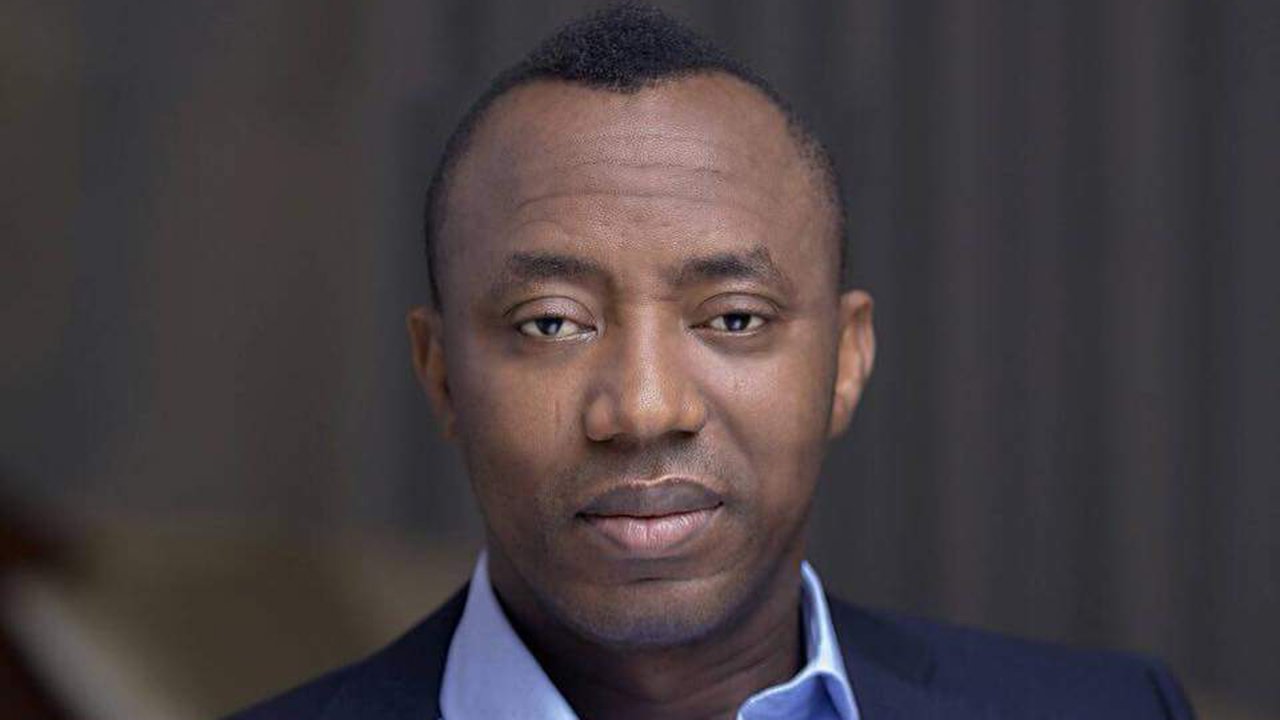
The Federal High Court in Abuja has overruled the no-case submission filed by politician and activist Omoyele Sowore against the amended alleged cyberbullying charges brought by the Federal Government of Nigeria.
Justice Umar Mohammed overruled Sowore’s application in a ruling delivered on Friday.
Nairametrics previously reported that the Federal Government of Nigeria had removed Meta (Facebook) and Elon Musk’s X Inc. (formerly Twitter) from the amended alleged cyberbullying charges.
What the Court said
Ruling on Sowore’s no-case submission, Justice Umar held that, however slight the evidence linking the defendant to the charge may be, the case ought to proceed so the defendant can explain his side of the story.
The judge stated that the operative words in the relevant sections of the Cybercrimes Act 2024 are “using a computer system or device” to send a false message for the purpose of causing a breakdown of law and order, or to threaten or bully.
According to the judge, evidence before the court showed that a prosecution witness testified that the defendant used his X handle to make the alleged post.
He concluded that allowing the case to proceed would help the court serve the interests of justice, rather than terminating the matter at this stage.
The judge held that the court was satisfied that a prima facie case had been established against Sowore.
- “The no-case submission is hereby overruled,” the judge ruled.
The court subsequently ordered the defendant to enter his defence in the case.
Following the ruling, Sowore rose and asked the judge to recuse himself from the case, stating that he believed he would not get justice based on how his lawyer was allegedly mistreated and in view of the forthcoming general elections.
The development led to a brief altercation between Sowore and the Federal Government’s counsel, A. Kehinde SAN, who appeared for the prosecution.
Sowore’s lawyer, Marshall Abubakar, also joined in requesting that the judge recuse himself.
However, the judge directed Abubakar to formally present their requests by filing the necessary applications on May 19, 2026.
Backstory
Nairametrics previously reported that the Federal Government had sued Sowore, Meta (Facebook) Inc., and Elon Musk’s X Inc. (formerly Twitter) as co-defendants, alleging that Sowore cyberbullied President Bola Ahmed Tinubu on social media.
One of the charges alleged that Sowore’s verified X handle, @YeleSowore, posted the following statement:
- “THIS CRIMINAL @OFFICIALPBAT ACTUALLY WENT TO BRAZIL TO STATE THAT THERE IS NO MORE CORRUPTION UNDER HIS REGIME IN NIGERIA. WHAT AUDACITY TO LIE SHAMELESSLY!”
The prosecution contends that Sowore’s remarks contravened the provisions of the Cybercrimes (Prohibition, Prevention, etc.) Amendment Act, 2024, specifically Section 24(1)(b).
In the list of exhibits seen by Nairametrics, the Federal Government highlighted the following exhibits: printouts of the defendant’s tweets on X; printouts of the defendant’s Facebook posts; the complainant’s letters to X and Facebook; the defendant’s posts and tweets referenced in the letters to X and Facebook; printouts of comments and reactions on X; and a video recording of President Tinubu’s comments in Brazil.
What you should know
Criminal prosecutions over cyberbullying allegations in Nigeria are increasingly prominent at both national and sub-national levels.
- However, such allegations are usually subject to judicial interpretation, which ultimately shapes public perception regarding the application and interpretation of these laws.
- Sowore’s case adds to a growing list of prosecutions under the Cybercrimes Act, which has become one of the most frequently cited pieces of legislation in Nigeria’s digital space.
- In March 2024, social media activist Okoli Chioma was charged in Anambra State for allegedly publishing false claims about a businessman’s private life on Facebook.
Journalists have also faced scrutiny under the Act.
Civil society groups argue that the government risks using the cybercrime law as a backdoor means of stifling press freedom.
Nairametrics also reported that the Socio-Economic Rights and Accountability Project (SERAP) recently called on President Tinubu to halt the alleged use of the Cybercrimes Act to harass and detain journalists, critics, and citizens exercising their right to free expression online.