Follow Us on Google Discover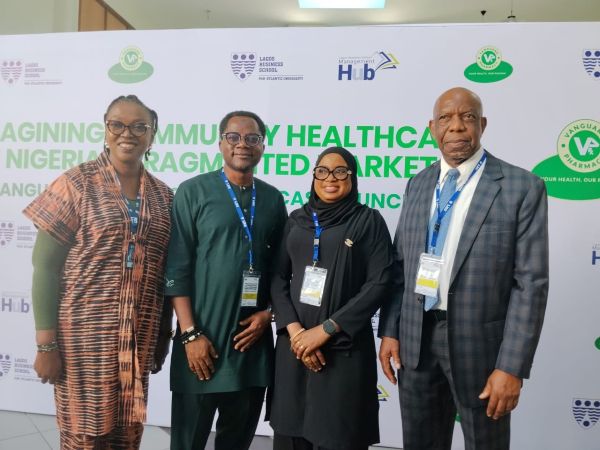
Nigeria’s healthcare system has long been characterised by fragmentation, uneven access, weak regulatory enforcement, and low public confidence in medicines.
For many patients, particularly those outside major urban centres, accessing quality care often entails long travel times, inconsistent service standards, and significant out-of-pocket costs for even the most basic treatments.
Against this backdrop, Vanguard Pharmacy has emerged as a community-focused response to a deeply systemic challenge.
Founded in 2006 as a modest retail outlet, the company has evolved into a structured healthcare brand anchored on proximity, trust, and integrated service delivery. Its approach redefines the role of the traditional pharmacy, shifting from a transactional model of drug dispensing to one centred on continuous patient care embedded within everyday community life.
“Beyond simply dispensing drugs, we are committed to bridging these gaps by strengthening patient trust, expanding access to care, and operating a people-centred business model,” said Taofik Odukoya, Chief Executive Officer of Vanguard Pharmacy, during a case launch held on Thursday, April 30, 2026, at the Lagos Business School (LBS).
“We are not just a pharmacy; we are an evolving healthcare ecosystem, positioned to improve outcomes through community-based service delivery,” he added.
At the event, themed ‘Reimagining Community Healthcare in Nigeria’s Fragmented Market,’ industry experts underscored persistent challenges within the sector, including low patient trust, limited technology adoption, and the absence of standardised practices across pharmacies.
Kawthar Odukoya, co-founder of Vanguard Pharmacy, noted that while technological advancement remains important, human interaction continues to play a critical role in healthcare delivery, particularly in demographics where digital tools are not widely used for medical decision-making.
“Integrating a human interface into service delivery is essential. In many communities, this means prioritising face-to-face engagement or leveraging accessible platforms such as WhatsApp to build trust and improve health outcomes,” she explained.
Rather than competing solely on pricing or product variety, Vanguard Pharmacy has differentiated itself by building a system rooted in people, culture, and accessibility. The result is a hybrid model that combines healthcare services with strong community presence, bringing care closer to where people live and work while maintaining operational consistency across locations.
Growth trajectory and measurable impact
From its humble beginnings, Vanguard Pharmacy has grown into a N17 billion enterprise, establishing itself as a significant player in Nigeria’s pharmaceutical retail landscape.
According to its 2025 patient tracking data, the company records over two million customer visits annually, a reflection of strong engagement levels and repeat patronage driven largely by trust. Its expansion across four South-Western states highlights a deliberate, measured growth strategy focused on replicating its service model within communities rather than pursuing rapid, unstructured scale.
Internally, the company reports a customer retention rate of 63 per cent, an impressive figure in a sector often characterised by low loyalty.
“Strategy is as much about what you choose not to do as what you pursue,” remarked Oliver Nnona, Senior Research Fellow at LBS.
Beyond retail pharmacy services, Vanguard Pharmacy has broadened its offerings to include vaccinations, point-of-care diagnostics, a grocery segment, veterinary services, and preventive health interventions, addressing critical gaps in primary healthcare delivery. During the COVID-19 pandemic, the company also played an active role in vaccine distribution, further reinforcing its position within local health ecosystems.
Innovation, standardisation, and community integration
Central to Vanguard Pharmacy’s success is its “one-stop” innovation model. Rather than operating as standalone drugstores, its outlets integrate a range of health and lifestyle services, creating a single, convenient destination for everyday needs.
Standardisation remains a key pillar of this model. Uniform service protocols, well-trained personnel, and structured governance systems ensure that customers receive consistent care across all locations, strengthening both quality assurance and accountability.
Equally significant is the company’s emphasis on a people-centred approach. By prioritising patient education, personalised care, and trust-building, Vanguard Pharmacy addresses one of the most persistent challenges in Nigeria’s healthcare system: public confidence.
Its deliberate siting of outlets within residential neighbourhoods further reduces both the physical and psychological barriers to care. In doing so, these pharmacies increasingly serve as first points of contact for health concerns, particularly among underserved populations.
The road ahead
As the event drew to a close, stakeholders emphasised the importance of scaling community-driven pharmaceutical models while leveraging data to design services tailored to local needs.
“Data must be harnessed to develop personalised customer experiences, stimulate demand, and unlock new market opportunities,” said Tunde Salako, Co-founder of Hadiel Health.
Other contributors highlighted the need for greater automation to improve operational efficiency, alongside a sustained focus on pharmaceutical-led healthcare delivery as the foundation for long-term impact.
“A one-stop innovation model is powerful, but building automated systems to streamline operations is equally critical to achieving better healthcare outcomes,” noted Flora Mbeledeogu, Chief Executive of Made in Africa Brand Ambassador.
The event attracted a diverse mix of industry leaders and stakeholders, including Louis Nzegwu, Professor of Marketing at LBS; Nsima Ogedi-Alakwe, Chief Marketing Officer at LBS; Segun Jones, Management Hub Lead at LBS; Oliver Nnona, Senior Research Fellow at LBS; Tunde Salako of Hadiel Health; Chidi Okoro, Founder of Drugs and Medicaments Nigeria Limited; among others.