
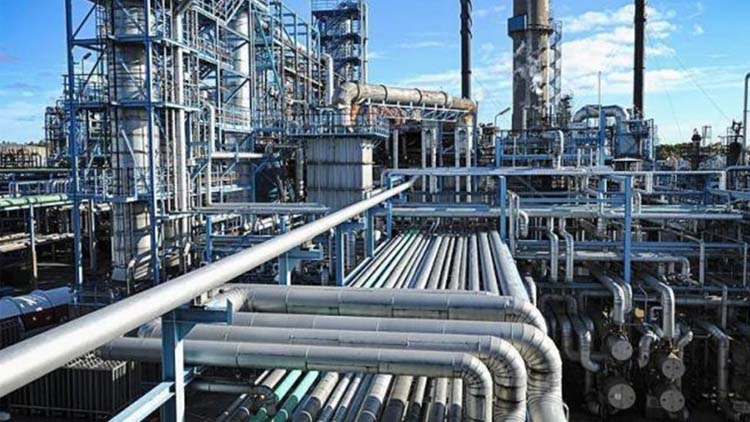
The global oil market is still very much a refinery game. With demand holding above 100 million barrels per day, data from the International Energy Agency (IEA) shows the real leverage in the oil value chain now sits downstream, where crude oil is processed into fuels that power transportation, industry, and broader economic activity.
Globally, refining capacity is estimated to be just above 100 million barrels per day, closely tracking demand and leaving the market finely balanced, according to IEA oil market reports.
This tight supply and demand dynamic has made refining margins more sensitive to disruptions, while pushing countries to ramp up domestic processing capacity to cut fuel imports and protect foreign exchange reserves.


Industry data further indicates that large-scale refineries, particularly those processing upwards of 500,000 barrels per day, are increasingly central to global fuel supply chains, shaping trade flows and pricing benchmarks across regions.
The structure of the oil economy is also evolving. While upstream production remains critical, value capture is shifting toward refining, distribution, and petrochemical integration, as highlighted in multiple IEA assessments and global refinery datasets.
For many economies, refining is no longer just about fuel supply but a strategic lever for economic stability and growth.
As countries reposition for energy security amid shifting global dynamics, large refining hubs continue to play an outsized role in stabilising supply chains and supporting industrial expansion.
Here are the 10 biggest refineries in the world by processing capacity as of 2026.
Nigeria
The Dangote Petroleum Refinery, owned by Dangote Industries Limited, stands as one of the most ambitious energy infrastructure projects in Africa. It was officially inaugurated by former President Muhammadu Buhari and is designed to significantly reshape Nigeria’s downstream oil sector.
Located within the Lekki Free Zone in Lekki, Lagos State, Nigeria, the refinery sits on a vast 6,180-acre (about 2,500-hectare) site, making it one of the largest single-train refineries in the world by land area.
With a processing capacity of approximately 650,000 barrels of crude oil per day, the facility is built to refine crude into a wide range of petroleum products for both domestic consumption and international markets. These include petrol, diesel, aviation fuel, kerosene, and other refined products critical to industrial and transport needs.
The refinery was engineered with advanced technology systems aimed at meeting strict global environmental and operational standards. Its design incorporates compliance with World Bank guidelines, United States Environmental Protection Agency (US EPA) standards, European Union regulations, and Nigeria’s Department of Petroleum Resources (DPR) emission and effluent requirements. https://refinery.dangote.com/