Follow Us on Google Discover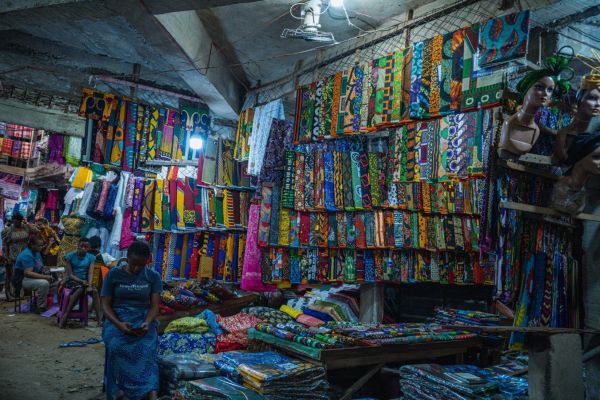
Every few years, a new report lands confirming what anyone who has walked through Aba’s Ariaria Market, wandered the adire clusters of Abeokuta, or passed through the leather workshops of Kano already knows:
Nigeria is sitting on one of the most concentrated pools of creative human capital on the continent. The reports celebrate the potential.
They quantify the opportunity. They note the gap between where we are and where we could be. And then they move on, leaving the workshops exactly as they found them.
The problem has never been talent. Nigeria has that in abundance. The problem is that we have spent a generation building the glamour layer of the creative economy while leaving its foundation unattended.
Also Read
The Lagos runways are world-class. The designers are global. The aesthetic conversation Nigeria is having about itself, through fashion, through film, through music, is one of the most important cultural conversations on earth. But behind that conversation, in the workshops and the production clusters, in the apprenticeships that train the next generation of craftspeople, on the floors where the actual making happens, there is an economy that has never had an institution behind it. The brands have owned the glam. Nobody has owned the work.
That is the structural failure we are solving.
The Invisible Economy
Nigeria’s fashion workforce is enormous and almost entirely uncounted. Hundreds of thousands of garment producers, cobblers, weavers, leather artisans and textile workers operate across the country’s production clusters. They make things that get sold, worn, exported and occasionally rebranded as someone else’s product. Forty-eight million pairs of shoes are produced annually in Aba. That number should make the city a global manufacturing story. Instead, they get relabelled and sold as Italian. This is not a branding problem. It is a systems failure. The skill exists. The production capacity exists. What doesn’t exist is the infrastructure that converts informal productivity into formal, competitive industry.
That infrastructure has four components, and they have to be built together or not at all. Skills development without market access produces trained workers with nowhere to go. Market access without financing means businesses that can win contracts they cannot fulfil. Finance without standardisation means products that buyers cannot consistently trust. And all three without policy engagement means progress that reverses the moment institutional attention moves elsewhere. Nigeria’s creative economy has attempted each of these in isolation, multiple times, with predictable results.
What Building the System Actually Looks Like
Ethnocentrique entered Aba’s fashion cluster with a different question. Not “how do we train more people?” but “what does the full infrastructure stack for this workforce actually require, and who is going to build it?” The answer, it turned out, was unglamorous and necessary in equal measure.
Over 21 months of active work in Abia State, the picture that emerged was this: 6,000 young people trained and placed in the production pipeline. Over 4,100 MSMEs supported. More than 700 businesses formalised, registered, structured, and repositioned to access finance, procurement opportunities, and institutional partnerships they were previously invisible to. Fifty-three production cooperatives created to aggregate demand, enable shared infrastructure, and improve quality control across the cluster. Over ₦200 million in orders fulfilled through coordinated cluster action. One hundred businesses supported to protect their brands through intellectual property registration. Lenders who once categorised cluster businesses as “too risky” now treating them as bankable partners after structured engagement.
These are not training outcomes. They are market outcomes. The distinction matters. The creative economy does not need more programmes that celebrate participation. It needs interventions that produce producers who can compete.
The Ecosystem Argument
The word “ecosystem” gets used loosely in development conversations, which is a shame, because the actual concept is precise and useful. An ecosystem is not a collection of individual actors doing their own thing in proximity. It is a system in which every actor, the funder, the producer, the buyer, the apprentice, the logistics partner, the policy maker, is structurally connected to every other. Remove one actor and the system degrades. Strengthen one actor in isolation and you get a stronger individual in a fragile system.
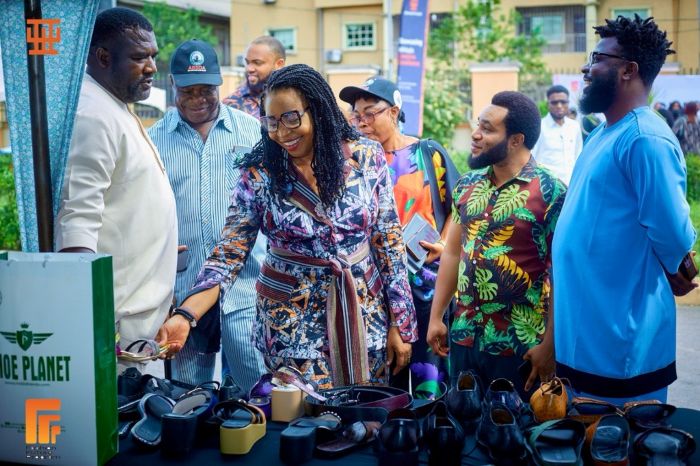
Nigeria’s creative economy has produced individual success stories at the top and systemic fragility throughout. What it has not produced, until recently, is an institution that takes responsibility for the full system. The Fashion Future Programme is not a training initiative. It is a pipeline, one that converts informal human capital into formal enterprise by connecting skills development to market access, market access to finance, and finance to policy. The Fashion Games is not a festival. It is the annual moment the ecosystem becomes visible and countable, the public proof that the infrastructure being built is producing outcomes that can withstand scrutiny.
The Size of the Opportunity
Nigeria’s creative industries already contribute meaningfully to GDP, and those numbers are almost certainly undercounted because so much of the production base operates informally. But the more important number is the forward-looking one. Sub-Saharan Africa’s fashion market is projected to grow significantly through the next decade. The question is not whether that growth will happen. It is whether Nigeria’s production clusters will be positioned to capture it, or whether we will watch the value flow elsewhere while our craftspeople remain uncounted and underserved.
The answer depends entirely on whether the infrastructure work gets done at scale. The model exists. The proof is in the clusters. How you take what has been demonstrated in Aba and deploy it across Nigeria’s other production centres is the most important question in Nigeria’s creative economy right now.
The people who make Africa’s fashion have always been here. The work now is building the ecosystem they deserve.
Irunna Ejibe is the Chief Executive Officer of Ethnocentrique Limited, a leading indigenous enterprise growth company building the infrastructure for Africa’s creative economy