For decades, Nigeria’s healthcare system has carried the weight of a growing population without a matching expansion in infrastructure and funding.
Public hospitals, envisioned as the backbone of care delivery, have struggled to meet expectations.
Nigeria’s healthcare system has, in many ways, reinvented itself, from overcrowded public wards to the steady rise of private medical giants.
According to data by WHO, the private sector provides close to 60% of health service delivery, in spite owning an estimated 30% of health facilities.
These institutions did not emerge in isolation. They are responses to gaps, to crises filled by a mix of entrepreneurs, medical professionals, and institutional investors who have built facilities that now rival international standards.
Some were established by practitioners who had seen advanced systems abroad and returned determined to replicate them locally. Others emerged from business minds that recognized healthcare as both a necessity and a viable long-term investment.
This feature article explores Nigeria’s largest private hospitals based on scale of operations, highlighting the individuals and organisations behind them, as well as the range of specialist care they provide.
Here are the owners of the largest hospitals in Nigeria by bed capacity.
- Dr. Richard Okoye- Founder, SaveALife Mission Hospital (500-bed)
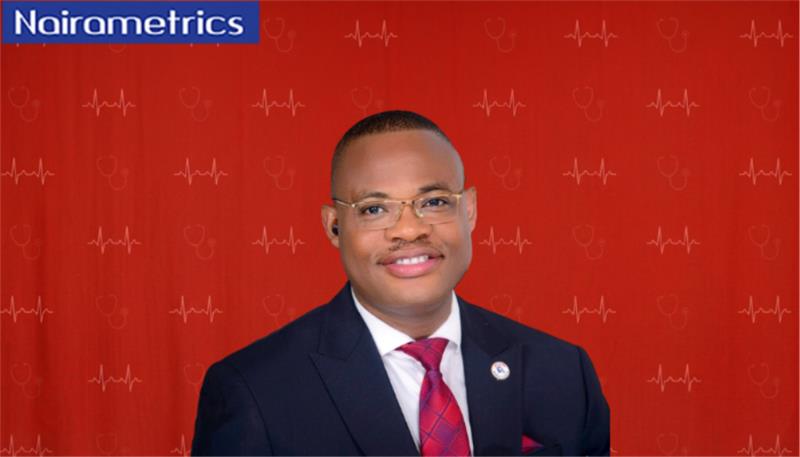
SaveALife Mission Hospital is owned and founded by Dr. Richard Okoye, a medical doctor and healthcare entrepreneur who serves as the Chief Medical Director and Chairman of the Save A Life Group.
The group includes a network of hospitals, a medical software company (Save A Life Medisoft), and the Doctors SaveALife Foundation, focused on health outreach.
After earning his MBBS from the University of Nigeria, Nsukka, he went on to pursue further training and built his career around advancing specialist healthcare in Nigeria.
He is credited with pioneering one of the first modern dialysis and kidney transplant facilities in Nigeria’s South-South and South-East regions. His work is centered on expanding access to advanced medical care and reducing the need for Nigerians to seek treatment abroad.
The hospital operates as a group with over 500-bed capacity, with facilities in Port Harcourt, Owerri, and Aba focused on critical care services such as angioplasty, pacemaker insertion, and open-heart surgeries, alongside kidney care, including dialysis and transplant services. The hospital also has a strong fertility programme covering IVF and ICSI, as well as maternal care services.
Its surgical capacity spans orthopaedics and spine care, including knee and hip replacements, minimally invasive spine procedures, and general laparoscopic surgeries, amongst others.
Note: Medical facilities like Nizamiye Hospital and Primus International Super Speciality Hospital are also part of the largest in Nigeria and owned by corporate groups rather than a single founder. As of the time of filing this report, the leadership of these groups could not be verified.
Notably, Nizamiye operates as a 55-bed facility under a Turkish-Nigerian investment consortium, while Primus runs a 120-bed hospital under India’s Primus Group.