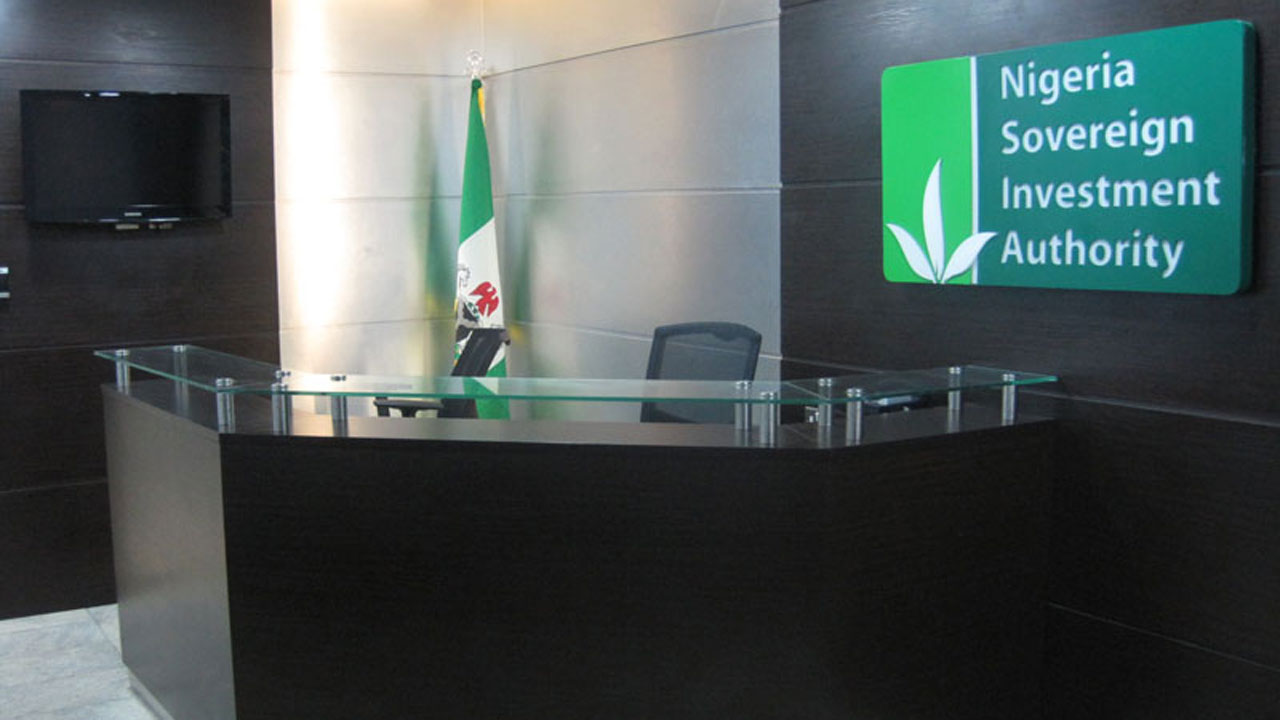
The Nigeria Sovereign Investment Authority (NSIA) has announced that its total assets climbed to $3.4 billion in 2025.
This was disclosed on Thursday at the NSIA Earnings Presentation and Media Parley, attended by Nairametrics.
According to the Authority, the growth was driven by dynamic asset allocation, efficient liquidity deployment, a 35.8% increase in investment securities, and improved returns across multiple asset classes.

What the NSIA is saying
The NSIA stated that its total assets grew by 10.9% year-on-year, closing at N4.91 trillion ($3.42 billion) in 2025.
The growth was underpinned by N360.8 billion in capital contributions during the year and N478.8 billion in core earnings.
The Authority added that the Group’s net asset value in USD increased by 19.8%, from $2.8 billion in 2024 to $3.4 billion in 2025. This was supported by cumulative capital injections of $241.2 million during the year, combined with $320.2 million in net earnings across core revenue streams.
On core operating income (NGN), the Authority said it rose from N498.0 billion ($328.5 million) in the prior year to N525.3 billion ($349.1 million) in 2025, reflecting efforts to actively deploy capital across diverse asset classes.
- “This growth was primarily driven by a 138% increase in the performance of externally managed investment portfolios, supported by improved performance across both developed and emerging markets.
- “Additionally, interest income from financial assets increased by 10%, reflecting higher yields and increased volumes, despite market rate cuts,” the statement read.
Other components of core operating income included infrastructure revenues from agriculture and healthcare businesses.
- “As part of its planned exit from the Presidential Fertilizer Initiative (PFI), and in line with the market-driven Phase II model, NSIA successfully completed the phased transfer of operatorship to the Ministry of Finance Incorporated (MoFI) between 2024 and 2025.
- “This transition impacted agriculture infrastructure revenues but aligns with NSIA’s strategic goal of promoting long-term sustainability and deepening private sector participation across the fertilizer value chain,” the statement added.
The Authority highlighted its catalytic role in mobilising capital, strengthening infrastructure, and supporting innovation across healthcare, energy, technology, agriculture, and capital markets.
It also noted that it is advancing Nigeria’s digital infrastructure through Kasi Cloud, an indigenous hyperscale data centre platform expected to reach approximately 32MW capacity at full completion.
According to the Authority, the platform will support cloud services and digital infrastructure in Nigeria. Phase I of the project is scheduled to commence operations in Q2 2026.
Speaking at the event, the Chief Executive Officer of NSIA, Aminu Umar-Sadiq, also unveiled plans to collaborate with the World Bank in establishing a new integrated funding platform aimed at unlocking critical investments across key sectors of the economy.
- “We are trying to create an integrated platform for financing and executing large-scale infrastructure projects,” he said.
He added that the proposed platform, known as the Nigeria Infrastructure Finance and Guarantee Facility (NIFGF), will address structural bottlenecks that have historically constrained the execution of large-scale projects across the country.
Get up to speed
Nairametrics previously reported that NSIA’s net assets crossed the $3 billion mark by June 2025, supported by additional government contributions and retained earnings. This translated to a compound annual growth rate of 9.9% across multiple economic cycles.
Core total comprehensive income rose by 6% year-on-year to N202.10 billion in the first half of 2025, underlining continued earnings momentum.
The platform also reported that, rather than competing with the private sector, NSIA increasingly acted as a platform builder in 2025—absorbing early risk and crowding in external capital.
What you should know
NSIA was established by an Act of Parliament and is mandated to save for future generations, provide fiscal stabilisation during economic stress, and invest in critical domestic infrastructure.
Despite its expanding role, the Authority continues to operate within constraints typical of long-term public investment institutions in emerging markets—challenges that are real but not insurmountable.
The first is scale. With net assets above $3 billion, NSIA remains relatively small compared to Nigeria’s infrastructure financing gap, which runs into tens of billions of dollars annually.
This reinforces the Authority’s strategy of mobilising partnerships and external capital rather than acting as a standalone financier.