Follow Us on Google Discover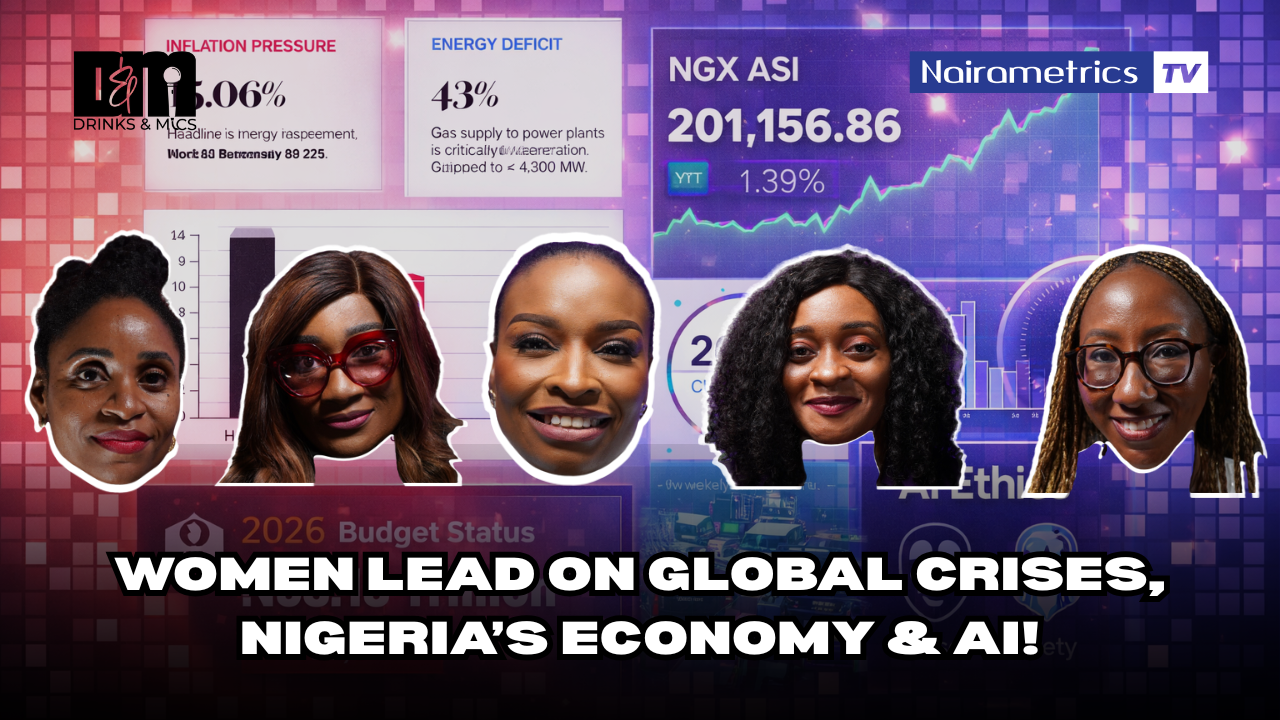
In this special all-women episode of Drinks & Mics, hosted by Rolake Akinkugbe-Filani, we hear from industry leaders Ola Oladele, Omon Anenih, Laura Fisayo-Kola-Olarewaju, and Chinwe Egwim as they discuss global issues shaping Nigeria’s economic reality.
During the conversation, Rolake Akinkugbe-Filani noted that diesel prices increased from N774 to roughly N1,300 in a short time.
According to her, the nearly 100% increase forced many businesses to rethink their operations, noting that companies that rely heavily on generators suddenly had to adjust their budgets, rethink pricing strategies, and restructure logistics just to remain operational.
Speaking from the standpoint of an entrepreneur, Omon Anenih said fuel price volatility is something businesses feel almost immediately. She added that diesel prices often remain high even when global oil prices fall because suppliers tend to keep prices elevated in anticipation of future spikes.
Also Read
Even with these ongoing uncertainties, Anenih maintained that the Dangote Refinery could still play an important role in strengthening local infrastructure and creating new jobs within the country.
Expanding the discussion further, Chinwe Egwim observed that rising global oil prices do not automatically translate into higher revenue for Nigeria.
To reinforce this point, she noted that because the country still imports a large share of refined petroleum products, the cost of those imports often reduces the gains generated from crude oil exports.
Continuing along the same line of thought, Laura Fisayo-Kola-Olarewaju expressed doubts that Nigeria would fully benefit from a global oil boom. She pointed out that the country’s current production level of about 1.3 million barrels per day remains well below the government’s benchmark of 1.8 million barrels.
The conversation also offered insight into how energy prices, artificial intelligence, financial markets, and everyday money habits are shaping Nigeria’s economic outlook.
Listen more on Youtube to get indepth insights on Nigeria’s economy, energy landscape, and the future of work.