Follow Us on Google Discover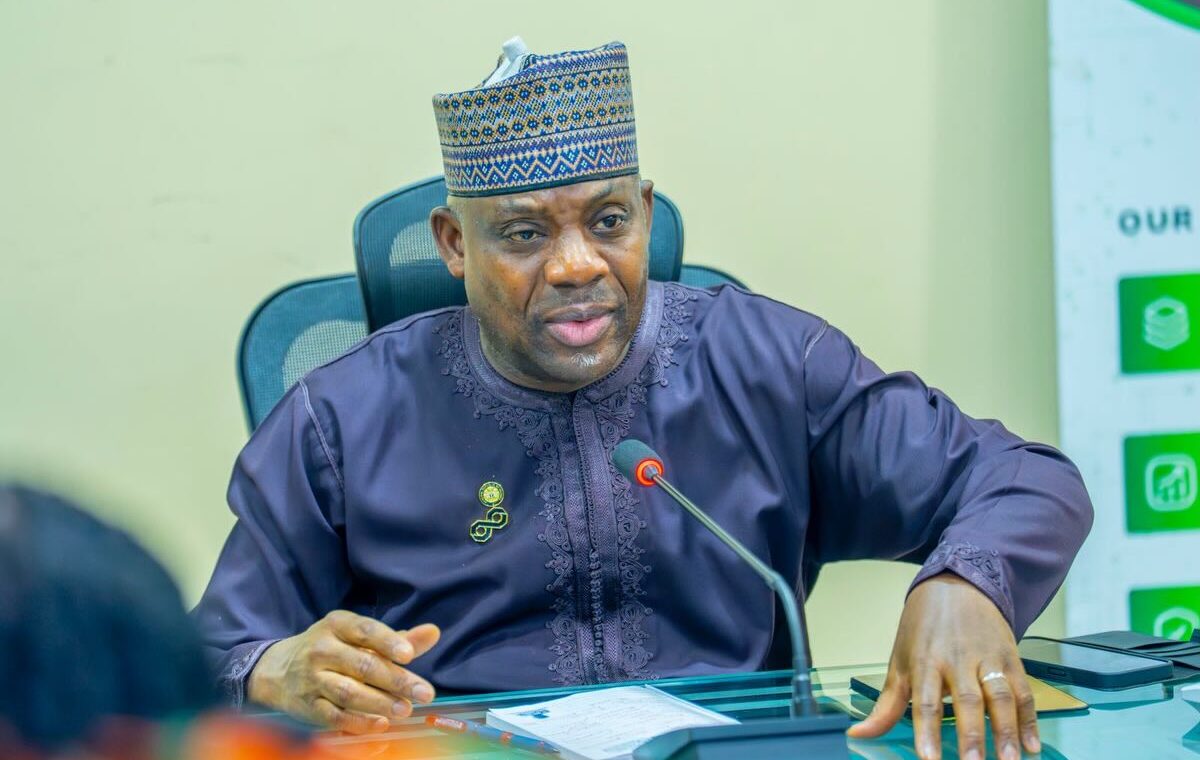
The Federal Executive Council has approved the restoration of the National Commission for Mass Literacy, Adult and Non-Formal Education as a full agency under the Federal Ministry of Education.
The council also endorsed a six-year moratorium on the establishment of new tertiary institutions across the country
This was disclosed by Tunji Alausa after the council meeting presided over by Bola Ahmed Tinubu at the State House in Abuja.
What the minister said
Alausa explained that the literacy commission, which had earlier been downgraded to a department, would regain its independent status due to its strategic importance in tackling Nigeria’s high illiteracy rate.
Also Read
“The upgrade was necessitated by President Tinubu’s expansive agenda to educate more than 50 million young adults over the next two to three years.
Today, we have about 56 million Nigerians who are illiterate. We can’t continue to have a high number of citizens who are illiterate,” he said.
According to the minister, the commission, originally established in 2013, will intensify literacy outreach in rural areas using radio, television and community schools to reach millions of adults who lack basic reading and writing skills.
The minister further disclosed that the council approved a six-year moratorium on the establishment of new universities, polytechnics and colleges of education across the country.
- According to him, the decision is intended to allow the government focus on strengthening existing institutions rather than expanding the number of schools.
- “Today, access is no longer the issue in the country. We have lots of tertiary institutions, both public and private,” Alausa said
More details
Alausa also announced that the council approved amendments to the National Postgraduate Medical College Act, aimed at recognising medical fellowships as equivalent to PhD qualifications.
He said the reform is designed to remove barriers faced by highly specialised doctors seeking academic advancement in Nigerian universities.
- “We need to remove the dichotomy of doctors who spent almost 16 years from medical school and residency and then doing their fellowship,” he said, noting that many are currently required to obtain a PhD before qualifying for a professorship despite their extensive clinical expertise.
What you should know
This is not the first time the Federal Executive Council has moved to restrict the creation of new tertiary institutions in Nigeria.
- Last year, the Council approved a seven-year moratorium on the establishment of new federal universities, polytechnics, and colleges of education as part of efforts to address the rapid proliferation of institutions across the country.
- According to Alausa, Nigeria currently has 72 federal universities, 108 state universities, and 159 private universities, alongside numerous polytechnics and colleges of education.
Despite the large number of institutions, demand has not kept pace. Data from the ministry showed that while about 2.1 million students applied for tertiary education between the 2024 and 2026 academic sessions, 199 universities recorded fewer than 99 applicants, while 34 universities had no applicants at all.