Follow Us on Google Discover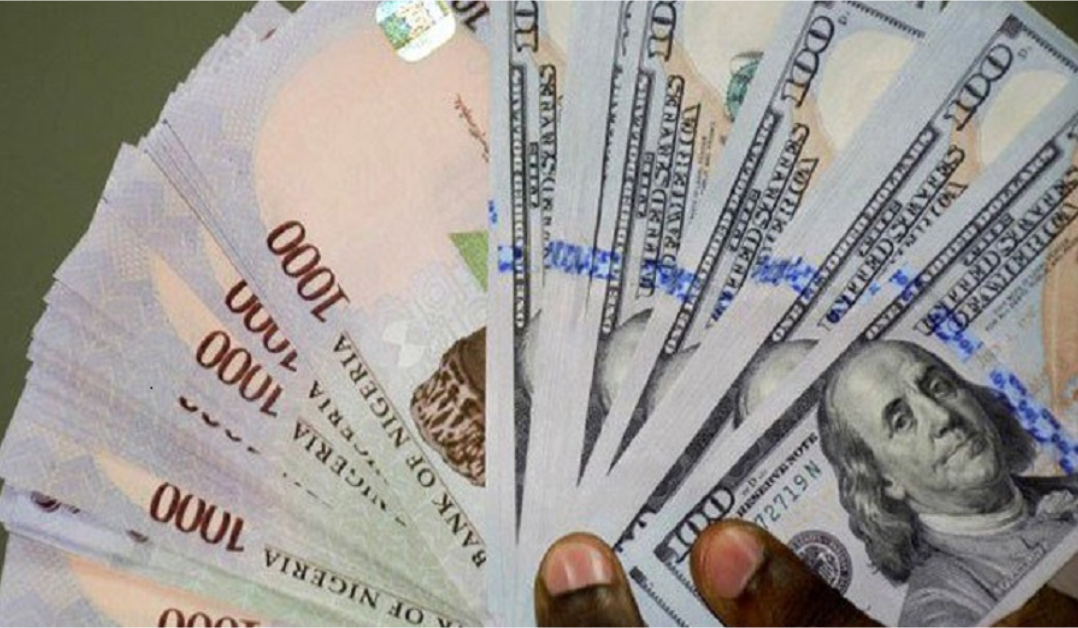
The naira depreciated to N1,340/$ at the official market on Wednesday, down from N1,337/$ recorded on Tuesday.
This is according to data published on the website of the Central Bank of Nigeria.
The data also showed that the local currency traded within a band of N1,328/$ to N1,340/$ during intraday activity, with a simple average rate of N1,337.17/$.
The weakening at the official window was mirrored in the parallel market, where the naira fell to N1,400/$ from N1,382.5/$ the previous day, widening the spread between both segments of the foreign exchange market.
Also Read
What the data is saying
Official figures show that the naira recorded a marginal depreciation at the Nigerian Foreign Exchange Market (NFEM) on Wednesday. Trading data indicates moderate volatility within the session despite the narrow daily movement.
- The naira closed at N1,340/$ on Wednesday compared to N1,337/$ on Tuesday.
- Intraday trading saw the currency fluctuate between N1,328/$ and N1,340/$.
- The simple mean rate for Wednesday stood at N1,337.17/$.
- In the parallel market, the currency weakened to N1,400/$ from N1,382.5/$ recorded a day earlier.
The N60 gap between the official and black market rates highlights persistent segmentation in the foreign exchange market despite ongoing reforms.
More Insights
The pressure on the naira coincided with a rebound in the U.S. dollar in global markets following the release of minutes from the U.S. Federal Reserve’s latest policy meeting.
The minutes suggested policymakers are not in a hurry to cut interest rates and that some remain open to further tightening if inflation remains elevated.
- U.S. Treasury yields moved higher following the release of the minutes.
- The dollar strengthened against major currencies, consolidating gains against the euro and the Japanese yen in early Asian trading.
- The euro remained below $1.18 amid the renewed dollar demand.
- Policymakers indicated that while productivity gains could help dampen inflation, progress may be slow and uneven.
The minutes also revealed divisions among Federal Reserve officials regarding the future path of interest rates, with several members suggesting that rate hikes remain possible if inflation proves sticky.
The next chairman of the Federal Reserve, expected to assume office in May, may face challenges in pushing through rate cuts amid such divisions.
What you should know
The Central Bank of Nigeria has continued to implement reforms aimed at improving liquidity and transparency in the foreign exchange market. Recent months have seen relative stability compared to the sharp volatility experienced in earlier reform phases.
- The apex bank has focused on unifying exchange rate windows and clearing FX backlogs.
- Improved foreign exchange inflows in recent months have supported reserve accretion.
- Governor of the CBN, Olayemi Cardoso, said Nigeria is playing a pivotal role in advancing Africa’s single currency agenda.