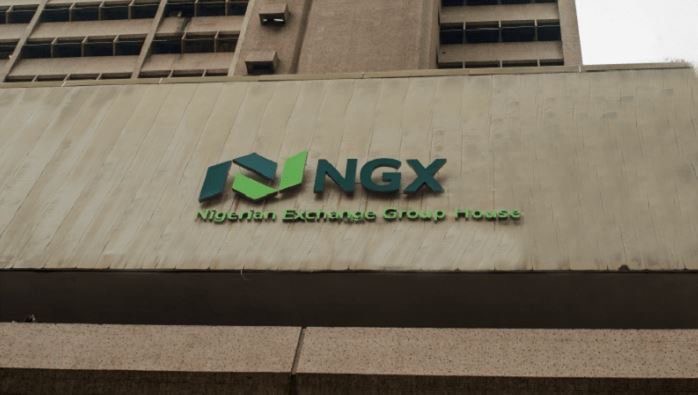
The Nigerian Exchange’s Exchange-Traded Funds (ETFs) extraordinary performance in January 2026, driven by order-flow driven rally and growing investor appetite for diversified investment vehicles and not fundamentals analysis.
Several ETFs outperformed the NGX-All-Share Index (ASI), which returned 6.27% in January 2026.
Some smaller ETFs posted impressive double-digit returns.


The month-to-date (MTD) performance in January was between 35% to 322%, which appears to be more outrageous when compared to the year-to-date (YTD) return of 2025, which was between 5% to 170%.
Total ETF trading volume in January reached 6.33 million units, while the total value rose to N1.51 billion, indicating a significant increase in market activity. Twelve ETFs are listed on NGX; the remaining two, Vetiva Grifin 30 ETF and NewGold Exchange Traded Fund (ETF), posted 36.64% and 35.25%, respectively.
If the NGX 30 Index did not rise 237% in January, then Stanbic IBTC ETF 30’s return reflects price dislocation rather than index replication. ETFs typically track a specific stock index, sector, or asset class such as banking stocks, consumer goods companies, industrial firms, or government bonds. Their strong showing in January suggests that investors preferred targeted exposure to specific sectors rather than buying the entire market.
Data as of January 30, 2026, computed by Nairametrics Research from the Nigerian Exchange Group (NGX), it also shows increased trading activity in ETFs. This reflects growing awareness and participation from both retail and institutional investors who want simple, low-cost exposure to structured portfolios.
Below are the top 10 best-performing ETFs for January 2026, ranked by year-to-date (YTD) return.
- YTD return: 322.20%
- Total volume: 25,464
- Total value: N101,743,685
- Market capitalization: N48.37 billion
The Siaml Pension ETF 40 emerged as the best-performing ETF in January 2026, with an extraordinary 322.20% return as price soar to N7,500 from N1,776.40. Its 2025 gain was 122.05%.
This ETF focuses on pension-based investments, benefiting from strong demand for stable, long-term returns. Managed by Siaml Asset Management, it has become a top choice for pension and long-term growth-focused investors.
What investors should understand before buying
Current pricing in some NGX-listed ETF 30 products shows a significant gap between market price and Net Asset Value (NAV).
For context, an ETF tracking the NGX 30 Index is designed to mirror the performance of the 30 largest and most liquid stocks on the Exchange. If the underlying index has delivered single-digit or moderate gains, a triple-digit increase in the ETF price suggests that demand — not fundamentals — is driving the move.
When an ETF trades materially above its NAV, investors are effectively paying more than the value of the assets the fund holds. This creates premium risks.
Historically, such dislocations tend to correct through one of three paths:
- The individual stocks inside the ETF rise sharply, so their value increases and eventually matches the higher ETF price.
- The ETF price stops rising and stays relatively flat for a while, while the value of the underlying stocks slowly increases until they catch up.
- The ETF price falls back down to reflect the true value of the stocks it holds.
The third scenario is often the fastest adjustment mechanism in less efficient markets.
For new investors, this means entry risk is elevated. Returns from this point may be constrained until price and NAV realign. Any cooling in demand or increase in supply could trigger a sharp adjustment.
Prudent positioning at this stage would involve:
- Checking ETF price relative to published NAV,
- Avoiding momentum-driven entry,
- Waiting for valuation alignment before deploying fresh capital.
In periods of pricing dislocation, capital preservation becomes more important than chasing short-term upside.