
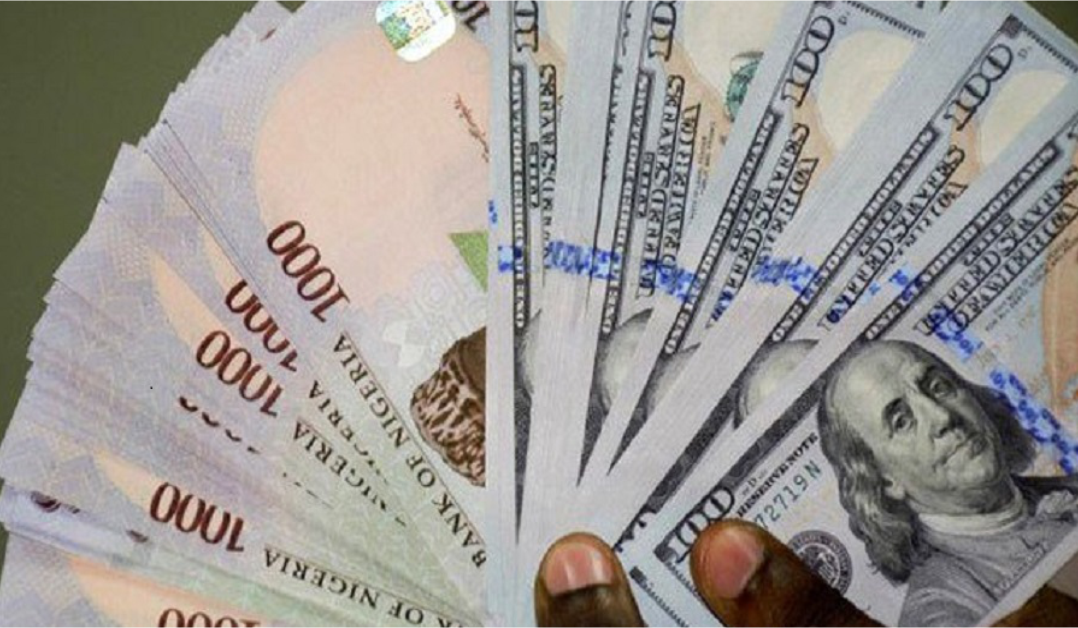
The disparity between official and parallel market exchange rates has widened to over 6%, sparking concerns of an arbitrage opportunity for speculators.
This is based on official data published on the Central Bank of Nigeria’s (CBN) website and a survey of parallel market rates obtained by Nairametrics.
While the official market shows signs of stabilization, the exchange-rate premium remains elevated.


As of mid-week, the gap stood at approximately 6.4%, or N94, after briefly exceeding N100 toward the end of January.
The persistence of this spread points to continued liquidity frictions, underscoring the challenge of achieving full convergence between market segments.
What the data is saying
Mid-week trading data show the naira strengthening at the official market, while posting a mild depreciation at the parallel market.
The combined movements point to short-term stability in exchange-rate dynamics, but only gradual convergence between the two market segments.
- At the official foreign exchange market, the naira closed at N1,359/$ on Wednesday, improving from N1,367/$ on Tuesday and N1,384.5/$ on Monday.
- In contrast, the currency traded at N1,453.13/$ in the parallel market on Wednesday, compared with N1,445.00/$ on Tuesday, per Nairametrics survey.
- This puts the official–parallel market spread at N94, slightly narrower than N96 a week earlier, but still wider than levels recorded late last year.
- Notably, the disparity had crossed the N100 mark in late January, reviving concerns about potential speculative pressures.
Nigeria’s external reserves stood at $46.59 billion as of February 2, 2026, providing near-term support for exchange-rate stability and the Central Bank’s intervention capacity.
Get up to speed
The exchange-rate disparity between the official and parallel markets is a key indicator of FX stability, as wide gaps can create arbitrage opportunities and fuel speculative activity.
- According to the CBN, recent FX reforms helped narrow the premium between the Nigerian Foreign Exchange Market (NFEM) and Bureau-de-Change (BDC) rates to 2.11% as of December 9, 2025, from 62.23% in May 2023, prior to the reforms.
- Data collated by Nairametrics shows that the disparity narrowed to below 5% for much of 2025, before creeping above that threshold earlier this year.
- On the other hand, the parallel market has also shown signs of strengthening, with the naira appreciating from about N1,490/$ to N1,453/$ within a week.
- The CBN has repeatedly stated that FX reforms are expected to enhance market efficiency and transparency, and sustain exchange-rate stability.
Recent price movements suggest progress, but not yet full convergence.
What you should know
In its macroeconomic outlook for 2026, the Central Bank of Nigeria projected the exchange rate to remain broadly stable, supported by rising diaspora remittances, higher oil receipts, and stronger investor confidence.
- The CBN also noted that an unanticipated deterioration in global financial market conditions, resulting in sudden capital reversal, could re-ignite exchange rate volatility.
- The Bank reaffirmed its commitment to balancing price stability with sustainable economic growth.
- External reserves are projected to rise to $51.04 billion in 2026, from $45.01 billion in 2025.
- Dangote Refinery’s planned capacity expansion—from 650,000 to 700,000 bpd in 2025, and eventually 1.4 million bpd—could support FX stability.
These factors are expected to reinforce Nigeria’s external sector resilience through 2026.