Follow Us on Google Discover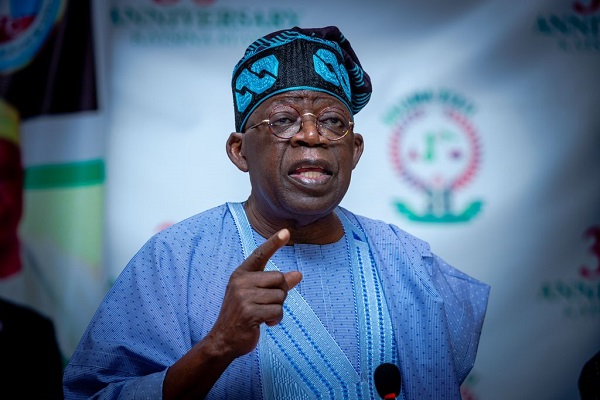
President Bola Ahmed Tinubu has stated that there is “no turning back” on Nigeria’s economic reform agenda, even as the World Bank commended the country’s leadership for sustaining credible and consistent reforms despite short-term challenges.
The assurance was given during a meeting on Tuesday between President Tinubu, Vice President Kashim Shettima and a World Bank delegation led by the Managing Director of Operations, Anna Bjerde, according to a statement from presidential spokesperson, Bayo Onanuga.
The engagement, held at the State House in Abuja, focused on Nigeria’s reform trajectory, investor confidence, and areas of deeper collaboration under the World Bank’s forthcoming Country Partnership Framework.
What they are saying
World Bank Managing Director of Operations, Anna Bjerde, said Nigeria is increasingly cited in global policy circles as a reference point for credible reform leadership, particularly in the context of difficult but necessary economic adjustments.
Also Read
She said Nigeria is now often cited in global policy circles as an example of steady and credible reform leadership, especially when tough decisions have to be made.
- This consistency and the clear evidence of positive results, she said, have built strong confidence among investors, policymakers, and the private sector.
- Tinubu reaffirmed the government’s commitment to the ongoing economic reforms, acknowledging that though the process has been challenging, “there will be no turning back.”
- She added that evidence of progress has strengthened trust in Nigeria’s economic direction and improved perceptions of policy stability, which she described as critical to sustaining long-term growth.
More insights
President Tinubu acknowledged that the reform process has come with significant short-term pain, but maintained that the decisions taken were necessary to reposition the economy on a sustainable footing.
He said measures such as fuel subsidy removal and exchange rate unification initially contributed to inflationary pressures, but noted that inflation has since eased while the naira has stabilised.
- The President said recent macroeconomic improvements are already boosting investor confidence and improving the ease of doing business.
- He stressed that the reform agenda is anchored on transparency, accountability and policy consistency, which he described as essential for restoring macroeconomic stability.
- Tinubu identified agricultural transformation as a core pillar of his economic strategy, citing Nigeria’s vast arable land and youthful population as major growth opportunities.
- He disclosed that government investments now include zonal mechanisation centres, improved seed development programmes and increased fertiliser availability, supported by the growing petrochemical industry.
According to the President, these interventions are designed to boost productivity, reduce drudgery and transition farmers from subsistence activities into commercially viable cooperatives capable of driving job creation and food security.
Bjerde said the upcoming framework is firmly anchored in Nigeria’s own development priorities, including the ambition to build a $1 trillion economy and achieve 7 per cent annual growth.
- She underscored the need to expand access to finance for small, medium and large enterprises, with special emphasis on mid-sized firms as key engines of employment and economic expansion.
- The World Bank also commended Nigeria’s focus on early childhood development, describing it as essential to long-term productivity and human capital development amid rising global concerns over childhood stunting.
The World Bank Group, through the IDA, IBRD and IFC, reaffirmed its commitment to supporting Nigeria through a comprehensive programme combining public and private sector interventions.
What you should know
In his inaugural address on May 29, 2023, President Bola Ahmed Tinubu unveiled a bold and transformative policy designed to alleviate the mounting financial pressures on Nigeria’s government.
“Fuel subsidy is gone,” Tinubu announced, sending a clear message of his administration’s commitment to economic reform during his inaugural speech.
While the subsidy kept fuel prices artificially low for consumers, it placed an enormous strain on public finances. In 2022 alone, the subsidy consumed a staggering N4.3 trillion.