
Senegal has revoked Atlas Oranto Petroleum’s Cayar Offshore Shallow licence, citing failure to provide required bank guarantees and over 15 years of minimal exploration activity since the block’s award.
The decision followed a regulatory review conducted by Senegal’s Ministry of Energy and Petroleum, which found that Atlas Oranto breached key financial and contractual obligations attached to the licence.
The revocation underscores the government’s push to enforce stricter compliance in the oil and gas sector and ensure that licensed acreage translates into tangible investment rather than prolonged inactivity.


What they are saying
Officials at Senegal’s Ministry of Energy and Petroleum said the licence withdrawal was unavoidable after repeated breaches by the operator and years of regulatory forbearance.
The objective, officials said, is to ensure that Senegal’s natural resources are developed responsibly, transparently and in a manner that delivers value to the state.
The ministry stressed that exploration rights must be matched with clear financial capacity and execution, adding that prolonged inactivity undermines national development goals.
More insights
Atlas Oranto Petroleum was awarded the Cayar Offshore Shallow block in 2008 as part of Senegal’s earlier offshore licensing rounds, a period when regulatory enforcement was relatively loose, and operators were often granted wide latitude on work programmes.
- The block spans about 3,600 square kilometres and is located north of the Dakar peninsula.
- It has long been regarded as oil-prone, with seismic surveys over the years identifying several geological leads.
- Despite this potential, no exploration wells were drilled throughout the licence period.
- The company received multiple extensions but carried out only minimal exploration activity, according to industry sources familiar with the asset.
Over time, the lack of progress increasingly conflicted with Senegal’s evolving petroleum framework, which now prioritises timely drilling, appraisal, and value creation.
What this means
By revoking the permit, Senegal has reclaimed full control of the Cayar Offshore Shallow acreage, sending a clear signal to operators holding underperforming licences.
- The move aligns with President Bassirou Diomaye Faye’s broader agenda to strengthen regulatory oversight and enforce contractual discipline in the extractive sector.
- It places Senegal among a growing number of African oil and gas producers reassessing legacy exploration contracts signed under less stringent regimes.
- Across the continent, governments are facing rising domestic pressure to ensure petroleum licences lead to drilling, production, and job creation rather than being treated as speculative assets.
For investors, the decision highlights a tougher operating environment where financial guarantees and work commitments are likely to be enforced more rigorously.
What you should know
The licence was formally withdrawn in September 2025 under the supervision of Minister of Energy and Petroleum Birame Souleye Diop, following findings that Atlas Oranto failed to submit required bank guarantees and advance the block toward drilling and appraisal.
- Industry accounts cited in early 2026 confirmed that the acreage saw little substantive seismic acquisition or drilling-related preparation over more than a decade.
- The withdrawal has renewed scrutiny of Atlas Oranto Petroleum’s wider regional footprint across Africa.
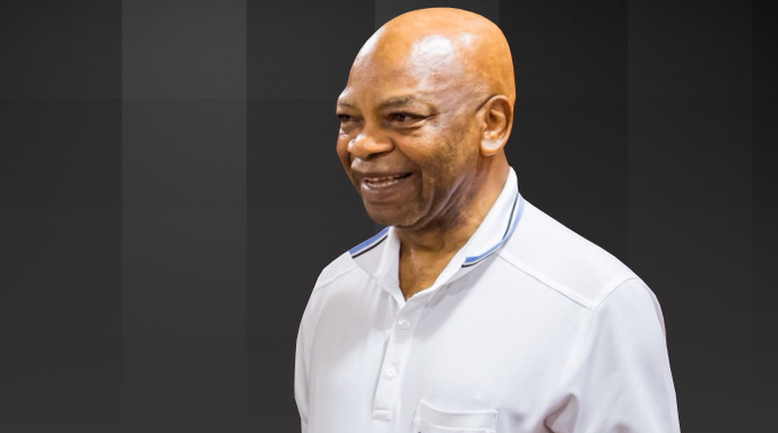
- The privately owned company, founded by Nigerian billionaire Arthur Eze, has been an early entrant into several frontier basins but has faced criticism in some jurisdictions over slow execution of work programmes.
Senegal’s decision also comes amid efforts to consolidate recent offshore successes, including the Sangomar oil field and the Greater Tortue Ahmeyim LNG project, which have raised expectations around credible operatorship.
In 2018, Oranto Petroleum acquired a 90 percent stake in two exploration blocks located onshore Zambia.