

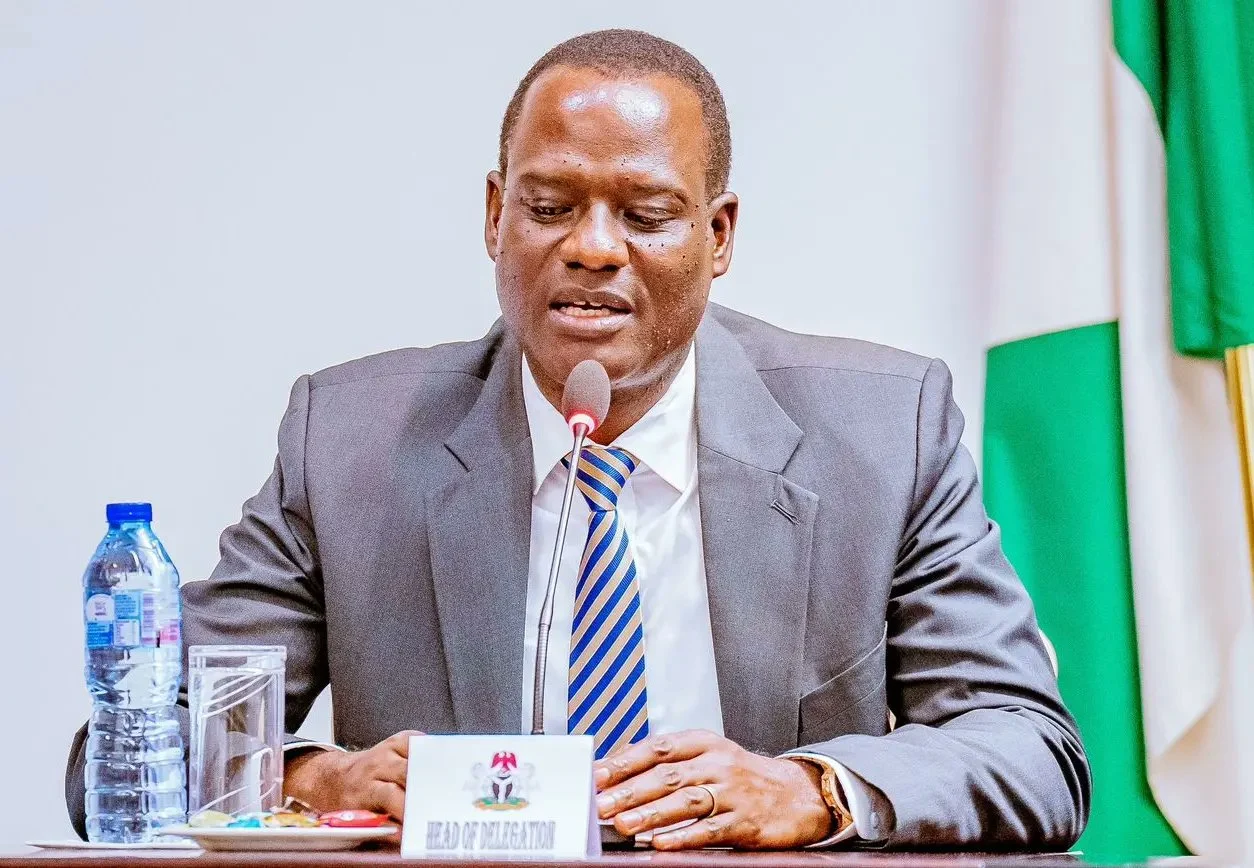
Chairman of the Presidential Fiscal Policy and Tax Reforms Committee, Taiwo Oyedele, has said the National Assembly has the constitutional power to suspend the planned January 2026 implementation of Nigeria’s tax reform laws.
Oyedele stated this on Monday during Channels Television interview while reacting to allegations that parts of the tax laws passed by the National Assembly were altered in the gazetted copies.
According to Oyedele, even before the allegation of alteration emerged, there had been growing calls from some quarters for the suspension of the tax reforms.


He noted that opposition to the reforms has been driven largely by misinformation and fear rather than the substance of the laws.
What Oyedele is saying
The tax reform committee Chairman stressed that any decision to postpone implementation is beyond the remit of the tax reform committee and lies squarely with lawmakers.
“If we even want to postpone the implementation of the law, it has to be the lawmakers. That’s far beyond my pay grade.
“That decision has to be made, and I believe that decision for them will be a function of what their findings from this investigation reveal,” he said.
Oyedele, however, warned that suspending or delaying the reforms would mean maintaining a tax system that disproportionately burdens low-income earners and small businesses.
- He said the current framework leaves about 98%of workers overtaxed, while small businesses continue to face multiple taxes without benefiting from exemptions.
- According to him, minimum taxes would also continue to apply to low-income earners and non-profitable businesses if the reforms are halted.
- He further noted that the existing value-added tax structure continues to push up the cost of basic consumption such as food, healthcare, and education, while wasteful and distortionary tax incentives remain in place.
“So we need to be clear about what we are asking for,” Oyedele said, adding that calls for suspension must be weighed against the economic and social costs of maintaining the status quo.
Implement law as passed, isolate any alterations
Oyedele said that even if investigations establish that substantial alterations were made to the laws after passage, those provisions should simply be identified and treated as invalid.
His position, he explained, would be to proceed with implementing the law as passed by the National Assembly, while separately addressing how the disputed provisions were introduced and what corrective actions should follow.
He accused some interests of mobilising unsuspecting Nigerians to oppose reforms that are designed to benefit the wider population by spreading fear and misinformation.
Manual processes may have enabled alterations
Speaking on what may have led to the alleged discrepancies, Oyedele pointed to systemic weaknesses and heavy reliance on manual processes across the legislative and executive workflow.
- He explained that amendments to bills pass through multiple stages, from note-taking during legislative debates to harmonisation between the House of Representatives and the Senate, legal review at the Ministry of Justice, presidential assent, and eventual gazetting, all of which involve manual handling.
- According to him, the absence of strong quality assurance mechanisms at these stages creates room for errors or unintended changes, not just for the tax laws but for legislation more broadly.
- Oyedele said the controversy should be treated as an opportunity to strengthen the lawmaking and gazetting process going forward, ensuring that laws passed by the National Assembly are not tampered with and accurately reflect legislative intent.
Backstory
Last week, a member of the House of Representatives, Hon. Abdulsammad Dasuki (PDP, Sokoto), had raised concerns over alleged discrepancies between the newly gazetted tax reform laws and the versions passed by the National Assembly.
According to him, his review of the gazetted copies of the tax laws revealed material differences from what was debated, harmonised, and approved by the House of Representatives and the Senate.
Dasuki said he compared the vote and proceedings of the House, the Senate’s records, and the harmonised versions with the gazetted copies currently in circulation and noticed alterations.
The House promised to investigate the claims, and this has heightened the calls for the suspension of the implementation of the laws billed for January 2026.













Good for lawmakers to review the tax law again and check if it is beneficial to the masses.