

I don’t even know which feeling should guide this write-up.
I don’t even know if I should be excited or cover myself in black tar as I attempt to write this farewell to two of the most cerebral men who have walked through Customs Street, Lagos.
Customs Street houses the core of the mega, trillion-naira–valued Nigerian capital market.

That is where you will find the giant NGX Group and the equally mighty CSCS, the custodian that is deemed to be the biggest in Africa.
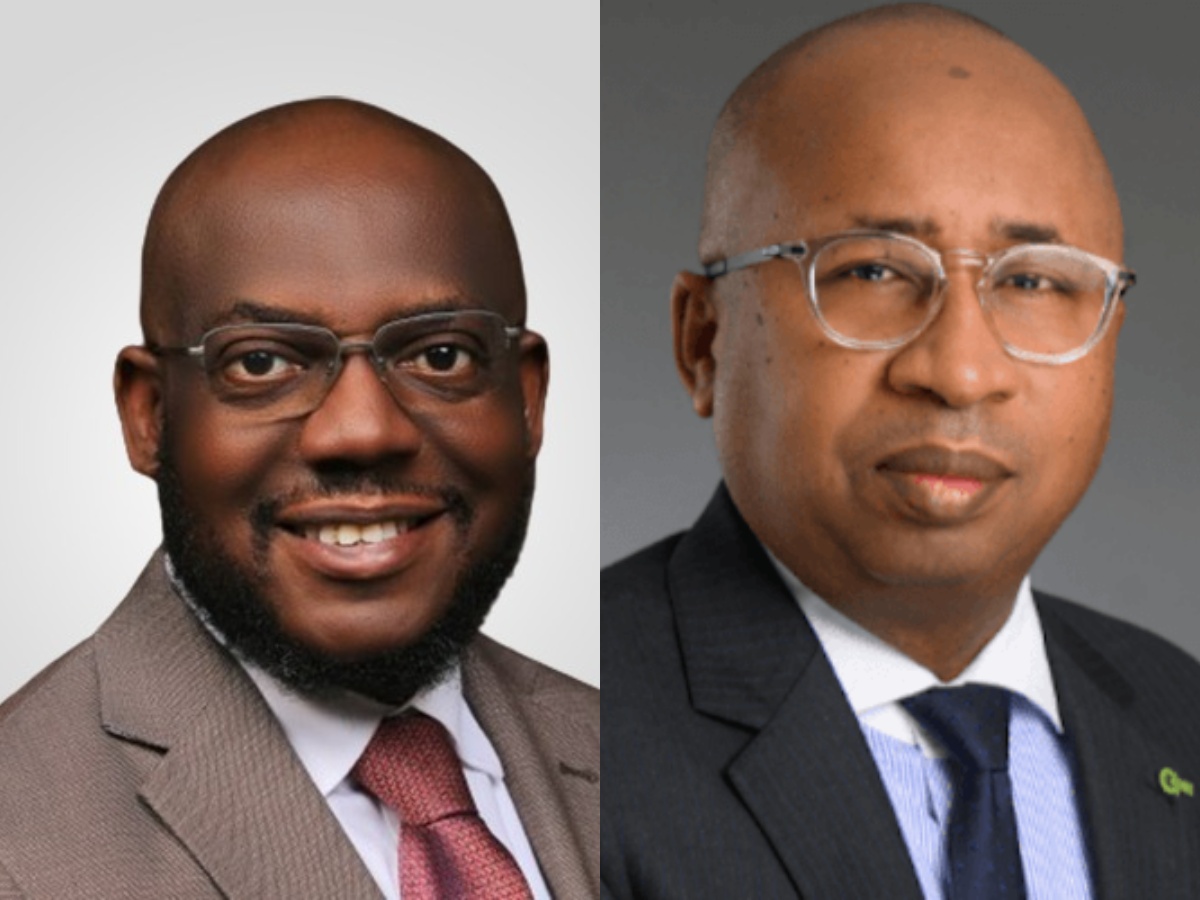
Tony Ibeziakor, after 11 years, is leaving the system.
I have heard a lot of undercurrents and innuendos leading to, and trying to explain, this shocking move, but I will not bother myself with those in this write-up.
The leadership of NGX, especially its GMD and Chairman, Temi Popoola and Umaru Kwairanga, can do no wrong in my eyes, which is why this write-up has taken me a while to complete.
Tony has given the system 11 years, during which he earned a reputation as the “revenue” man, being responsible for a massive slice of its revenues year in and year out.
Tony had risen to the level of a DGM and was poised for leadership, all things being equal.
I have known Tony for over 20 years, and I must say he carries with him the mind of a genius—sharp and engaging, with fortuitous clarity.
I replaced him at BGL, where I found his footprint too huge for me to fill, and when I left, he replaced me before beating a brilliant footpath towards the Exchange.
Jalo, on the other hand, is a massively influential figure in the Nigerian capital market.
It is safe to say that there has been no impactful policy at all levels of the market without his input.
Jalo built the CSCS from a backwater custodial business to one of the most profitable institutions of its nature on the continent.
He led the digital revolution that has seen it plug in globally, improve efficiency, and drive value for all its stakeholders.
Today, the CSCS is the beautiful bride, as its revenues dwarf those of other such institutions in the space.
Jalo’s pedigree is one of the richest in the market, having worked in and led some of the finest institutions.
From Afrinvest to Kakawa Asset, where I met him, through UBA Capital, down to the NGX before settling at the CSCS, where he immortalised himself as a visionary CEO.
Speaking with Jalo the other night, he sounded very enthusiastic about life post-service, remained very grateful for the opportunity to serve and meet great minds, but prayed for his legacy to be protected.
His exit was most likely as a result of the tenor-limit policy of the SEC, which I strongly support.
In things like this, you expect collateral damage, as it has now knocked out one of the strongest pillars of the renaissance in our market.
Our fight for the right-sizing of the market, in a bid to better position it, was driven by two central pillars—generational change and tenor limits—which were to imbue robust corporate governance, among others.
The capital market succeeded on both counts, as it produced the Umaru Kwairanga–led leadership, with strong young guns like Temi Popoola, Nonso Okpala, and Mohammed Garuba at the NGX.
In contrast, on the tenor limit, it eliminated such dinosaurs as Falowo at the NASD and Koko at FMDQ, but sadly, it also took out Jalo.
In pushing for these policies, Jalo, in my mind, was very central to a much more purpose-driven market environment, and I still believe that this is very possible even in his retirement.
The system must build inroads towards not only Jalo but other right-thinking stalwarts who have now rightly earned their pips as well-respected elder statesmen, if it is to continue on this trajectory.
The SEC, as led by my brother Dr Agama, if it doesn’t already have that structure, must seek to build an advisory council in the mould of the Council of State, where the capital market, at the highest levels, can continue to enjoy the brilliance of people like Jalo.
As for Tony, age is still on his side; he will surely resurface somewhere else, where he will continue the role that he has been destined to play in the markets.
These two Irokos have done well, and we must give them their accolades.
Well done, guys.
Duke of Shomolu






