Follow Us on Google Discover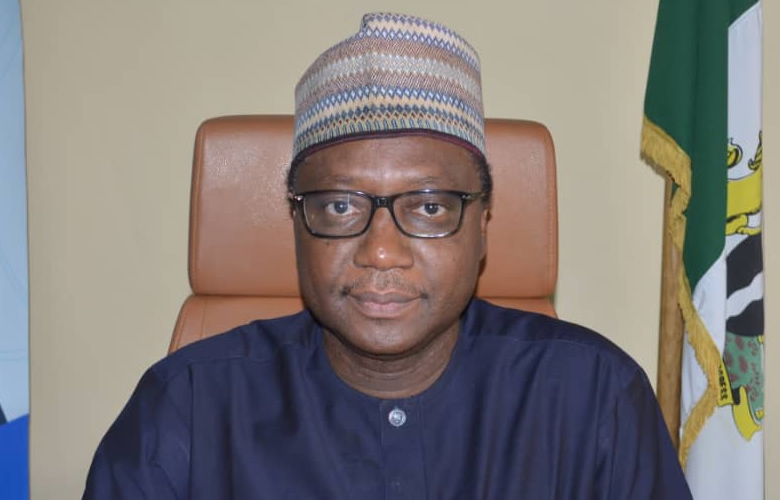
The Revenue Mobilisation Allocation and Fiscal Commission (RMAFC) has disclosed that Nigeria’s Federation Account recorded total accruals of N23.06 trillion between January and October 2025, marking a significant improvement in the country’s revenue performance.
The figure surpassed the N21.43 trillion recorded in the whole of 2024.
The Chairman of the commission, Dr. Mohammed Shehu, made the disclosure on Monday in Abuja at a two-day National Stakeholders’ Discourse on “Enhancing Fiscal Efficiency and Revenue Growth Under the Nigeria Tax Act, 2025.”
Revenue outperforms previous years
Shehu said the 2025 revenue performance surpassed N11.93 trillion recorded in 2023 and N21.43 trillion in 2024, reflecting the positive impact of ongoing fiscal and tax reforms.
Also Read
“Accruals for January to October 2025 alone reached N23.06 trillion, surpassing the full-year figures of previous years,” he said.
He noted that the 2023 figure of N11.93 trillion represented the early gains of fiscal reforms under the current administration, while the sharp rise to N21.43 trillion in 2024 was driven by improved coordination among revenue-generating agencies, stronger audits and enhanced compliance mechanisms.
Drivers of revenue growth
According to the RMAFC chairman, the sustained revenue growth was largely attributable to digital revenue tracking systems, fiscal discipline and reforms that expanded the revenue base across both oil and non-oil sectors.
He added that the improved inflows had strengthened statutory allocations to federal, state and local governments, while also reducing volatility and over-dependence on oil revenues.
Shehu reaffirmed the commission’s commitment to monitoring accruals and safeguarding federation revenues through enhanced transparency and accountability measures.
Nigeria Tax Act is to take effect January 2026
The RMAFC chairman also said the Nigeria Tax Act, 2025, would take effect in January 2026, following extensive consultations by the Presidential Committee on Fiscal Policy and Tax Reform.
He disclosed that the committee’s work culminated in four tax reform laws, which were assented to in June, aimed at streamlining tax administration, reducing compliance costs and strengthening revenue governance.
According to him, the new Act harmonises fragmented tax laws, removes duplication, improves the ease of doing business and promotes a more predictable, transparent and sustainable fiscal environment.
Shehu said the stakeholders’ discourse was convened to deepen understanding of the Act’s implementation framework and urged participants to engage experts while addressing public misconceptions surrounding the reforms.
Alake: RMAFC central to national stability
Speaking at the event, the Minister of Solid Minerals Development, Dr. Dele Alake, said RMAFC’s constitutional and statutory mandate remained central to Nigeria’s peace and governance architecture.
Alake, who was represented by Mr. Peluola Olusegun, said the effective implementation of the Tax Act would require strong collaboration among governments, legislative agencies, institutions and the private sector to properly assess fiscal implications and enhance efficiency.
He also highlighted the solid minerals sector as a key opportunity for renewable energy development, assuring that the ministry remained committed to governance reforms, investment and partnerships to strengthen Nigeria’s fiscal structure and economic returns.
Tax reforms mark major milestone – RMAFC Committee
Also speaking, Mr. Desmond Akawor, Chairman of the Fiscal Efficiency and Budget Committee of RMAFC, described the Tax Act as a major reform milestone.
Akawor said the reforms were designed to modernise tax administration, strengthen compliance frameworks, close revenue leakages and expand the revenue base across all tiers of government.
“For these reforms to achieve their intended outcomes, active participation, cooperation, and a shared understanding among all relevant stakeholders remain indispensable,” he said.
Some basic taxes to be eliminated – Oyedele
Chairman of the Tax Reforms Committee, Taiwo Oyedele, said the new tax reforms were aimed at creating a fairer, simpler and more efficient tax system that boosts economic growth and government revenue.
Oyedele disclosed that from January 2026, Nigerians would no longer pay certain basic taxes, including those on food, shelter and education, as part of efforts to ease the burden on citizens and improve equity in the tax system.
What you should know
- In September, RMAFC said it had recovered the sum of N319 billion in unremitted money from Ministries, Departments, and Agencies (MDAs) in the last two years.
- The Chairman of the commission, Mr Mohammed Shehu, who disclosed this in a media interview, said the Commission had to engage the services of forensic experts to discover the money, as some of the MDAs are complicated.
- He added that sometimes, the Commission also works with law enforcement agencies like the Economic and Financial Crimes Commission (EFCC) to investigate the MDAs.