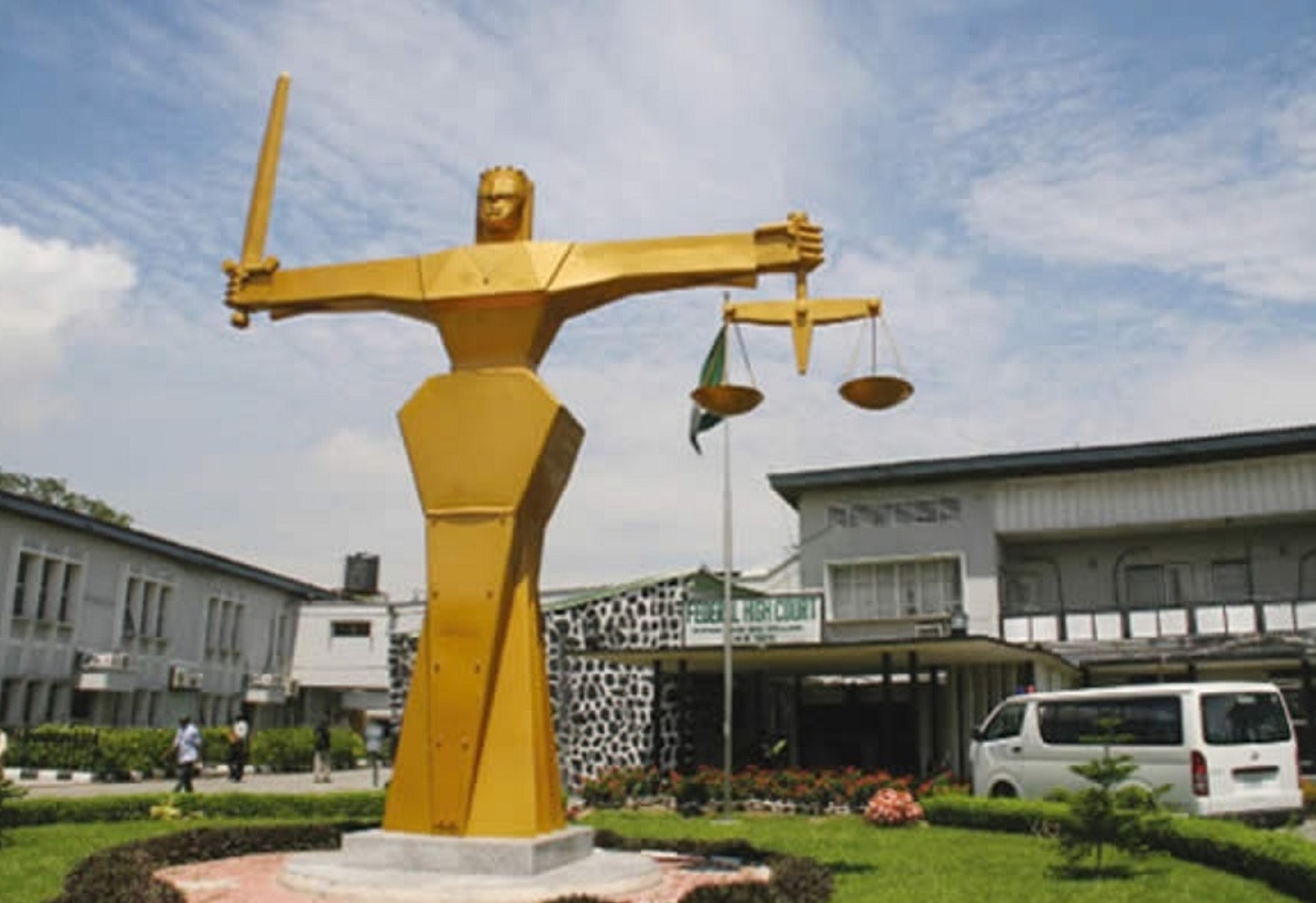
The Nigerian Upstream Petroleum Regulatory Commission (NUPRC) has left the age-long dispute stemming from the Gas Processing Agreement (GPA) dated March 15, 2002, between Shell Petroleum Development Company of Nigeria Limited (SPDC) and Global Gas and Refining Limited to the “discretion” of the Federal High Court, Abuja.
The Court, presided over by Justice Mohammed Umar, on Monday fixed February 23, 2026, for ruling on some pending applications, including motions for joinder, preliminary objections, and submissions relating to discretion.
Nairametrics previously reported several adjournments in the case, in which Global Gas alleged that Shell failed to supply wet gas in accordance with the terms of their GPA dated March 15, 2002.

Global Gas had sought an order restraining the NUPRC from “approving, authorizing, consenting to, or otherwise granting permission for the $1.3 billion sale/divestment of the assets of the 1st Respondent (SPDC) to Renaissance Consortium.”
What transpired in court
- At Monday’s resumed proceedings, P. Ikweato SAN informed the court that while the case is pending, the Respondent claimed to have allegedly granted approval and directed a company to take over the 1st Respondent (SPDC), whom he described as “a stranger to the Plaintiff.”
- He urged the court to grant an Interim Measure of Protection against NUPRC and Shell.
- He also adopted another application seeking to join the Minister of Petroleum as the 3rd Respondent.
SPDC lawyer, Adeola Kembi, adopted his preliminary objection, urging the court to strike out the suit for lack of jurisdiction or, alternatively, stay proceedings pending the determination of the appeal at the Supreme Court.
- On his part, NUPRC’s lawyer, C. Odum, Esq., said the Commission had resolved to leave the decision on the legal submissions to the court’s discretion.
“We are not a party to the arbitration nor a party to the appeal. We leave the decision to the discretion of the Court,” he submitted.
- After hearing arguments, the judge adjourned the case to February 23, 2026, for ruling.
Global Gas claims and Shell counterclaims
Previously, the Executive Chairman of Global Gas, Mr. Ken Yellowe, told the court that his company initiated arbitral proceedings against Shell, alleging that it failed to supply wet gas in line with the Gas Processing Agreement.
Through his counsel, Patrick Ikweato (SAN), Yellowe argued that unless the court grants an order temporarily safeguarding the “assets” in dispute from being sold, the company’s 2002 business deal with Shell could be jeopardized.
The applicant further submitted that the dispute is already before the Supreme Court of Nigeria. However, since NUPRC is not a party at the apex court, the trial court should restrain the statutory agency of the Federal Government.
“The instant application for an Interim Measure of Protection merely seeks to preserve the Applicant’s rights against the intended divestment/sale of SPDC’s onshore facilities, as publicly announced by its parent company, Shell PLC,” the applicant’s lawyer argued.
In a further affidavit, Celestine Ezeokeke stated that he was aware that while the suit was pending, “the NUPRC publicly announced/advertised that it has begun due diligence for the divestment of the Shell Petroleum Development Company (SPDC) assets, totaling crude oil and condensates of 6.73 billion barrels reserve, to Renaissance African Energy Company Limited (Renaissance).”
SPDC’s legal team, however, maintained in a counter-affidavit that it “did not sell its onshore assets and facilities in Nigeria to anyone.”
SPDC’s Legal Counsel, Global Litigation (Sub-Saharan Africa), Mr. Kingsley Osuh, told the court that the dispute between Shell and Global Gas is already before the Supreme Court for final determination.
He added that the transaction with Renaissance was not an asset sale but a share sale, in which SPDC’s shareholder agreed to sell its shares in SPDC to Renaissance.
He further argued that the applicant’s claims relate to liquidated sums—specifically compensation for an alleged breach of contract—and that SPDC, as a corporate entity, is capable of paying if the court upholds the claim.
NUPRC’s counsel, Chikaosolu Ojukwu (SAN), had at previous proceedings urged the court to compel the parties to notify him of any settlement discussions—a request the court granted.
Backstory
In 2021, Shell announced its intention to divest its Nigerian onshore assets due to the incompatibility of its long-term energy transition strategy with operational challenges in Nigeria, including theft and oil spills.
After a pause in 2022, Shell resumed talks in June 2023 to sell its 30% interest in the joint venture (SPDC), which operates onshore and shallow-water oil and gas fields.
With the inauguration of President Bola Tinubu in May 2023, advisers recommended completing outstanding divestments by international oil producers to boost petroleum output.
Subsequently, NUPRC established a divestment framework to oversee applications for ministerial consent in the SPDC divestment process.
The Renaissance Consortium later announced a landmark agreement with Shell International PLC to acquire its entire shareholding in SPDC.
NUPRC confirmed at the time that SPDC had submitted documents for review and that they were undergoing due diligence.
However, on September 11, 2024, NUPRC’s Head of Public Affairs, Mrs. Olaide Shonola, denied reports that the Commission had accepted Shell International’s $1.3 billion bid to sell its onshore assets to Renaissance.
In October 2024, NUPRC reportedly rejected the proposed sale, citing Renaissance’s lack of qualification to manage the assets, according to Reuters.
But on March 13, 2025, Shell announced the completion of the sale of SPDC to Renaissance, stating that the completion followed approvals from the Federal Government of Nigeria.