

When writing about social impact, the default opening is often a shocking statistic.
With respect to Nigeria, it is common to read statistics that inform you that there are “over 20 million children out of school in the country”.
Without a doubt, the number is staggering, and it signals urgency.


But over time, such figures have become clichés. They alert us to a crisis but do not help us understand the reality of the people living inside it.
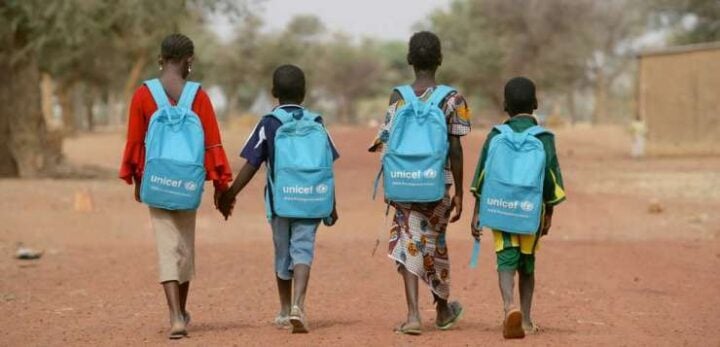
According to UNICEF, Nigeria has one of the largest numbers of out-of-school children in the world, with about 10.2 million out at the primary level and nearly 8 million at junior secondary, bringing the total closer to 18–20 million. To put it in perspective, that is more than the entire population of countries like the Netherlands or Zambia. These comparisons are meant to shock, but after the initial jolt, they rarely provide insight into how to respond.
The problem is that big numbers numb us. It is hard to truly care about “20 million children.” No one lies awake at night worrying about millions of strangers. The sheer scale makes it abstract, and even if we are moved at first, over time, a sense of apathy about how limited we are to help sets in.
Even statistics about child marriage or gender disparity, however appalling, lose their power after the initial shock. Numbers that large invite sympathy; sympathy invokes a sense of pity but rarely moves people to action or creates sustained concern.
Psychologists have long described this as “psychic numbing”: the larger the number, the less emotionally connected we feel to it. Studies by researchers like Paul Slovic show that people are more likely to respond with empathy and action when presented with the face of a single child than when told about millions in need. This helps explain why storytelling that relies only on sweeping statistics struggles to generate long-term impact.
Why Localised Stories Matter
So what kind of numbers move us? I believe impact storytelling must shift toward the local and the specific. Instead of only saying approximately 20 million children are out of school, what if we said: at one of our summer schools this year, a mother of four named Chinasa Samuels slept on the classroom floor with her children, and yet she was filled with joy that her kids could finally learn in a safe space. That is a reality you can picture. That is a crisis you can imagine next door.
Or consider twelve-year-old Laughter Joseph, who discovered his love for drawing and storytelling during a previous special summer school program and now tells stories with his art. His widowed mother, who makes shoes and bags to provide for her children after losing her husband in 2020, now has two of her kids sponsored through the foundation. Their story doesn’t live in a statistic; it lives in a child’s sketchbook and a mother’s quiet resilience.
Localized stories like these don’t diminish the scale of the problem; they draw it closer. They give numbers a human face, making action feel possible.
The truth is that inequalities in education in Nigeria are not evenly spread. Children in rural areas are three times more likely to be out of school than those in urban communities. In the North East and North West, the figures are most dire, with some states recording that more than half of girls are not enrolled at the primary level. Poverty deepens the divide, with children from the poorest households least likely to ever set foot in a classroom. These broader realities provide the backdrop against which stories like Chinasa’s and Laughter’s unfold.
What Our Summer School Taught Us
This past summer, our foundation ran our annual Special Summer School program across 14 learning centres in 9 States in Nigeria, reaching over 23,000 children with free access to literacy, numeracy, and creative programs.
Huge as that number is, they don’t say much until broken down and localized, and specific. Because when localized, they tell us that in Ikota, alone, 230 children spent three weeks learning, playing, and discovering their talents in ways they had never experienced before.
We also saw the power of community. More than 15 young volunteers joined us, many mentoring children not much younger than themselves. These small but concrete figures remind us that impact is both measurable and human. Behind each number is a child like Laughter, a mother like Chinasa, or a volunteer who gave up their holiday to teach.
Globally, research reinforces what we saw firsthand. Studies show that children who attend and learn from summer programs for at least three to five weeks and maintain steady attendance are less likely to experience the “learning loss” that typically occurs during long breaks. In some contexts, participation in structured summer learning has been shown to increase math achievement by around 3% compared to peers without access.
In addition to academic outcomes, researchers highlight gains in social-emotional well-being, creativity, and confidence, benefits that align with what our volunteers observed among children in the program.
From Sweeping Stats to Human Urgency
Localized numbers don’t simply help us tell stories; they inspire empathy, accountability, and change. Policymakers and communities can act on the reality of a mother sleeping on a classroom floor. Donors and corporate partners can relate to a young boy sketching his way toward a new dream. A society can rally when the challenge is no longer faceless but personal.
Nigeria’s challenges in financing education are also significant. UNESCO recommends that countries allocate 15-20% of public expenditure to education as part of the Education 2030 Framework for Action. In Nigeria, recent budget proposals have been around 6-8%, well below that recommendation. This shortfall is not just a budgetary concern; it reflects choices about whose futures matter. Redirecting even a fraction more toward education could dramatically expand programs like summer schools, ensuring that localized stories of transformation are not exceptions but the norm.
If we want to transform education in Nigeria, we need more than sweeping statistics. We need the little numbers; the ones that sit beside us, reflect real lives, and make the urgency impossible to ignore.
- Mifa Adejumo is the Communications Lead at The Special Foundation












Interesting post. We truly need more stories like this.