Follow Us on Google Discover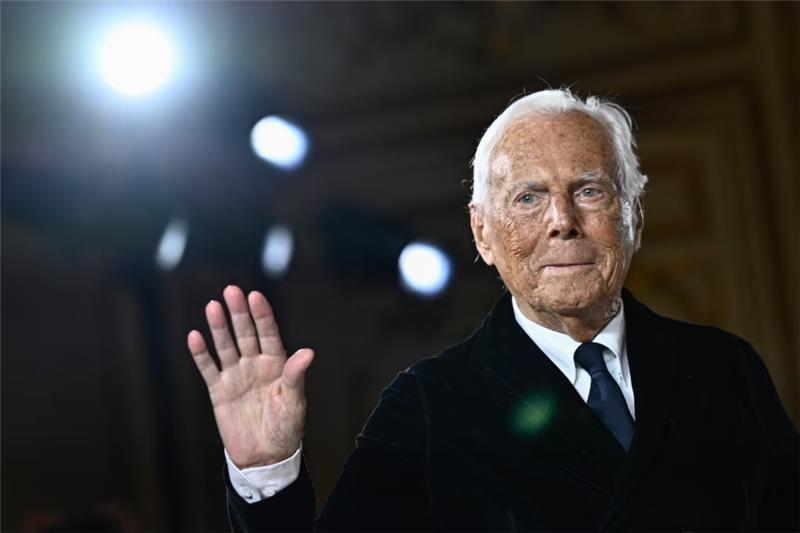
Giorgio Armani, the Italian designer worth $12.1 billion (Forbes) whose vision of pared-down sophistication transformed global fashion and built a multibillion-dollar empire, died on Thursday at his home in Milan. He was 91.
The death was confirmed in a statement by the Armani Group, which described him as the company’s “tireless driving force” who worked until his final days. No cause was disclosed.
In a statement issued on Thursday, the company said: “With infinite sorrow, the Armani Group announces the passing of its creator, founder and tireless driving force: Giorgio Armani. Indefatigable to the end, he worked until his final days, dedicating himself to the company, the collections and the many ongoing projects.”
A public memorial will be held this weekend at the Armani/Teatro in Milan. In accordance with his wishes, the funeral will be private.
Also Read
What we know about his fashion career
Armani, one of the most influential designers of the past half century, was expected to headline Milan Fashion Week this month with celebrations marking the 50th anniversary of his namesake label. His absence from June’s menswear shows the first time he had missed them in decades fueled speculation about his health.
- With his soft-shouldered jackets, muted palettes and relaxed tailoring, Armani redefined both Italian fashion and modern business dress in the late 1970s. At a time when luxury often meant rigid formality, his sleek silhouettes offered an alternative: elegant but comfortable, sharp but never ostentatious. The look resonated worldwide, from corporate boardrooms to Hollywood red carpets.
- His designs for Richard Gere in the 1980 film American Gigolo introduced Armani to a global audience, cementing his reputation as the arbiter of contemporary cool. In the decades that followed, celebrities from Michelle Pfeiffer to Lady Gaga appeared in his gowns, while his tuxedos became an awards-season staple. He was credited with pioneering the now-ubiquitous concept of red-carpet fashion.
At the time of his death, Armani presided over a sprawling business valued at more than $10 billion, according to Forbes, ranking him among the world’s wealthiest fashion figures. His empire stretched far beyond clothing to include accessories, fragrances, home furnishings, hotels and even a basketball team, Olimpia Milano. He also opened more than 20 restaurants and two luxury hotels, in Dubai and Milan, underscoring his vision of lifestyle branding before the term was common.
Brief profile on the late Armani
Born in 1934 in Piacenza, northern Italy, Armani was the son of an accountant and a homemaker. He studied medicine at the University of Milan before abandoning his degree to serve in the military. A job as a window dresser at the Milan department store La Rinascente led him into fashion. By the mid-1960s, he was designing menswear at Cerruti, honing the skills that would make him indispensable.
In 1975, with his partner Sergio Galeotti, Armani launched his own label. Backed by Italian manufacturers eager to promote local talent, he quickly found success with his fluid tailoring. By the 1980s, the brand had exploded internationally, bolstered by licensing deals and expansion into perfumes, eyewear and more affordable lines like Emporio Armani. His eagle logo became one of the most recognizable in the industry.
Though celebrated for commercial success, Armani remained closely tied to art and cinema, designing costumes for more than 100 films and supporting exhibitions at institutions including New York’s Museum of Modern Art. He was also among the first luxury designers to embrace sustainability, joining the Green Carpet Challenge in 2011.