

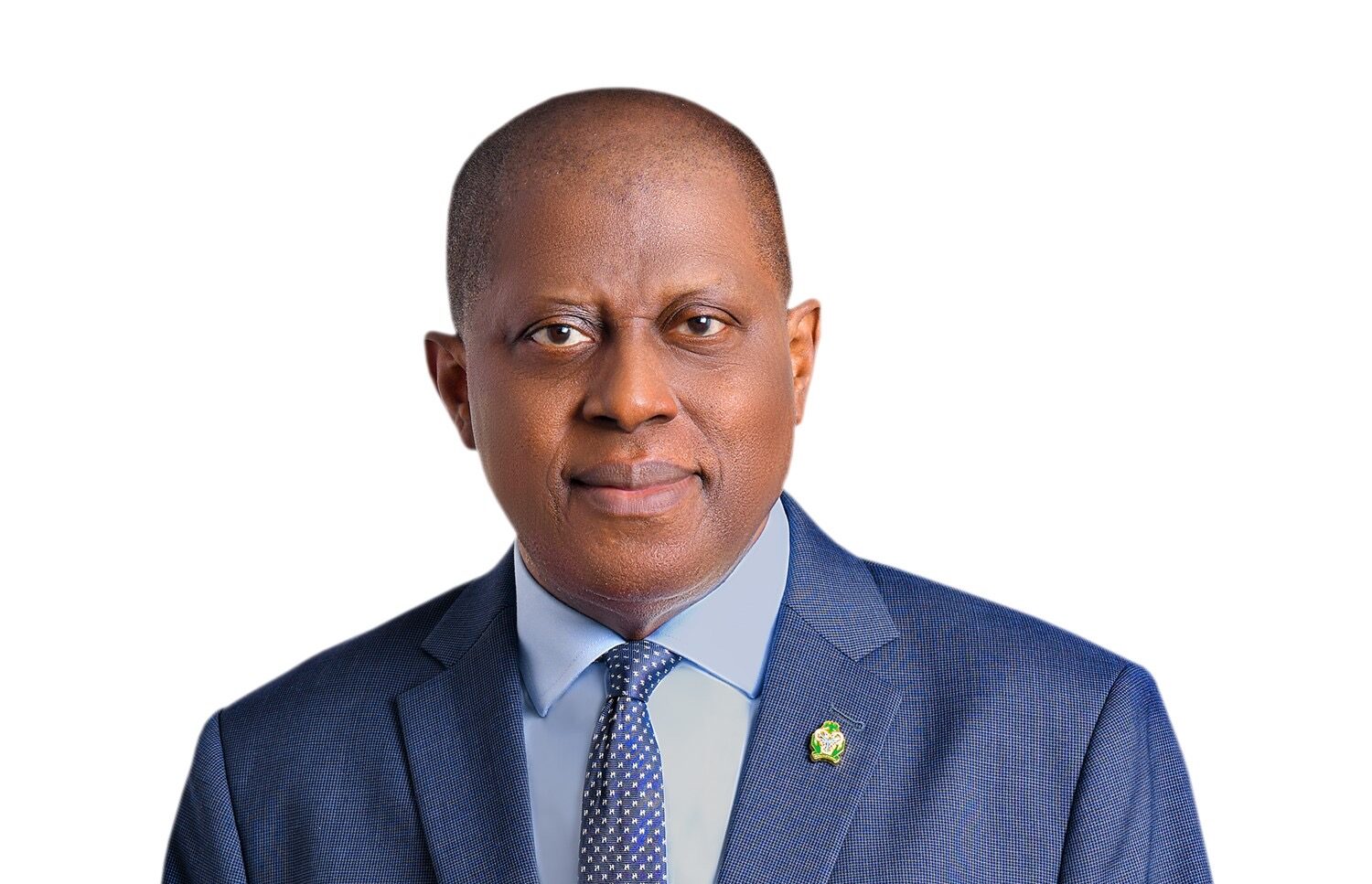
Mr. Olayemi Cardoso, our distinguished “headmaster,” is the talk of the town, and it’s hardly surprising. The economy, crawling out of over a decade of battering from global shocks, fiscal recklessness, and creeping despondence, seems to be falling apart at the seams.
For his sins, he is tasked with facing the sharpest edge of this head-on in the form of the Thanos that is our seemingly logic-defying FX market.
The problems aren’t new; it’s been obvious for years that stubbornly pegging our exchange rate despite a global commodity glut, which crashed the price of our star export (accounting for over 70% of exports), would eventually create a yawning supply gap.

That supply gap cost the CBN $17 billion to defend in 2022, but it cost Nigerians even more. After kicking the can down the road and hoping for a miracle from poorly targeted interventions riddled with discrepancies, 2023 laid the Nigerian economy bare for all and sundry: the child hollered, and the emperor’s new clothes caught the breeze.
Recommended reading: “Foreign investors interested in returning to the Nigerian market” – Yemi Cardoso
At first, it seemed simple – ditch the subsidy and float the Naira. Pundits and analysts, including myself admittedly, predicted that it would take a few quarters for the Naira to settle at its true value, estimated to be around N650-850.
Unfortunately, there was a catch: over a decade of unconventional monetary policy, which aimed to maintain the illusion of a strong Naira by manipulating legitimate demand out of the official window, had created foundational distortions in the FX market.
We were left with three opaque FX markets – the official, the parallel, and the P2P – each with its own quirks, all operating without an effective price discovery mechanism.
Above all, we found ourselves in a conundrum – how do you fix a market where artificial scarcity was driving intense demand, sending the currency into a death spiral? If you continued to peg, the cost would likely rise exponentially from the $17 billions of 2022.
Fewer businesses and citizens would be able to access that rate as dollar liquidity in the official window continued to decline, and backlogs would grow. The intensity would have been amplified by the dollar rally of Q3 2023. You simply didn’t have the funds for it.
If you stopped pegging, however, your vulnerable economy risked exposure to challenging global economic headwinds as commodity prices soared.
Worse still, those who profited from the window of arbitrage you were trying to close would bite back, capitalizing on an unprecedented wave of speculative demand as citizens and businesses attempted to hedge against soaring inflation.
We found ourselves grappling with declining production in the manufacturing sector as businesses, unable to access FX for their machinery and other inputs, dropped like flies.
The Form Ms and Form Qs piled up with no answers. Simultaneously, the behemoth of the subsidy regime tied down the vast majority of our dollar earnings from crude, while years of underinvestment in the sector systematically eroded our capacity to meet oil production targets.
It seemed we had nowhere to turn to get the necessary liquidity to rejuvenate our hobbling FX market while the Naira remained in decline.
Foreign investment and capital importation have been on everyone’s lips; the hope is that they will save us. However, since the substantial Foreign Direct Investment promised during the president’s unofficial investment tour hasn’t quite kept pace with the announcements and MoUs, many are warming to the possibility of Foreign Portfolio Investors.
The trouble, though, lies in understanding not just how to attract it but how to retain it. Overlapping geopolitical and climate crises put a squeeze on global capital flows in 2023; controlling for flows with European conduit economies, FDI flows fell by 18%.
This contraction was felt most acutely in the developing world. In Africa, FDI flows fell by 1%, but crucial infrastructure-driving project finance deals fell by a third.
So, we’re scrambling for a piece of a smaller pie, and the tumultuous geopolitical realities have resulted in risk-averse investors.
Grain prices are breathing down our necks as climate change ravages global production capacity. Citizens are hungry, without the wages to absorb the inflation, resulting in substantial contractions in wider consumption.
Businesses are undercapitalized, faced with a choice between eye-watering local interest rates and the implicit interest rate on foreign loans due to rapid depreciation. Not an ideal environment for an economy in transition.
A look at our capital importation data in Q3 2023 reveals a year-on-year decline across all sectors, with a quarter-on-quarter decline in all but one: money markets.
My initial suspicion that, in addition to bringing remittance flows into the official market, Foreign Portfolio Investment (FPI) would be the centerpiece of CBN’s plan to stabilize the Naira was confirmed in the CBN Governor’s interview with Arise News.
Cardoso sought to assuage fears, refuting the idea that all FPI was hot money, arguing that a good FPI portfolio includes a broad spectrum of investors.
This unassuming aside was followed up by a 19% 365-day treasury bill bonanza later in the week. As the Honourable Minister for Finance and Coordinating Minister for the Economy, Mr Wale Edun, pointed out in an interview at the World Economic Forum, bringing in foreign investment means that “the direction of interest rates, in the short term, naturally is upwards.”
At a point in Nigeria’s history, FPI was a rising tide that lifted (and sank) all boats, but today, the data suggests a more complicated picture.
This playbook is risky, but the potential upside is the glimmer of hope we need, and the CBN might just be able to create the breathing space for the fiscal team to address underlying dysfunctions in the economy.
What is Hot Money?
Hot money is often considered a sensitive term in central bank circles due to its association with high vulnerability, leading to potential instability and disastrous consequences.
But what exactly is ‘hot money’? It refers to large amounts of capital that move across borders, aiming to gain short-term profits from exchange rate or interest rate shifts.
Countries in economic turmoil, with undervalued currencies or high-interest yields, are prime targets. The challenge arises when the foreign exchange (FX) market is liquid, and there are no minimum terms for holding investments; this money can swiftly leave, causing another economic crisis. The anxiety about hot money stems from this unpredictability.
One significant way hot money flows is through Foreign Portfolio Investment (FPI), unlike direct investments in things like factories, FPI can be withdrawn during economic turmoil. Nigeria’s capital markets lack a sophisticated derivatives component, making us particularly vulnerable, especially in our equity, bond markets, and money market instruments.
Investors could acquire stocks, money market instruments, and bonds, then sell as soon as our currency appreciates, intending to repatriate their proceeds, adding strain to our already fragile recovery.
I maintain that NGX’s bull run in the second half of 2023 being driven predominantly by domestic capital is a positive development. It indicates that the circulating naira is being utilized effectively, invested in Nigerian companies.
Portfolio investment doesn’t always uphold its reputation. The landscape of our financial market underwent a significant transformation before the 2008 global financial crash.
Foreign Direct Investment (FDI), primarily fueled by the oil and gas sector, overshadowed Foreign Portfolio Investment (FPI). In December 2007, FDI constituted 71% of total capital importation, while FPI was at a mere 6%. However, as oil prices sharply declined, both FPI and FDI exited, with FPI showing relative resilience.
By December 2008, our fortunes had reversed in each category. FDI accounted for only 6.5% of capital importation, while FPI soared to 52.5%.
Equity-based portfolio investment, with its higher inclination for diversification, could weather the storm. Its exposure to financial contagion could be mitigated, and the ability to perform a quasi-divestment by reorienting portfolios to other sectors within the market allowed some investors to pivot instead of incurring substantial losses.
Flashback: Sanusi’s Recovery
Confronted with the imperative of maintaining financial stability in the aftermath of the global financial crisis, Sanusi Lamido Sanusi devised a strategy to boost capital importation.
Despite Nigeria’s limited direct exposure to the global financial system and our underdeveloped financial institutions, the crash in oil prices induced by the global context had a significant impact on our economic prospects.
While oil constitutes only a fraction of Nigeria’s GDP, it holds crucial importance for financial stability as it contributes the majority of government revenues and the overwhelming majority of our foreign exchange (FX).
Even with the recovery of oil prices, the reserves utilized to manage the economic crisis were not replenished due to fiscal recklessness. As Mr. Cardoso remarked, “[the CBN] don’t produce FX; we rely on what comes in.” In the face of occasional outright hostility from the fiscal side, marked by calls to amend the CBN act, SLS embarked on leveraging the available monetary tools to ensure an influx of more FX.
As part of his strategy to garner international credibility for his monetary reforms, Sanusi Lamido Sanusi (SLS) implemented various measures, including the effort to list Nigerian bonds on JP Morgan’s Bond Index.
A crucial step in this process involved eliminating the one-year minimum term for foreign investors, a move undertaken in 2011 that resulted in a substantial influx of dollars. Gross portfolio inflows witnessed a remarkable surge, growing by almost 200% from $4.51 billion in 2011 to $13.4 billion in 2012.
Initially, Foreign Portfolio Investment (FPI) appeared to replace Foreign Direct Investment (FDI) as the new source of foreign exchange. While FPI continued its upward trajectory in 2013, FDI experienced a decline of more than a fifth, amounting to $5.56 billion.
However, it’s worth noting that FPI is challenging to retain unless accompanied by regulatory restrictions on its exit, such as the one-year minimum term for foreigners investing in Federal Government bonds, or within a stable economic environment.
A closer examination of this phenomenon sheds light on fundamental shifts in the Nigerian financial system, particularly concerning foreign capital.
During the global financial crisis from 2008 to 2011, when the naira remained resilient, Foreign Capital accounted for a slight majority of the value of transactions on the Nigerian Stock Exchange (NSE). Following the removal of capital restrictions by SLS in his capital importation strategy, this proportion peaked at 57.52% in 2014. Notably, equity investments played a pivotal role in the substantial increase in foreign capital flowing into Nigeria.
By 2013, equities constituted 87.03% of all Foreign Portfolio Investments (FPI). This trend, where FDI continued to lag behind FPI, underscores two concerning realities.
First, the oil and gas sector, historically the primary recipient of FDI flows, never recovered after 2011, leading to fragile pipelines and reduced crude output. Second, there is a growing dislocation of capital importation from technological transfers, crucial for enhancing our capacity to add value to commodities before export.
The cracks quickly began to show. In 2014, FPI slowed just as the first signs of the commodity glut which would crash oil prices once again became clearer in Q4 it fell 60.94%. In the following years, the real consequences became more apparent. Consistently low oil prices were a significant drain on forex earnings and the moving capital became more and more restricted.
From this, we should have learnt a timely lesson, building an economy so heavily dependent on the financial sector and the export of a single commodity left us perilously vulnerable to external shocks.
In several ways, Buhari attempted to address this, with infrastructural investments and development finance programmes to boost non-oil exports and reduce export dependency, but the pay off was limited.
While we marked incremental improvements in manufacturing and agriculture as a proportion of GDP, much of this was financed through an eyewatering overindulgence in ways and means which has compounded the crisis we face today with an excess naira liquidity crisis that looms with increasing determination.
Early Signals
Unlike Sanusi, Cardoso inherited a CBN with an unprecedented credibility crisis and without the reserves to fight back. The CBN couldn’t be trusted in its assurances that it could meet the demand for the dollar; backlogs had piled up, and rumors swirled about the true value of our net dollar reserves.
The acting CBN Governor before him had done some work towards setting the Naira free, but the vast majority of forex transactions were still happening beyond the purview of the CBN.
The first task was to mop up some of the excess liquidity in the banking system through Open Market Operations.
In November, we saw a stop rate of 17.5% on a one-year in the CBN’s OMO auction. This was followed closely by N108 billion in Treasury Bills for the wider public. It seems the CBN caught on to the urgency of this task, and in February, we saw a real bonanza as banks offered N1 trillion in T Bills to the market with a one-year stop rate of 19%. The move was a resounding success as investors offered up N2.3 trillion. Of that, $400 to $500 million is estimated to be fresh FPI.
To consolidate the faith of foreign investors that they can repatriate their profits, it was necessary to move as much legitimate supply into the official window as possible to bring up NAFEM’s daily transaction value. Early in the year, we saw a flurry of circulars and updated regulations which the CBN has made in consultation with key players.
The IMTOs were freed to quote market reflective rates in exchange for limiting their operations to inbound remittance flows. Banks were instructed to limit their net open positions to 20% and sell off their staggering dollar stockpiles. Crypto was brought back into the fold with a comprehensive regulatory framework and the prospect of a Naira-pegged stablecoin organized by the Tier 1 banks.
Most recently, the bank has targeted the practice of cash pooling from IOCs whereby their Nigerian subsidiaries immediately repatriate any earnings. Instead, immediate repatriation has been limited to 50% of earnings, while the remainder must be held in Nigeria for at least 90 days before onward travel.
On the surface, the early signals look terrifying. The Naira has depreciated to new lows amid the dollar’s early 2024 recovery. Nigerians are certainly feeling the crunch. Peel away the alarmism of superficial reports and something quite striking becomes apparent.
After a deadly cash crunch-induced second quarter, which saw capital importation plummet across almost every metric, and loans rise to more than 70% of the total, foreign investors are coming back. Q4 saw both a quarter-on-quarter and year-on-year increase in capital importation.
The Q3 glimmer in the money market seems to be catching on in equities – both FDI and FPI. I suspect that the first quarter of this year will see those numbers rise further still, and hopefully, the spread will become more promising if loans continue their downward trajectory.
The sustainability of Cardoso’s playbook rests on three key factors. First, his ability to bring down money supply to temper the impact of external inflationary pressures in our importing nation.
Second, his ability to loosen the choking artificial dollar demand by broadening the access that Nigerians have to the official window. It was amid the dollar scarcity of December 2015, as crude prices tanked below $40, that the CBN suspended cash withdrawals abroad for naira-denominated accounts. In response, banks saw unprecedented demand for domiciliary accounts.
These Nigerians, locked out of the official window and unable to buy forex from their banks, form the backbone of continued demand in the parallel and P2P markets. Until they are brought back into the fold, they will continue to be willing to pay the premium to access FX, either to hedge or to pay for things like digital services and CV enhancing certifications which they still can’t pay for with their naira cards.
Most importantly, the medium to long-term success of Cardoso’s strategy will rely on the fiscal team. Crude production is climbing incrementally but not fast enough for an NNPCL under pressure to keep a lid on petrol prices. Agricultural policy has been marred by what seems to be a lack of coordination, and poorly timed dry season farming interventions.
Throw brewing insecurity into the mix and there is widespread concern that poor yields in the upcoming marketing year will leave us dangerously short of supply for key grains. This comes at a time when global protectionism is pushing export prices up, disruptions at sea are driving an uptick in logistics costs, and depreciation is eroding margins for importers.
Industry is gasping for air, and this looks set to worsen if the Monetary Policy Committee does the needful on inflation and brings MPR up.
In this context, the yet unfulfilled promise of single-digit credit lines for manufacturers is more vital than ever to build a more diverse and therefore resilient economy.
The challenges are many, and the urgency is reaching a fever pitch as Nigerians suffer blows from every angle.
It feels peculiar to Nigeria that a move towards central banking orthodoxy would be perceived as a maverick strategy. If the last decade has taught us anything, it’s that an iron-fisted approach to FX can work well when exports are strong and dollar revenue is high, but when a crisis comes, it encircles your armory with mounting costs and strangles the fledgling sectors of the economy which aren’t lucky enough to get the resultant dollar subsidy.
If the pains that Nigerians face today are not to be in vain, it is imperative that we fix the fundamentals once and for all: that means building a transparent, liquid foreign exchange market where pricing makes logical sense, and you don’t need to have contacts to buy dollars when you need them.
For that to happen, of course, you need the right structure and guardrails, but ultimately you need to increase the supply of FX. The stakes are high to get it right, and Cardoso is sending many of the right signals, but ultimately the best he can do is buy us some time.












This was a very detailed and enlightening article. Thank you for this