

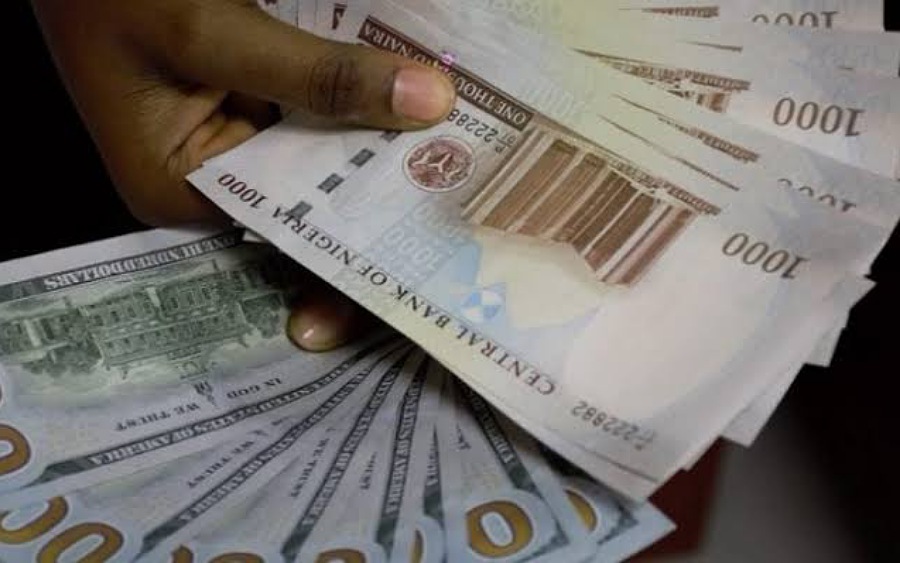
- The exchange rate between the naira and dollar reached a high of N791/$1 on the first day of the unification of the exchange rate.
- The Central Bank of Nigeria (CBN) instructed commercial banks and dealers to sell foreign exchange at market-determined rates, in line with the government’s directive to end the multiple exchange rate regime.
- The stability of the currency will depend on the state of the economy and the actions taken by the government to attract foreign investors and stabilize the currency.
The exchange rate between the naira and dollar sold for as high as N791/$1 to the dollar on Wednesday, June 14th, 2023.
The intra-day high represents the highest daily trade of the exchange rate on the first day of the unification of the exchange rate. The exchange rate also sold for as low as N461/$1 while the final closing rate was N664.04/$1.
This signifies a significant depreciation of 65.83% compared to the N477/$1 it recorded in the last trading session, with a forward rate of N500/$1.
Forex turnover, however, increased by 68.44% to $193.33 million at the official market on Wednesday 14th June 2023 from the $114.78 million that exchanged hands in the previous session.
Meanwhile, the nation’s external reserves stood at $34.69 billion as of Tuesday, 13th June 2023, from $34.81 billion recorded as of Friday, 9th June 2023.
New Forex Policy: Nairametrics reported that the central bank informed commercial banks and dealers to sell foreign exchange at market-determined rates, in line with President Tinubu’s directive to end the multiple exchange rate regime.
- The CBN confirmed this in a press release that stated the unification of all segments of the forex market collapsing all windows into one.
- This was part of a series of immediate changes to operations in the Nigerian Foreign Exchange (FX) Market, in a bid to improve liquidity and stability.
The closing rate is still a wide disparity to the black-market rate which sold for as high as N775/$1 when Nairametrics checked around noon on Wednesday.
What this means
Following the operational changes to the forex market, the exchange rate is expected to be market-determined subject to the forces of demand and supply.
- The CBN guidelines also reintroduce the “Willing Buyer, Willing Seller” model at the I&E window, where all eligible transactions can access foreign exchange at their preferred rates.
- This means traders can bid for forex at any rate and will be able to get the forex they need provided their bid is accepted by a seller.
Optics: The fact the exchange rate sold for as high ad N791/$1 and closed at N664/$1 suggests the market is still in price discovery mode.
- Exchange rate volatility will likely continue until there is an equilibrium between demand and supply.
- The state of the economy will also dictate how the strength of the naira against the dollar.
- For example, if the inflation rate continues to deteriorate, then the exchange rate will likely worsen because holders of dollars will demand more naira.
- The Tinubu administration will have to give foreign investors the confidence they need to invest in the country by providing the needed supply required to stabilize the currency.
The unification of the exchange rate in Nigeria will bring about significant changes to the forex market.
- The closing rate of N664.04/$1, although still a wide disparity from the black-market rate, signifies that the market is currently in a phase of price discovery.
- Going forward, the exchange rate will be determined by market forces of demand and supply, with the reintroduction of the “Willing Buyer, Willing Seller” model.











Do those we have in government actually think before they leap?
How can one come up with a policy without first finding a soft landing for the aftermath?
Must we the citizens continue to suffer from cluelessness of those in power?