
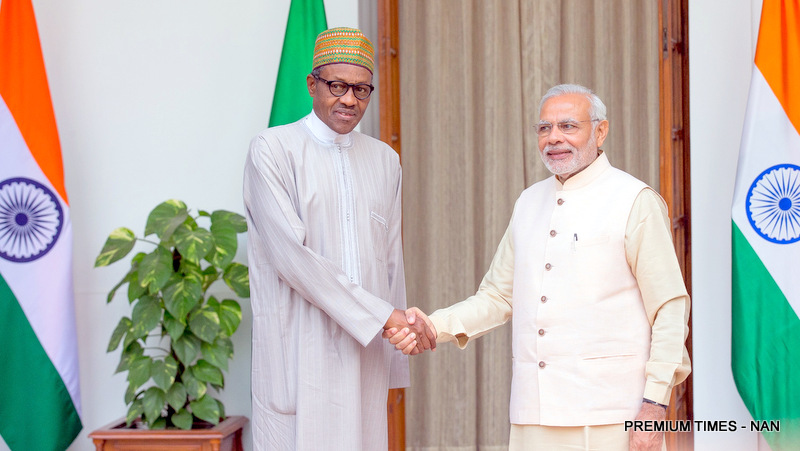
During presentations and panel sessions at the India-Nigeria liquefied petroleum gas (LPG) summit that took place on Wednesday, September 28 in FCT, Abuja, stakeholders shared possible solutions that could help Nigeria achieve the set goal of achieving 5 million tons of domestic LPG consumption by 2025.
Nairametrics has compiled a few of those shared takes;

Market structure
Speaking on market structure and policy, the president of the Nigeria Liquefied Petroleum Gas Association (NLPGA), Felix Ekundayo said that the focus on Nigeria’s LPG sector is mostly on the domestic aspect while neglecting factors like manufacturing, industrial, and autogas.
According to him, the neglect is caused by policy mismatches across the board and this is reflected in LPG pricing. Although global gas prices affect local pricing, the development of conflicting policies among stakeholders has caused supply restraints. He suggested that in order for Nigeria to resolve LPG issues, stakeholders need to improve in-house production, drive down the cost of associated materials like gas cylinders, and cut down on LPG regulation.
LPG Regulation
Elvis Duruji, from the Nigerian Midstream and Downstream Petroleum Regulatory Authority (NMDPRA), spoke about regulating the LPG sector and pointed out that there are over 12oo refilling plants across the country. He said the NMDPRA was working on guaranteeing the safety and effectiveness of cooking gas in Nigeria.
Addressing issues around explosion incidents from gas cylinders, which scare off potential users, he said most of the incidents are related to loading and packaging. He also hinted that licensing, inspections, registration, and compliance are some of the tools used by the NMDPRA, to ensure that LPG users are safe.
However, he said some of the LPG incidents stem from the decision of some micro-distributors to also want to operate a refilling plant. He says; “To be a micro-distributor, you need to have a level D license and you cannot refill cylinders with that same license. You need another license to refill.”
“We want to see a downstream sector that is self-regulated and we are working with critical stakeholders to ensure safety,” he says.
According to Duruji, the Petroleum Industry Act (PIA) has created an opportunity to change the way things are done. According to him, the PIA has brought in an era of collaboration, where all stakeholders must agree and in the case of the LPG sector, all parties have to agree on how best to attract local/foreign investments in the sector.
Stimulate investments
Speaking during a panel session at the summit, Dayo Adeshina, from the office of Nigeria’s vice president, said that the country is on the right track to achieving its 2025 target of 5 million tons of domestic LPG consumption by 2025. He said one of the action steps needed is to set criteria for marketers to aid LPG investments across states in the country.
“We have enough natural gas volumes in-country. We only need to achieve LPG domestication, by encouraging marketers,” he says. According to him, marketers will want to know that their investment will yield the needed returns. For example, it is necessary for a potential investor to know how many users are located within a state before investing in the LPG sector of that state.
Infrastructure capacity
Vice president of LPG at Argus Media, David Appleton highlighted the fact that demand growth had seen India as the world’s second-biggest LPG importer. He said India has developed its market strategy based on some factors like product, primary infrastructure, local and foreign direct investments as well as LPG bottling capacity.
According to him, India has done well in developing infrastructure and it is clear that if a country does not have enough infrastructure, it will have to deal with high LPG prices.
In India, bottling infrastructure is key to continuing to grow the market. LPG storage and bottling capacity are being developed to ensure the full maximization of the market. State oil companies like Indian Oil, Bharat Petroleum, and Hindustan Petroleum are all investing significantly in bottling infrastructure.
Women participation
The coordinator of Women in LPG Nigeria, Joy Shaiyen said 33% of LPG distributorship goes to women in India. She spoke about the possibility of Nigeria doing the same thing in order to promote deeper penetration of LPG use in the country. According to her, women should be stakeholders when it comes to LPG policymaking because more women make use of cooking gas and they can convince other women to switch from traditional biomass to cooking gas.
As a solution to increasing LPG use in Nigeria, Shaiyen advocated for the re-orientation of Nigerians on LPG as well as active consumer education in schools and marketplaces. She also called on the authorities to tackle deforestation, which is the starting point of the use of firewood for cooking.
What you should know
- According to NLPGA president, Felix Ekundayo, an LPG truck needs 53 licenses to operate in Nigeria, which could be seen as too restrictive by operators.
- WLPGA is the authoritative voice of the global LPG sector and represents the full LPG value chain.
- Nigeria recorded 1.3 million tons of domestic LPG consumption in 2021. Currently, domestic LPG consumption is contracting due to supply constraints, and we would be lucky to reach 1 million tons at the end of 2022.
Bottom line
Nigeria has some lessons to learn from India when it comes to driving LPG investments and creating the necessary conditions for Nigerians to willfully adopt cooking gas and ditch traditional biomass, which is harmful to the environment and to users.
However, there are some factors that need to be put in place first before these can happen. Some of these factors include; making the country attractive enough for local and foreign investments to thrive and for Nigerians to find LPG as a better alternative to traditional biomass.
According to Joy Shaiyen, it was easier for stakeholders to convince potential LPG users to switch from traditional biomass three years ago as opposed to present times, that the poverty rate in the country is so high and low-income earners can simply not afford it.