

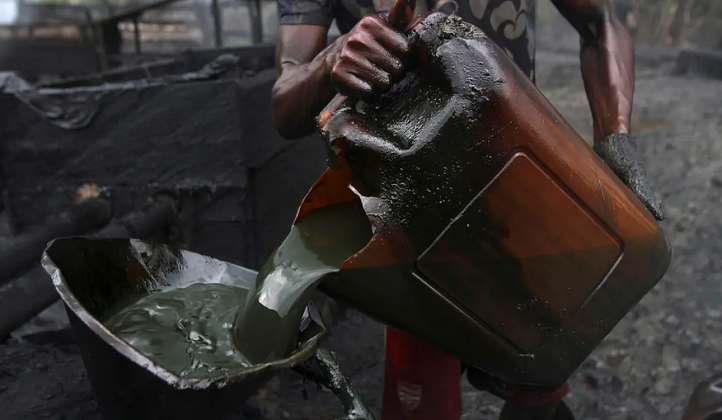
Since the discovery of oil in commercial quantity in 1956, Nigeria has been enmeshed in an oil-related crisis. The country has been pegged back in crisis in its oil sector despite being the sixth-largest oil producer in the world. Fuel scarcity and fuel subsidy removal have been some of the country’s problems that have bedevilled the oil sector since Nigeria became a member of the Organization of Petroleum Exporting Countries in 1971.
Here are some numbers behind Nigeria’s production and consumption of Oil:
- Nigeria has four refineries; Port Harcourt (2), Kaduna, and Warri.
- Nigeria’s refineries have a combined installed capacity of 445,000 barrels per day.
- According to NNPC, Nigerians consume 74m litres of fuel daily.
- Nigeria currently produces 1.4m barrels per day.
- According to NNPC, N100 billion was spent on refineries in 2021, despite being nonfunctional.
Background on fuel subsidy
Subsidy means a government’s way of making a product or good available and affordable for its citizens or people. Subsidy is a government incentive (financially) aimed at reducing the price of a product against the benchmark or its initial amount. Fuel subsidy has, over the last five decades, become a topic of debate over its effects on the economy.

It was introduced in the 70s by the military government of General Olusegun Obasanjo; the military government of Obasanjo sold fuel to Nigerians at a subsidized rate as opposed to benchmark set by OPEC. However, the drop in oil prices in the 80s led to struggles on the path of the government to continue the payment of subsidies on fuel. Crude Oil is Nigeria’s major export.
The payment of subsidies has created a divisive line amongst Nigerians from all walks of life. One part believes that due to several economic issues, Nigerians cannot afford to buy petrol at prices obtainable across the world, and a total removal is synonymous with hardship for Nigerians. On the other hand, they believe it’s high time the government removed subsidies on fuel and divert the funds into other sectors of the economy. This notion has been corroborated by successive governments (military and civilian).
The government’s effort for the total removal of subsidies has been met with resistance from Nigerians. In 2012, the OCCUPY NIGERIA protest was due to the government of Goodluck Jonathan’s removal of subsidy; the price soared from 65 Naira to 141 Naira before it was reversed to 97 Naira per litre.
- According to Minister of Finance, Zainab Ahmed, the Federal Government spent N450 billion in 2019 and N1.573 trillion in 2020 on fuel subsidies. Also, the FG has earmarked N4 trillion to be spent on fuel subsidies in 2022.
- The FG, through the Minister of Information, Lai Mohammed, announced that it spent N10.43 trillion on fuel subsidies between 2006-2019.
Illegal refinery: A Panacea to Fuel subsidy crisis?
Illegal refineries and oil theft has been a bane in the Nigerian oil sector. Asides from its economic effect, health effects and environmental degradation, among others, are part of the problems associated with illegal refineries.
Illegal refineries are sites mainly situated in oil-producing regions; usually preceded by the diversion of crude oil from pipelines into the sites where it is heated in metal containers. The products are then exported illegally to different parts. This process is dangerous as it does not involve or adhere strictly to safety measures of oil refining.
One of such incident is the explosion at an illegal refinery site between Imo and Rivers State in April 2022, where over 100 persons were confirmed dead.
Nairametrics, in an earlier report, noted that Gbenga Komolafe, CEO of the Nigerian Upstream Petroleum Regulatory Commission (NUPRC) stated “150,000 barrels of oil are diverted a day by criminals who illegally tap pipelines,” adding that at present price levels, the missing barrels are worth about $4 billion a year.” One of the reasons for this is the poverty-stricken nature of host communities which have their source of livelihood destroyed due to environmental degradation.
Nigeria needs to look inwards to address its lingering fuel subsidy crisis issues, and illegal refineries might supposedly be an answer. Despite spending billions of dollars in turnaround maintenance and overhead costs, Nigeria’s ‘legal’ refineries have been unable to refine any product, and this calls for questioning when it is being done locally, although in a hazardous way. The government should look towards granting amnesty and go into some partnerships with illegal refiners who are willing to stop the illegal site and perhaps transition into modular refineries to refine products legally, adhering to all safety procedures.
This can solve fuel scarcity prices in states or areas where fuel consumption is high. This will further reduce dependence on the importation of petroleum products.
As of May 23, 2022, the Naira to Dollar stands at 415.785. With $4 billion lost annually to oil theft, Nigeria is set to lose N1.663 trillion in 2022 to fuel subsidies. This figure could grow higher. With changes to Illegal refineries, this amount will help reduce Nigeria’s fuel subsidy budget. Also, Nigeria is currently struggling to meet up with OPEC’s 1.78million barrel quota daily. The World Bank, in reaction to Nigeria’s budget for the subsidy, has warned that it has a huge economic impact and might affect public finance.













THere a lot of gaps in what we are being told about subsidy,oil theft,volume of imported products illegal refineries and all sorts.
Firstly,no matter how professional you are,you cannot breach the crude pipes without the architectural design,and without a compromise in house
Secondly on crude theft,what is the volume that can be stolen with the Jerrycans.
The crude theft is done in the process of the legitimate transactions by under declaring the capacity of the vessels.
Majority of those illegal refineries has a lot of backings of some professional in the system and the securities inclusive
They are only making noise over it as they are mot sincere about the stoppage ,this will expose a lot when there are no small thieves in the system to cover up their major heist.
It was the Gowon regime that started the subsidy regime and not the Obasanjo administration.