• Login
  • Register
Nairametrics
  • Home
  • Exclusives
    • Recapitalization
      • Access Holdings Offer
      • Fidelity Bank Offer
      • GTCO Offer
      • Zenith Bank Offer
    • Financial Analysis
    • Corporate Stories
    • Interviews
    • Investigations
    • Metrics
    • Nairalytics
  • Economy
    • Business News
    • Budget
    • Public Debt
    • Tax
  • Markets
    • Currencies
    • Cryptos
    • Commodities
    • Equities
      • Company Results
      • Dividends
      • Public Offer & Right Issues
      • Stock Market News
    • Fixed Income
    • Funds Management
    • Securities
  • Sectors
    • Agriculture
    • Aviation
    • Company News
    • Consumer Goods
    • Corporate Updates
    • Corporate deals
    • Corporate Press Releases
    • Energy
    • Entertainment
    • Financial Services
    • Health
    • Hospitality & Travel
    • Manufacturing
    • Real Estate and Construction
    • Renewables & Sustainability
    • Tech News
  • Financial Literacy
    • Career tips
    • Personal Finance
  • Lifestyle
    • Billionaire Watch
    • Profiles
  • Opinions
    • Blurb
    • Market Views
    • Op-Eds
    • Research Analysis
  • Home
  • Exclusives
    • Recapitalization
      • Access Holdings Offer
      • Fidelity Bank Offer
      • GTCO Offer
      • Zenith Bank Offer
    • Financial Analysis
    • Corporate Stories
    • Interviews
    • Investigations
    • Metrics
    • Nairalytics
  • Economy
    • Business News
    • Budget
    • Public Debt
    • Tax
  • Markets
    • Currencies
    • Cryptos
    • Commodities
    • Equities
      • Company Results
      • Dividends
      • Public Offer & Right Issues
      • Stock Market News
    • Fixed Income
    • Funds Management
    • Securities
  • Sectors
    • Agriculture
    • Aviation
    • Company News
    • Consumer Goods
    • Corporate Updates
    • Corporate deals
    • Corporate Press Releases
    • Energy
    • Entertainment
    • Financial Services
    • Health
    • Hospitality & Travel
    • Manufacturing
    • Real Estate and Construction
    • Renewables & Sustainability
    • Tech News
  • Financial Literacy
    • Career tips
    • Personal Finance
  • Lifestyle
    • Billionaire Watch
    • Profiles
  • Opinions
    • Blurb
    • Market Views
    • Op-Eds
    • Research Analysis
Nairametrics
Home Business News Politics

Leather Industry Neglect Shows Nigeria’s Manufacturing Struggle

Editor by Editor
September 22, 2015
in Politics
Share on FacebookShare on TwitterShare on Linkedin

After three decades of operating Safiyanu Baba’s leather business in northern Nigeria’s largest city is on the verge of closing down.

Baba’s factory, plying the more than 1,000-year-old leather trade in the ancient city of Kano, is struggling as others fold amid a slowing economy, limited credit, central bank import restrictions, a lack of reliable electricity and the strain of cheaper imports from China. Now only a handful of tanneries are running, from more than 40 in the 1980s, according to Nigeria’s Tannery Council.“A lot of the factories are not producing to the fullest capacity, others have closed operations and laid off workers,” Baba said in an interview at his Kano Multi Tan Ltd.office. “Some, like mine, are on the verge of closing down. Our competitors in other parts of the world don’t have the problems that we are face like that of water supply, roads and electricity.”

 Leather makers are but one example of industrial malaise in Africa’s biggest crude producer and large-scale manufacturing has suffered decades of neglect after the discovery of oil in the 1950s. President Muhammadu Buhari, who came to power four months ago, plans to revive Nigerian industry in a bid to create jobs, instructing his ministries to come up with policies before setting out next year’s budget.

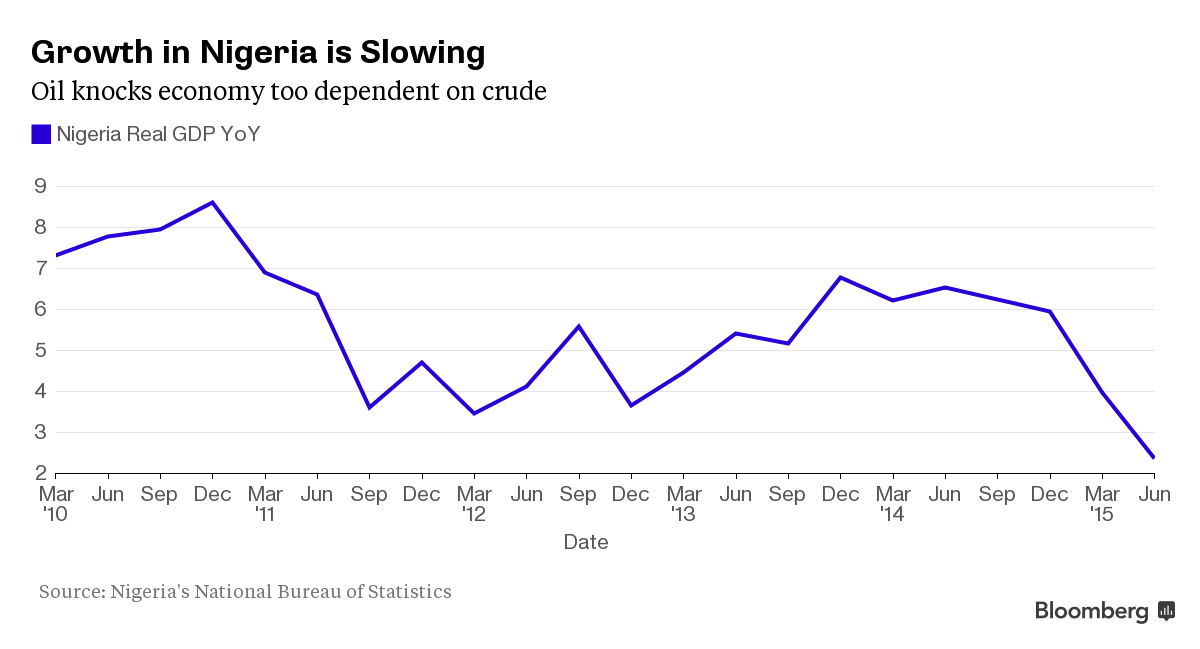
A halving of crude prices in the past year has slowed annual economic growth to 2.4 percent in the second quarter, while manufacturing, which has barely risen above a 10th of gross domestic product since independence in 1960, contracted by 3.8 percent, after a 14 percent expansion a year earlier. Nigeria relies on the commodity for two-thirds of government revenue.


MoreStories

Enugu Govt to build Nigeria’s longest canopy walkway, first zipline 

Enugu sets N150 million advertising permit for 2027 political campaigns  

February 23, 2026
President Tinubu appoints 6 Chief Medical Directors for federal hospitals on 4-year terms 

Electoral Act: Tinubu signs bill ahead of 2027 polls amid ‘concerns’ 

February 18, 2026

Bloomberg,Led1

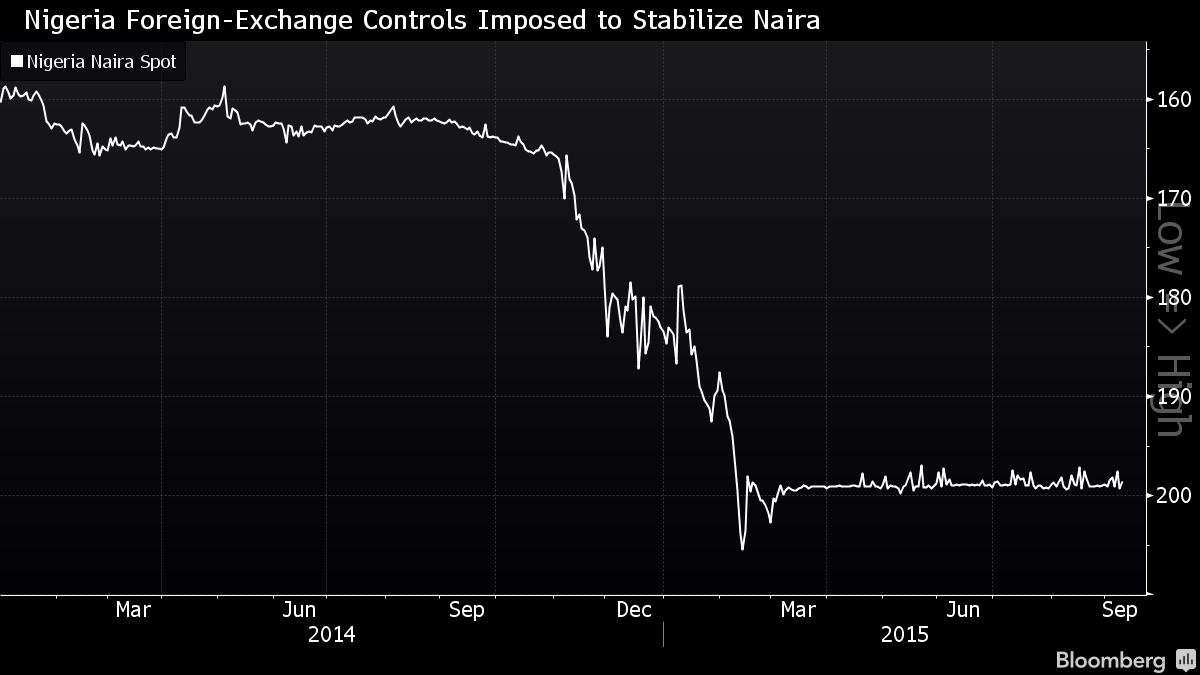
The fall in oil prices put pressure on the nation’s currency. After a devaluation in November, followed by its plunge to a record low in February, the central bank stabilized the naira by imposing trading restrictions and banning importers from using the foreign-exchange market for about 40 items.The edicts have made it difficult for manufacturers to import raw materials and obtain dollars needed to operate, according to Frank Udemba Jacobs, president of the Manufacturers Association of Nigeria, which represents more than 2500 companies.

The naira was little changed before the central bank announces its key interest rate decision at 2:15 p.m. on Tuesday, trading at 199.25 per dollar at 10:39 a.m. in Lagos.

Enormous Costs

The scenario for local industry has some historic resonance. Government plans in the late 1970s to help manufacturers fund imports collapsed after oil prices dropped a few years later. The program was halted as the government struggled to meet the dollar demand needed to back the plan following a naira devaluation.

Along with economic factors, daily blackouts, due to a lack of reliable grid power, and the lack of a modern transport network have curbed Nigeria’s manufacturing potential, with Africa’s most populous nation losing at least 2 percent of growth annually due to its infrastructure deficit, according to the Finance Ministry.

“Power is the biggest problem for Nigeria,” said Yvonne Mhango, a Johannesburg-based economist at Renaissance Capital. “You have the few existing manufacturers having to basically build their own power plants in order to produce. That’s an enormous additional cost, that at the end of the day is passed down to consumers.”

Years of neglect of railways while Nigeria was in political flux during military rule, which ended 16-years ago, cut freight-rail capacity to 15,000 tons a year in 2005 from 3 million tons four decades earlier, according to the Transport Ministry. Most cargo is transported on worn-out and congested roads.

Misguided Priorities

“Giving priority to manufacturing without first fixing rail transport is rather misguided,” said Ayo Teriba, head of Lagos-based consultancy Economics Associates. “High transport and energy costs will make most manufacturing projects uncompetitive, unprofitable and unsustainable.”

With poor infrastructure pushing up production costs and prices, Nigerian goods are unable to compete with cheaper imports from China. While trade between the two countries has shot up to $19.6 billion at the end of 2014 from $500 million in 2000, according to data compiled by Bloomberg, three-quarters of it consists of imports to Nigeria.
Bloomberg,Led2

“Trade with China has increased across Africa and you find that it has generally undermined our infant manufacturing industries,” RenCap’s Mhango said. “The competition is making it a lot more difficult and manufacturing has been hit harder over the past 15 years.”

Despite the daunting challenges, Baba hopes Buhari’s government will deliver on campaign promises to create jobs by revamping manufacturing, fixing the economy and consequently boosting the leather industry.

“We need the government to give us incentives and make clear decisions on policy,” he said.


Tags: Manufacturing
Editor

Editor

Next Post
Discos Negotiate with Customers Over Hike in Electricity Tariffs

FG Pursues Single-Digit Interest Loans For Power Firms

Leave a Reply Cancel reply

Your email address will not be published. Required fields are marked *

rabafast

nairametrics


DUNS

Follow us on social media:

  • HOME
  • ABOUT NAIRAMETRICS
  • CONTACT US
  • DISCLAIMER
  • ADs DISCLAIMER
  • COPYRIGHT INFRINGEMENT

© 2026 Nairametrics

Welcome Back!

Login to your account below

Forgotten Password? Sign Up

Create New Account!

Fill the forms below to register

All fields are required. Log In

Retrieve your password

Please enter your username or email address to reset your password.

Log In
Social Media Auto Publish Powered By : XYZScripts.com
No Result
View All Result
  • Home
  • Exclusives
    • Recapitalization
      • Access Holdings Offer
      • Fidelity Bank Offer
      • GTCO Offer
      • Zenith Bank Offer
    • Financial Analysis
    • Corporate Stories
    • Interviews
    • Investigations
    • Metrics
    • Nairalytics
  • Economy
    • Business News
    • Budget
    • Public Debt
    • Tax
  • Markets
    • Currencies
    • Cryptos
    • Commodities
    • Equities
      • Company Results
      • Dividends
      • Public Offer & Right Issues
      • Stock Market News
    • Fixed Income
    • Funds Management
    • Securities
  • Sectors
    • Agriculture
    • Aviation
    • Company News
    • Consumer Goods
    • Corporate Updates
    • Corporate deals
    • Corporate Press Releases
    • Energy
    • Entertainment
    • Financial Services
    • Health
    • Hospitality & Travel
    • Manufacturing
    • Real Estate and Construction
    • Renewables & Sustainability
    • Tech News
  • Financial Literacy
    • Career tips
    • Personal Finance
  • Lifestyle
    • Billionaire Watch
    • Profiles
  • Opinions
    • Blurb
    • Market Views
    • Op-Eds
    • Research Analysis
  • Login
  • Sign Up

© 2026 Nairametrics