• Login
  • Register
Nairametrics
  • Home
  • Exclusives
    • Recapitalization
      • Access Holdings Offer
      • Fidelity Bank Offer
      • GTCO Offer
      • Zenith Bank Offer
    • Financial Analysis
    • Corporate Stories
    • Interviews
    • Investigations
    • Metrics
    • Nairalytics
  • Economy
    • Business News
    • Budget
    • Public Debt
    • Tax
  • Markets
    • Currencies
    • Cryptos
    • Commodities
    • Equities
      • Company Results
      • Dividends
      • Public Offer & Right Issues
      • Stock Market News
    • Fixed Income
    • Funds Management
    • Securities
  • Sectors
    • Agriculture
    • Aviation
    • Company News
    • Consumer Goods
    • Corporate Updates
    • Corporate deals
    • Corporate Press Releases
    • Energy
    • Entertainment
    • Financial Services
    • Health
    • Hospitality & Travel
    • Manufacturing
    • Real Estate and Construction
    • Renewables & Sustainability
    • Tech News
  • Financial Literacy
    • Career tips
    • Personal Finance
  • Lifestyle
    • Billionaire Watch
    • Profiles
  • Opinions
    • Blurb
    • Market Views
    • Op-Eds
    • Research Analysis
  • Home
  • Exclusives
    • Recapitalization
      • Access Holdings Offer
      • Fidelity Bank Offer
      • GTCO Offer
      • Zenith Bank Offer
    • Financial Analysis
    • Corporate Stories
    • Interviews
    • Investigations
    • Metrics
    • Nairalytics
  • Economy
    • Business News
    • Budget
    • Public Debt
    • Tax
  • Markets
    • Currencies
    • Cryptos
    • Commodities
    • Equities
      • Company Results
      • Dividends
      • Public Offer & Right Issues
      • Stock Market News
    • Fixed Income
    • Funds Management
    • Securities
  • Sectors
    • Agriculture
    • Aviation
    • Company News
    • Consumer Goods
    • Corporate Updates
    • Corporate deals
    • Corporate Press Releases
    • Energy
    • Entertainment
    • Financial Services
    • Health
    • Hospitality & Travel
    • Manufacturing
    • Real Estate and Construction
    • Renewables & Sustainability
    • Tech News
  • Financial Literacy
    • Career tips
    • Personal Finance
  • Lifestyle
    • Billionaire Watch
    • Profiles
  • Opinions
    • Blurb
    • Market Views
    • Op-Eds
    • Research Analysis
Nairametrics
Home Opinions Blurb

Analysis: Nigeria’s Rice Policy Shows More Cost Than Benefit by @lloydatiku

Atiku Samuel by Atiku Samuel
January 13, 2017
in Blurb
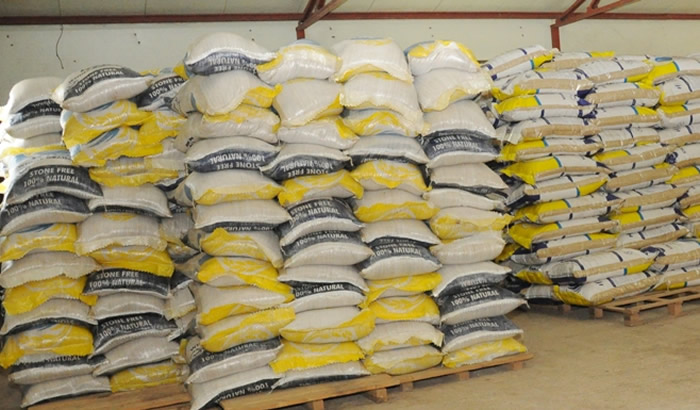
Lake Rice

Lake Rice Picture credit: Punch Newspapes

Share on FacebookShare on TwitterShare on Linkedin

Nairametrics| The first casualty in President Buhari’s drive to end the importation of rice is the mathematics underpinning Nigeria’s agricultural policy.

Rural and urban populations in Africa’s most populated country now consume rice on a daily basis. By some measure, rice consumption on the per capita basis is running close to par with consumption in traditional rice consuming countries in Asia. Hence, rice and policies around rice are now extremely important as it has become uncommon to see politicians using rice and its associated price as a tool in the drive for political gains.

Interestingly, the standard Thailand rice sells at approximately $373 per tonne or thereabout in the international market. At the official exchange rate of N305/$1, a 50kg bag of rice that retails at N22,000 in the local market or thereabout comes to approximately N5688 in the international market.


MoreStories

Naira weakens to N1,353.5/$ ahead of 304th MPC meeting 

US-Iran conflict: What it means for Nigeria’s economy, exchange rate

March 1, 2026
Cadbury Nigeria shareholders to get N751.28 million dividend

Cadbury Nigeria 2025 results: A recovery with room to grow 

February 4, 2026

If the government were to allow rice to retail below N8000, most domestic rice farmers would go belly up, while the customs officials benefitting from the trade in smuggled rice may end up with empty pockets within a short cycle. And the roof may drop on the head of the rice milling industries, a sector that has already been stretched thin.

Even with government’s policies, that seem to centre around making made-in-Nigeria rice the only brand in the market, domestic producers of rice in Nigeria routinely struggle to find a market for the product. While monetary, fiscal and trade policies are all coordinated and directed strangely at making Nigerian domestically produced rice desirable. But at what cost?

First, the government’s policy of using tariffs and foreign exchange walls to hold the gate against imported rice could drive the price of the commodity further north – beyond the reach of the “have-nots” and “working poor.” The higher price would encourage smuggling activities- which either way, nets out the very tiny gains we hope to achieve – breeding corruption along its bumpy way.

Second, rice is a water-hungry crop. Farmers, interested in rice- will need to cluster around the increasingly smaller rivers and water reservoirs. Competition for planting space should drive the price of agricultural land up putting more pressure on the price of the commodity. Before the cycle flattens out, it is logical to assume the price of the commodity should be out of order- creating a huge incentive for smugglers.

Third, a rush into the rice trade could open up the dead pit for other agricultural products. Truthfully, farmers of maize, beans, cassava, yam and potatoes will raise the price to maintain the same status with rice farmers. Food inflation is a tax on the ‘working-poor’ and ‘have-nots.’ Food inflation will limit consumer’s ability to spend on discretionary goods and services which in turn is not good for an economy in recession.

No sane society with efficiency in its veins will allow and encourage the use of cutlass and hoe. The evolution of agriculture has moved from ‘human power’ through ‘animal power’ to ‘machine power.’ Nevertheless, Nigeria’s agriculture system has chosen to remain stuck in the 15th century when all around the world, the talk on everyone’s lips is ‘driverless tractors’ with ‘32-row planters.’ If eventually we wake from our slumber, it will take huge funds to aggressively mechanize our farms.

And finally, to be candid, do we really need to plant more rice? Why not maize? Why not soybeans? Planting rice on irrigated land according to the National Cereal Research Institute, Badeggi, Niger State should yield between 3 to 4 tonnes per hectare in Nigeria. The monetary value using the international price of the rice sets at approximately $1,492 per hectare. Putting corn on the same land area with reduced labour or less pressure on scarce water resources should return between $1540 and $2300 per hectares. Hence, why not trade in corn for rice?

For a country with a minimum wage significantly lower than what Sierra Leone will accept, the government’s innate plan for rice is centered around using the price of the commodity as a tool to draw-in and boost up production but Nigeria’s policy formulators seem to be out of touch with reality. It appears they will rather throw massive amounts of regulations at problems to push up the price- rather than address the real issue, which is cost.

The rice economy, the pricing of the rice and the standards that guide the value of the commodity which Nigerians are presently promoting forcefully, are really not paved in blind stones. Nigeria needs to realign her policy with logical thinking if she hopes to change her course. Of a truth, rice is great when cooked but who wants rice littered with rocks?


Tags: AgricultureConsumer GoodsNigerian recession
Atiku Samuel

Atiku Samuel

Atiku Samuel is the Research Lead at BudgIT. He has undertaken series of Executive training and professional courses in accounting, project finance, econometric modelling techniques, monetary policies, economics, data gathering, analysis and visualisation among others. Atiku is a graduate of Actuarial science from the University of Lagos, Nigeria. Atiku is currently working on series of research covering different aspect of economic, developmental and social policies, ranging from Trade Policies, taxation and employment to energy, health, Agriculture, transport and international development across National and Sub-National Level.

Next Post
pension

Corporate Action: Meyer Plc Appoints MD and Company Secretary

Comments 1

  1. naijaritaSeun says:
    March 25, 2017 at 12:42 pm

    Brilliant. Thanks. But is anyone listening?

    Reply

Leave a Reply Cancel reply

Your email address will not be published. Required fields are marked *

rabafast

nairametrics


DUNS

Follow us on social media:

  • HOME
  • ABOUT NAIRAMETRICS
  • CONTACT US
  • DISCLAIMER
  • ADs DISCLAIMER
  • COPYRIGHT INFRINGEMENT

© 2026 Nairametrics

Welcome Back!

Login to your account below

Forgotten Password? Sign Up

Create New Account!

Fill the forms below to register

All fields are required. Log In

Retrieve your password

Please enter your username or email address to reset your password.

Log In
Social Media Auto Publish Powered By : XYZScripts.com
No Result
View All Result
  • Home
  • Exclusives
    • Recapitalization
      • Access Holdings Offer
      • Fidelity Bank Offer
      • GTCO Offer
      • Zenith Bank Offer
    • Financial Analysis
    • Corporate Stories
    • Interviews
    • Investigations
    • Metrics
    • Nairalytics
  • Economy
    • Business News
    • Budget
    • Public Debt
    • Tax
  • Markets
    • Currencies
    • Cryptos
    • Commodities
    • Equities
      • Company Results
      • Dividends
      • Public Offer & Right Issues
      • Stock Market News
    • Fixed Income
    • Funds Management
    • Securities
  • Sectors
    • Agriculture
    • Aviation
    • Company News
    • Consumer Goods
    • Corporate Updates
    • Corporate deals
    • Corporate Press Releases
    • Energy
    • Entertainment
    • Financial Services
    • Health
    • Hospitality & Travel
    • Manufacturing
    • Real Estate and Construction
    • Renewables & Sustainability
    • Tech News
  • Financial Literacy
    • Career tips
    • Personal Finance
  • Lifestyle
    • Billionaire Watch
    • Profiles
  • Opinions
    • Blurb
    • Market Views
    • Op-Eds
    • Research Analysis
  • Login
  • Sign Up

© 2026 Nairametrics