Follow Us on Google Discover
The CBN held rates steady on Tuesday, keeping borrowing costs unchanged to defend easing inflation even as pre-election spending channels under fresh pressure into the naira.
The Central Bank of Nigeria adopted a more aggressive stance to defend the naira, resorting to stricter monetary measures and selective foreign exchange interventions as the market remains volatile.
The apex bank has taken steps to stem speculative demand and narrow the widening premium between the official Nigerian Autonomous Foreign Exchange Market (NAFEM) window and the parallel market. The central bank’s latest intervention signals a renewed effort to safeguard the naira from further depreciation.
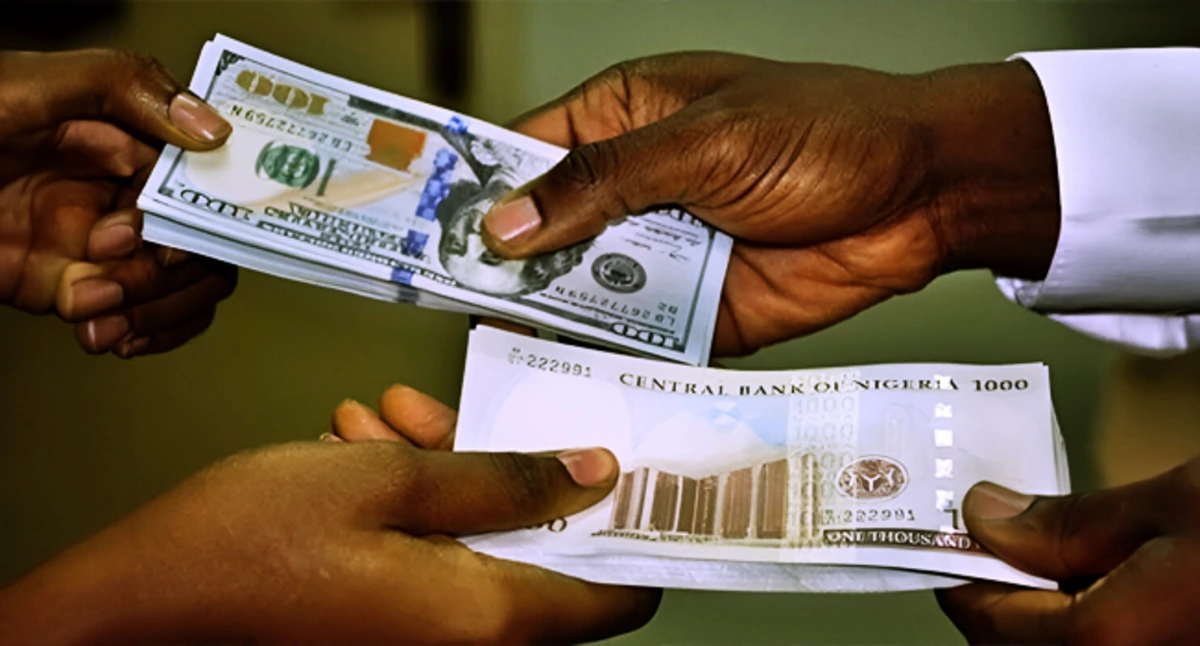
Over the past week on the official Nigerian Foreign Exchange Market (NFEM), the local currency fell to eight-month lows at the close of the trading session at N1,394/$ before eventually ceding the symbolic 1,400/$ level in forward and intraday market quotes.
Also Read
Its depreciation in the parallel market was more severe, as the street exchange rate traded between N1,458 and N1,468 to the US dollar.
Consequently, the Nigerian Apex Bank has pumped an estimated $1.3 billion into the foreign exchange market over the past week tocurb further slide and restore market confidence.
This has spurred increased activity in the interbank segment, raising the total five-day turnover at the NFEM to an estimated $2.55 billion and the implied five-day average turnover to $934.5 million.
In addition, the Central Bank of Nigeria (CBN) Governor Olayemi Cardoso highlighted that the Monetary Policy Committee (MPC) decided to keep the policy rate unchanged at 23%.
The decision is aimed at anchoring recent momentum in consumer prices, Cardoso said. Headline inflation eased to 14.1% in October from 14.6% the prior month, and the governor said the rate of price rises will likely decelerate in the near- to medium term, aided by better food supplies and a foreign-exchange market that remains fundamentally sound.
- “On the whole, the Committee considered that the appropriate policy stance was to preserve the present success of the disinflation process while adopting a data-dependent and alert approach to any possible additional measures,” said Cardoso.
The rate hold was announced amid heightened political activity and anxiety around the cost of living ahead of the January 16 presidential election, in which President Bola Tinubu is seeking a second four-year term.
The naira has weakened by almost 5% against the US dollar since the Monetary Policy Committee last met in September and slashed the benchmark rate by 350 basis points.
Even so, the CBN chief dismissed concerns over the recent depreciation, attributing the currency pressure to typical seasonal year-end foreign exchange demand.
The central bank chief assured that Nigeria’s external buffers remain solid and that monetary policy is still restrictive, despite the recent reduction in borrowing costs. He noted that foreign exchange reserves have climbed to $54 billion, enough to cover 10 months of imports and are projected to grow further in the near term.
Cardoso emphasized that overall financial conditions stay tight following September’s rate cut, pointing out that Nigeria’s real interest rate spread of roughly 9 percentage points remains among the highest globally.