
Leadership is easier to define than it is to practicalize. In theory, leadership is associated with sound decision-making, firm authority, and clear direction. However, in practice, true leadership is more nuanced and manifests in the quality of judgement exercised under pressure.
Leadership is undergoing a profound shift as economic volatility, policy uncertainty, and rapid market changes reshape our organizations.
Traditional approaches, once considered sufficient for stability and growth, are now proving inadequate. As a result, there is a growing demand for leaders who are not only competent and resilient, but also adaptive in how they think, act, and make decisions in real time.


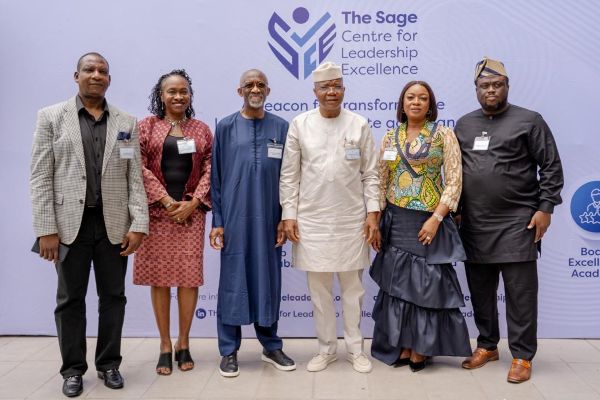
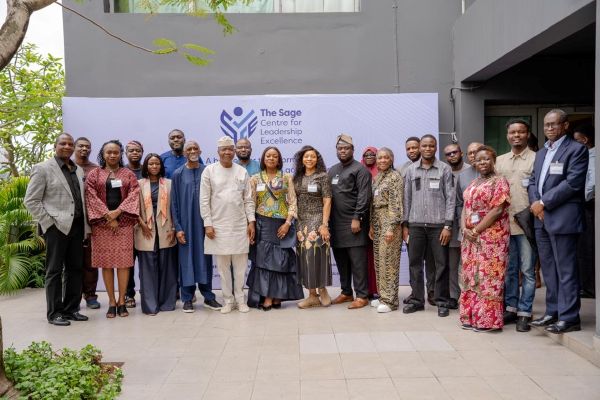
The Sage Centre for Leadership Excellence was created in response to this demand. Building on decades of inspiring leadership and sound governance by its Chairman, Mutiu Sunmonu, the Sage Centre brings industry leaders and subject matter experts together in communities of practice that reinforce ethical leadership and decision-making. The Centre’s Masterclass, held on 11 April 2026 in Lagos, underscores the outcomes of these convenings. Exploring the theme Leadership in Uncertain Times, the masterclass featured a fireside conversation between Hakeem Belo-Osagie, Chairman of Metis Capital Partners, and Bolaji Balogun, Founder and Chief Executive Officer of Chapel Hill Denham.
At the heart of the discussion was a shared question: how do leaders make sound decisions when the systems they operate are uncertain and often contradictory?
Leadership Beyond Structure and Strategy
For Hakeem Belo-Osagie, the central argument was that sustainable progress in any society is ultimately determined by the quality of its leaders at the individual, corporate, and institutional levels. In his view, what distinguishes countries and organisations that endure those that stagnate is not ambition, but disciplined and consistent leadership sustained over time across institutions.
He illustrated this idea through comparative national examples, showing how perceptions of national potential can diverge sharply from long-term outcomes. He referenced Libya and the United Arab Emirates as an example of how such expectations can shift dramatically over time. In the 1950s and early 1960s, Libya was widely regarded as a promising economy, while the UAE was relatively underdeveloped. Over the past decades, that expectation has been reversed.
This contrast, he suggested, underscores a broader point about how leadership continuity and institutional discipline ultimately shape national trajectories. Building on this perspective, he argued that improving leadership outcomes in Nigeria ultimately comes down to two structural levers: strengthening regulatory and institutional processes that shape how leaders are selected and held accountable, and taking a more intentional approach to diversity in leadership pipelines—not just as representation, but as a way of improving the quality of decision-making across institutions.
The Pressure of Short-Termism in Financial Systems
Bolaji Balogun brought the conversation closer to market behaviour and capital formation, raising concerns about whether Nigeria’s financial system is sufficiently structured to support long-term productive investment, or whether it is still skewed towards short-term, high-yield trading strategies. He situated this within broader macroeconomic realities such as currency volatility and inflation, which continue to shape investment decisions and risk appetite across the market.
In his view, this imbalance reflects deeper structural and policy issues within the financial system. He pointed to the role of regulation in shaping market development, the unintended consequences of earlier privatisation efforts, and structural gaps in long-term savings mobilisation, including limitations within the pension system and the absence of a strong domestic savings culture to support risk capital formation.
Bridging the Leadership Gap
The Sage Centre’s masterclass does not attempt to resolve these questions in a single sitting. Instead, it creates space for these questions to be asked openly among those positioned to influence outcomes.
Established in 2025, the Sage Centre for Leadership Excellence is advancing corporate governance and leadership excellence across West Africa. Through four strategic service pillars—the Masterclass Series, Enterprise Turnaround Clinic, Leadership-in-Action Labs, and the Advisory & Executive Engagement Platform—the Centre is designed for C-suite executives and board members of medium to large enterprises, with a mandate to strengthen ethical leadership, strategic clarity, and organisational performance across the region’s corporate landscape.
The series will continue with its next edition scheduled for July 2026, further deepening conversations around leadership, strategy, and decision-making under complexity.
You can learn more about the Sage Centre for Leadership Excellence and its programmes at Sage Centre for Leadership Excellence.