
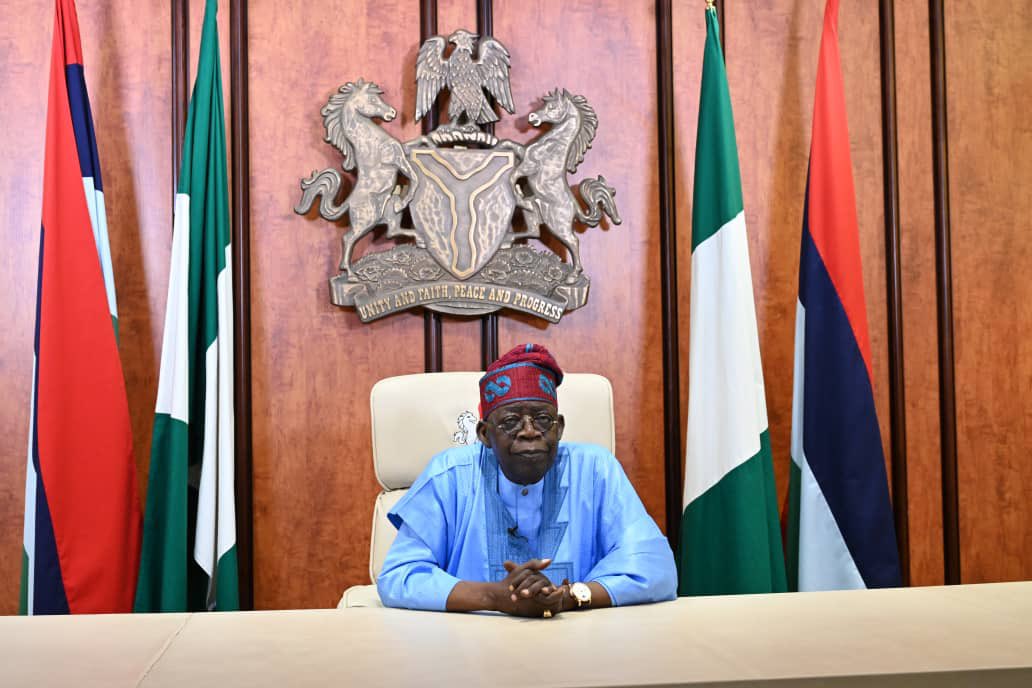
S&P Global Ratings has upgraded Nigeria’s long-term foreign and local currency credit ratings to ‘B’ from ‘B-’, citing President Bola Ahmed Tinubu’s economic reforms, improved foreign exchange liquidity, stronger fiscal revenues, and rising external reserves.
The global ratings agency also affirmed Nigeria’s short-term sovereign ratings at ‘B’, while raising the country’s national scale ratings to ‘ngA+/ngA-1’ from ‘ngBBB+/ngA-2’, with a stable outlook.
In a statement dated May 15, 2026 and sent to Nairametrics, S&P said the improvement in Nigeria’s credit profile reflects gains from three years of structural reforms under the Tinubu administration, particularly the liberalisation of the foreign exchange market.

What S&P is saying
S&P said Nigeria’s reform programme is beginning to strengthen macroeconomic stability and restore investor confidence.
According to the agency:
- “Following three years of sustained structural reforms, Nigeria’s creditworthiness has improved.”
- “The liberalization of the exchange rate has bolstered access to foreign currency and enabled a market-driven exchange-rate environment, supporting investor and consumer confidence, while benefiting non-oil GDP growth.”
- “Significant refining capacity is now also online; Dangote Industries Ltd.’s large-scale refinery and petrochemical complex has ramped up to near its maximum capacity of 650,000 barrels per day.”
- “We could lower the ratings if the implementation of Nigeria’s reform program–including the series of critical steps taken to liberalize the exchange rate in 2023–reverses, or if fiscal policy becomes more expansionary, resulting in widening fiscal and external deficits, or if we see significantly increased debt-servicing requirements.”
The agency noted that Nigeria’s external reserves rose to $50 billion by March 2026 from about $33 billion in 2023, supported by stronger current account balances, lower import demand, fuel subsidy removal, and expanding domestic refining capacity.
S&P also highlighted improved FX market liquidity, stating that average monthly FX turnover rose to $8.6 billion in 2025, while April 2026 alone recorded about $10 billion in market supply.
More insights
The rating upgrade comes amid broader reforms aimed at stabilising Nigeria’s economy after years of exchange-rate distortions, rising fiscal deficits, and foreign exchange shortages.
S&P credited the Federal Government’s fiscal reforms, particularly Executive Order 9 signed in February 2026, which mandates the Nigerian National Petroleum Company Limited to remit a larger share of petroleum revenues directly into the Federation Account.
The agency projected that government revenue could rise to 12.4% of GDP in 2026 from 7.3% in 2023, while debt servicing pressures are also expected to moderate over the medium term.
S&P further projected:
- Oil production to average 1.66 million barrels per day in 2026.
- Nigeria’s current account surplus to improve to 5.8% of GDP.
- Inflation to decline from 23% in 2025 to 17.7% in 2026.
- Real GDP growth to settle at 3.7% in 2026 after 4% growth in 2025.
What you should know
In February, S&P Global Ratings reaffirmed Nigeria’s sovereign credit rating at B-, keeping a positive outlook that reflects cautious optimism about the country’s economic recovery and ongoing fiscal reforms.
The reaffirmation follows S&P’s November 2025 decision to upgrade Nigeria’s outlook from stable to positive while keeping the B-/B foreign and local currency ratings.
In October 2025, Fitch Ratings affirmed Nigeria’s Long-Term Foreign-Currency Issuer Default Rating (IDR) at ‘B’ with a Stable Outlook, citing improved foreign exchange liquidity and ongoing monetary and fiscal reforms.