
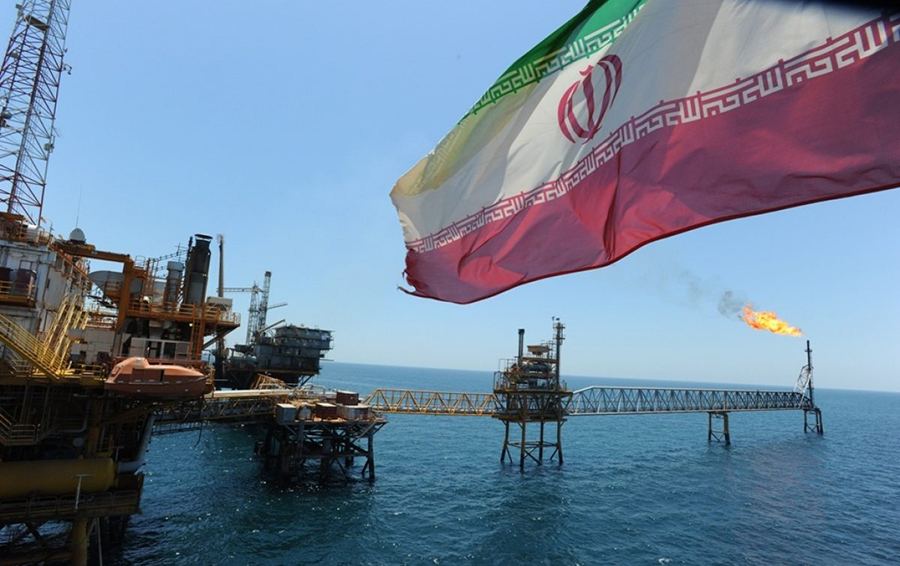
Security, economic, and policy analysts have noted that the ongoing Iran–Israel–US conflict has exposed deep weaknesses in Nigeria’s ability to anticipate, absorb, and respond to external shocks, arguing that the country’s crisis response “toolkits” are no longer sufficient for today’s interconnected global risks.
They say the Middle East geopolitical tension has tightened global oil supply expectations, driven up energy costs, and reinforced long-standing concerns about the resilience of Nigeria’s economic and fiscal response systems.
At the centre of Nigeria’s response remains a firm policy stance against the return of fuel subsidies, alongside efforts to maintain fiscal discipline. However, analysts now question whether existing tools are strong enough to cushion the economy from rapid global volatility.

What they are saying
Policy analysts caution that efficiency gains from FG’s reforms may not translate into crisis resilience.
Development economist, Dr. Michael Adelusi, warned that the Iran conflict is already affecting global energy pricing and could worsen domestic inflation.
- “Any disruption in the Middle East immediately reflects in global crude prices. Nigeria feels it almost instantly, whether we are ready or not,” he said.
He added, “The problem is that Nigeria does not have strong enough buffers—strategic reserves, stabilisation funds, or contingency systems—to absorb these shocks.”
A fiscal policy analyst, Bisi Adeyemi, was more direct:
- “We operate an economy that assumes global stability, but the world we live in is anything but stable,” she said.
- “That mismatch is why every global crisis feels like a domestic emergency here.”
- “Targeting is efficient in stable times,” said Abuja-based policy analyst Ade Onabolu.
- “But during a global shock, speed becomes the most valuable currency, and Nigeria’s system isn’t built for speed.”
- “Reforms alone do not constitute a complete shock-response toolkit.”
- “What Nigeria lacks are automatic stabiliser systems that immediately protect households when global crises hit.”
The comments reflect a widening gap between fiscal reforms and real-time crisis response capacity.
Peace and security analyst Olalekan Oyewo noted that while Nigeria has issued diplomatic advisories and monitored developments, such steps fall short of what is required for a rapidly interconnected global system.
- “Nigeria’s safety advisory is prudent, but prudence alone does not equal preparedness,” he argued, warning that Nigeria often responds only after external shocks have already hit the economy and security environment.
More Insights
Oyewo said Nigeria’s approach to global crises remains fundamentally weak and delayed.
- “Nigeria is still largely reactive. We respond after the damage has started. That is not preparedness, it is damage control,” he said.
He warned that the Iran crisis demonstrates how quickly external conflicts can translate into domestic pressures.
- “What is happening in the Middle East is not far away. It reflects directly on oil markets, inflation, and even internal security dynamics in fragile states like Nigeria,” he added.
Another foreign policy commentator, Dr. Halima Yusuf, said Nigeria’s diplomatic posture lacks strategic depth in anticipating global shocks.
- “We issue statements, we express concern, but we do not have a structured system that translates global intelligence into domestic preparedness,” she said.
- “That gap is becoming dangerous in a world where crises are interconnected.”
The analysts maintained that the removal of fuel subsidies in 2023 significantly reduced fiscal pressure, saving an estimated N4 trillion to N6 trillion annually.
However, they noted that it also exposed households to immediate global price transmission effects, particularly in fuel, transport, and food costs.
They further observed that Nigeria’s public debt, now estimated at over N159 trillion, has sharply constrained fiscal flexibility, making a return to broad-based fuel subsidies largely unsustainable.
The Nigerian Economic Summit Group estimates that sustained geopolitical tensions could generate windfall revenues of up to N30.2 trillion. However, Nigeria’s weak savings and stabilization mechanisms mean such gains are often absorbed into current spending rather than saved for downturns.
Inflationary pressures remain elevated, driven largely by fuel and transport costs, while sectoral strains are becoming more visible. The aviation sector, for example, has seen Jet A1 prices rise to as high as N3,000 per litre, significantly increasing operating costs for airlines.
FG defends reforms
Nigeria’s economic managers and policy analysts argue that the country’s reform direction remains unchanged despite external pressures, even as concerns grow about its ability to respond quickly to shocks.
The Minister of Finance, Wale Edun, reinforced Nigeria’s position during the recent IMF Spring Meetings, stressing fiscal caution and rejecting fresh borrowing pressures.
- “Nigeria has no plans at the moment to approach the IMF or any other source,” Edun said.
- “Nearly half of African countries are at or near debt vulnerability levels… The premium they pay for commercial debt is part of the reason for this distress—particularly the share of revenue that goes to debt service instead of health and other priorities.”
The Chairman of the Nigerian Revenue Service, Zacch Adedeji, also recently highlighted the fiscal implications of subsidy removal, noting the scale of avoided spending.
- “At an estimated oil price of $120 per barrel, we were looking at subsidy costs of over N52 trillion. That would have left very little for capital projects, social services, and national development,” he said.
What you should know
Nairametrics earlier reported that the United States and Iran have failed to reach an agreement to end the ongoing conflict in the Middle East following 21 hours of negotiations.
- After 39 days of war, the U.S. and Iran agreed to a two-week ceasefire brokered with the help of Pakistan, with support from China.
- The conflict has already caused significant global disruptions, particularly in energy markets.
- Following the ceasefire announcement, oil prices dropped sharply, with Brent crude and WTI falling by more than 15%, after earlier surging to as high as $120 per barrel.
This volatility has had a notable impact on Nigeria. Reports indicate that the Dangote Refinery maintained its pricing structure at N1,200 per litre at the gantry and N1,153 per litre at the coast, compared to a pre-war pump price of around N799 per litre—representing a 50.19% increase.