

 Follow Us on Google Discover

The Chief Executive Officer of Zinnc, Chidozie Okonkwo, has stated that Nigeria’s deep-seated economic and structural challenges go beyond political party affiliations, urging leaders to adopt proven turnaround strategies from peer nations like Egypt.
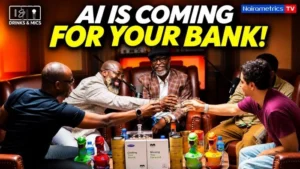
Okonkwo made the comment during the latest episode of the Drinks and Mics podcast hosted by Ugodre Obi-Chukwu.
The conversation comes as Nigeria prepares for the 2027 general elections to elect political leaders.
General elections will be held in Nigeria on 16 January 2027 to elect the president and vice president, members of the Senate and House of Representatives, while elections to elect state governors and members of the House of Assembly will be held on 6 February 2027.
Also Read
Nigeria’s problems are neither unique nor insurmountable
Okonkwo argued that Nigeria’s problems are neither unique nor insurmountable, regardless of whether the All Progressives Congress (APC), the Peoples Democratic Party (PDP), or another political party is in power.
- “We’ve got so many problems, and it’s not about APC, PDP and whatever party; it’s not about that. Just whoever’s in that seat, there are like a million problems to fix,” Okonkwo said. “Every problem we have, every other country has faced it. There’s no problem in Nigeria that is new. So the question becomes, how did Egypt do it?”
Also on the panel, the Chief Executive Officer of Awabah, Tunji Andrews, warned against the widespread belief that cutting government expenses alone can resolve Nigeria’s fiscal crisis.
According to Andrews, the country requires massive capital inflows and revenue generation rather than mere austerity.
- “Nigerians need to understand that we cannot prudence our way out of the mess we are in,” Andrews stated. “A lot of people just assume that once we cut costs, we will now have enough money to fix problems; we need a bucket load of money.”
Meanwhile, the Co-Managing Partner at FigPartners Africa, Akinseye Akinola, expressed skepticism over official figures showing a sustained decline in Nigeria’s inflation rate, noting a sharp disconnect between macroeconomic data and the lived reality of citizens.
- “I don’t really believe in the inflation numbers, sorry, because we also spoke earlier around the sentiment that people are feeling angry, purchasing power is reducing, people are hungry, they can’t afford what they could afford last year, but inflation is going down. So the math just doesn’t really math for me,” Akinola remarked.
The panel also weighed in on corporate governance and executive conduct.
Arnold Dublin-Green, Chief Investment Officer at BGL Asset Management, argued that corporate leaders should be judged strictly on their professional competence and performance rather than personal morality.
Adding to the discussion on leadership and accountability, host Ugodre Obi-Chukwu noted that public and corporate figures often escape scrutiny when their actions are framed around broader institutional or national benefits.