


 Follow Us on Google Discover
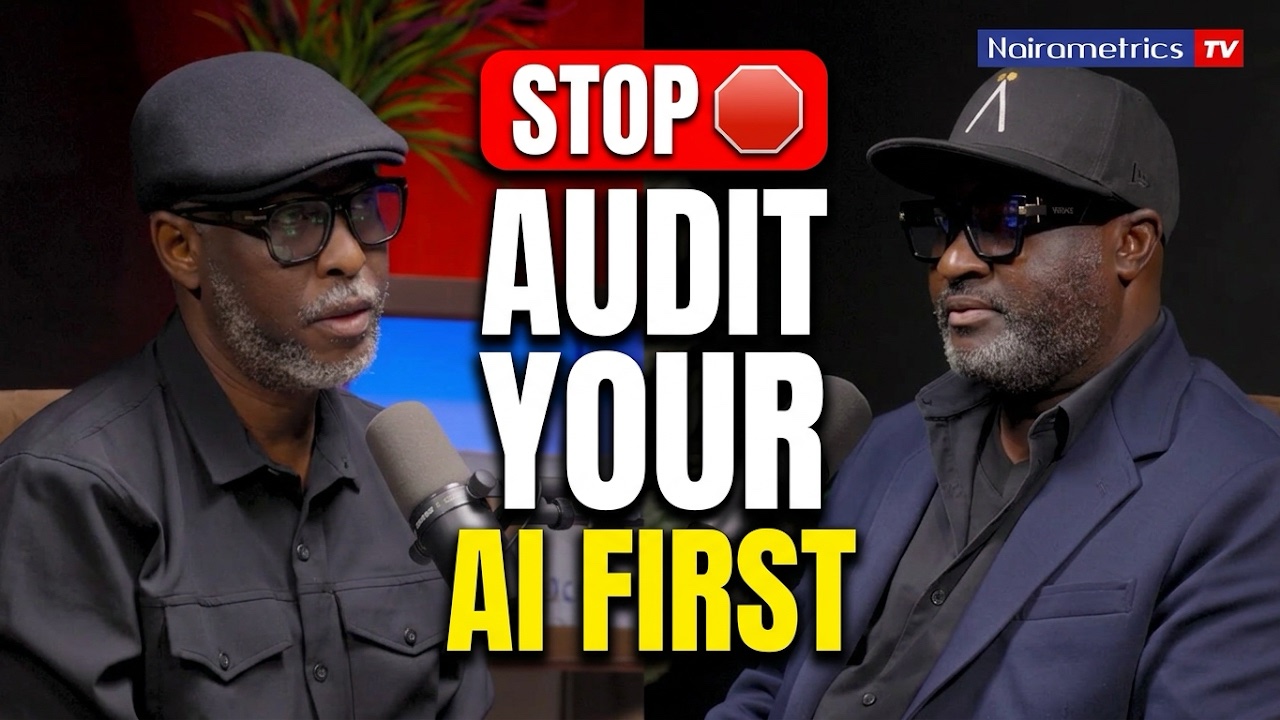
Artificial intelligence (AI) will reshape workforce requirements rather than eliminate workers who learn how to govern the technology, Olayinka James, Founder and Chief Executive Officer of AURÄI, an artificial intelligence assurance company, has said.
Speaking on The Coffee Table with Ugodre, James said organisations adopting AI should prioritise retraining employees for emerging roles rather than viewing the technology solely as a tool for reducing headcount.
He explained that while AI agents could take over a wide range of tasks, their growing use would create demand for professionals who can monitor, audit and validate automated systems.
This is expected to make AI assurance and governance skills increasingly important as businesses integrate the technology into their operations.
Also Read
AI governance skills will shape future jobs
James said AI adoption could reduce the number of employees required to perform certain tasks, but businesses should consider the full cost of deploying the technology before assuming that workforce reductions would translate into significant savings.
- He noted that running AI systems involves costs, including token consumption, which could offset some of the savings expected from replacing human workers with automated processes.
- He also highlighted the limitations of AI systems, despite their ability to execute tasks faster and reduce some forms of human error.
- AI systems remain susceptible to hallucinations, model drift and inaccurate outputs.
- Businesses must account for the cost of deploying and maintaining these systems when assessing the financial benefits of automation.
Professionals who understand how AI performs existing tasks will be needed to supervise its operations and assess its decisions.
James also cited comments attributed to Google Chief Executive Officer Sundar Pichai during a presentation at Carnegie Mellon University in July, suggesting that AI was changing job responsibilities rather than simply eliminating positions.
- “AI takes the job of those who refuse to learn how AI is used to do the work,” he said.
He added that organisations would continue to require human oversight, even if fewer employees were needed to execute certain operations. Workers who develop the skills to supervise automated systems and provide assurance that their outputs meet established standards could therefore remain relevant as businesses adopt AI.
Nigerian firms face growing AI governance risks
Beyond its impact on employment, James raised concerns about accountability when AI systems are used in sensitive sectors such as healthcare.
He illustrated the challenge with a hypothetical situation involving a Nigerian hospital that deploys an AI diagnostic tool to improve efficiency but produces an incorrect result that leads to a patient’s death. He argued that responsibility should rest with the organisation deploying the technology, particularly where it fails to establish appropriate validation and monitoring processes.
- Hospitals and other institutions using AI for critical operations need professionals who continuously assess the systems’ outputs.
- Organisations must ensure automated systems operate within acceptable standards, particularly where their decisions could affect human lives.
- Banks, hospitals and publicly listed companies should face stronger AI governance requirements because their operations affect public interest.
Existing data protection requirements could be extended to cover AI governance rather than creating an entirely separate regulatory framework.
James pointed to the Nigeria Data Protection Act (NDPA), which requires organisations processing personal and sensitive data to appoint trained Data Protection Officers (DPOs). He suggested applying a similar approach to professionals responsible for overseeing AI deployment.
AI adoption changes hiring needs in Nigeria
Nairametrics has previously reported on how artificial intelligence is changing recruitment patterns and workforce requirements in Nigeria, as businesses increasingly integrate automation into their operations.
- In May 2026, Nairametrics reported in This is how AI is changing who Nigerian startups want to hire, founders reveal that Nigerian startups were increasingly seeking professionals who combine industry expertise with the ability to use AI tools to improve productivity. Founders said the technology was creating new opportunities while changing the skills employers expected from prospective workers.
- Similarly, a June 2026 report titled AI reshapes Nigeria’s workforce as CEOs cut reliance on traditional roles examined how business leaders across manufacturing, banking, consulting, legal services and media were using AI to automate research, administrative and other workplace functions. The report highlighted concerns about the potential displacement of traditional roles while identifying growing demand for digital skills, cybersecurity, data science and AI operations.
The adoption of the technology has also accelerated across Nigerian businesses. In August 2026, Nairametrics reported that AI adoption among Nigerian firms jumped to 40%, matching US levels, as AI adoption among Nigerian formal businesses increased from less than 5% in 2022 to approximately 40% in 2025, according to the World Bank.