Follow Us on Google Discover
Nigeria’s fast-moving consumer goods (FMCG) sector remains vulnerable to exchange rate fluctuations, global commodity prices and rising financing costs, as the country continues to rely heavily on imported raw materials and processing inputs, according to a report by Standard Bank Group Securities (SBG Securities).
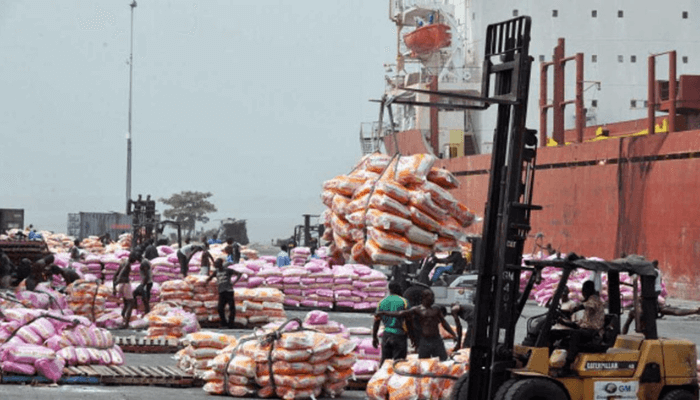
The report, titled Nigerian FMCGs: Gradual Return to Real Growth, estimated that Nigeria imports about $10 billion worth of food annually, despite government efforts to promote local sourcing and backward integration.
It said the country’s dependence on imported and internationally priced inputs exposes manufacturers to currency depreciation, higher production costs and increased working capital requirements.
Currency depreciation raises naira cost
The report noted that currency depreciation raises the naira cost of imported raw materials and machinery, while changes in the customs exchange rate increase the cost of bringing goods into the country.
Also Read
- “Nigeria’s FMCG market is structurally undersupplied across several raw materials and processing inputs,” the report said.
The supply gaps include wheat, dairy products, edible oils, processed foods, agricultural commodities, chemicals and packaging materials.
According to the report, manufacturers may respond to supply disruptions and currency volatility by building inventories to protect production, but this increases their financing requirements.
- “Currency depreciation raises the naira cost of imported inputs and machinery, while changes in the customs exchange rate increase landed costs. Companies may respond by building inventories to protect production continuity, but this consumes cash and increases working capital funding requirements,” it said.
Higher interest rates add to the pressure by increasing the cost of financing inventories, distributor credit and capital expenditure.
Local sourcing offers relief, but progress remains uneven
SBG Securities said backward integration and local sourcing could reduce manufacturers’ exposure to foreign exchange volatility, although progress across the industry remains uneven.
It identified agricultural productivity, insecurity, logistics challenges, energy availability and access to capital as major constraints affecting the availability, quality and consistency of locally sourced inputs.
The report said the greatest benefit from localisation comes when companies reduce the foreign currency component of their cost of sales without compromising product quality, operational efficiency or supply reliability.
However, it warned that poorly executed backward integration could increase capital expenditure, working capital requirements and operational risks.
- “Scale should remain an advantage,” the report said, noting that larger manufacturers can negotiate better supplier terms, purchase inputs more efficiently, invest in local supply chains and spread fixed manufacturing costs across a wider revenue base.
It added that financial strength is equally important because manufacturers must finance inventories and distributor credit amid fluctuations in currency and commodity prices.
The report also noted that the withdrawal or reduction of manufacturing operations by multinational companies, including Procter & Gamble’s manufacturing scale-down, has accelerated localisation and the growth of private-label products.
Traditional trade accounts for 77% of FMCG sales
On distribution, SBG Securities said traditional trade remains the dominant channel for FMCG sales in Nigeria, accounting for an estimated 77% of volumes.
The channel includes open markets, wholesalers, neighbourhood stores, kiosks and other informal retail outlets that serve consumers in both urban and rural areas.
The report said these outlets remain particularly important for low- and middle-income households, making widespread product availability and affordable pricing more important than introducing new distribution channels.
- “Product availability at the right price point is more important than channel novelty in Nigeria,” it said.
Modern trade, comprising supermarkets, hypermarkets and organised convenience stores, accounts for approximately 9% of FMCG sales volumes.
Although the channel is expanding in major cities, supported by urbanisation, a growing middle class and retail investment, the report said high property costs and limited coverage outside urban centres continue to constrain its growth.
Alternative distribution channels account for the remaining 14% of sales volumes.
The report estimated Nigeria’s e-commerce market at approximately $2.5 billion, describing it as a small fraction of total FMCG consumption.
It said digital channels play a more significant role in brand discovery, convenience purchases in urban areas and premium or bulk buying than in everyday mass-market sales.
Distribution remains critical to FMCG performance
SBG Securities identified route-to-market effectiveness as the most important driver of performance for FMCG companies operating in Nigeria.
The report highlighted distributor coverage, trade financing and stock management as key factors determining how effectively manufacturers reach consumers.
It said extensive distribution networks, supported by sub-distributors and wholesalers, enable manufacturers to restock thousands of small retail outlets regularly.
Credit and trade financing were also described as essential because many retailers and wholesalers have limited working capital and rely on supplier credit, rebates, consignment stock and volume incentives.
- “Credit is a structural necessity in Nigeria’s FMCG ecosystem,” the report said.
The report added that manufacturers could improve distribution efficiency by reducing product lines, ensuring reliable last-mile delivery and offering smaller, faster-moving product packs.
It also stressed that brand strength alone is no longer sufficient to sustain growth without reliable product availability and affordable pricing.
- “As of 2026, brand strength alone is insufficient without reliable availability at affordable price points, as stock-outs can prompt immediate substitution,” the report said.
According to the report, nationwide distribution requires substantial investment in distributors, wholesalers, inventories and retailer credit.
Manufacturers must therefore balance efforts to increase market share with the risks associated with unpaid receivables and slower cash conversion.
How FMCG companies compare
The report highlighted differences in distribution capabilities among the companies covered in its analysis.
Nestlé Nigeria benefits from extensive urban and rural distribution coverage, while Unilever Nigeria is expanding its last-mile distribution network to support its recovery.
Cadbury Nigeria relies heavily on distributor and retail partnerships, while UAC of Nigeria’s Gala distribution network provides visibility across kiosks, motor parks and street vendors.
SBG Securities said digital ordering and distributor management tools could improve performance by strengthening restocking, order visibility and product availability.
However, it said digital channels should complement traditional trade rather than replace it.
FX turnover rises to $951m
The report’s findings come amid continued activity in Nigeria’s foreign exchange market, where interbank turnover rose to $951.37 million on Monday, November 23, 2026, its highest level in a month.
- According to Central Bank of Nigeria (CBN) foreign exchange trading data reviewed by Nairametrics, the naira closed at N1,393 per dollar, compared with N1,394 per dollar on Friday, November 20.
- The latest turnover was the highest since October 23, when interbank foreign exchange transactions reached approximately $1.01 billion.
- The increase in turnover highlights the continued activity in the foreign exchange market, while the naira’s marginal appreciation offers limited relief to manufacturers facing elevated costs of imported inputs.
For Nigeria’s FMCG sector, the report’s findings suggest that sustained growth will depend not only on consumer demand but also on manufacturers’ ability to manage currency exposure, strengthen local supply chains, maintain affordable prices and build efficient distribution networks.