
 Follow Us on Google Discover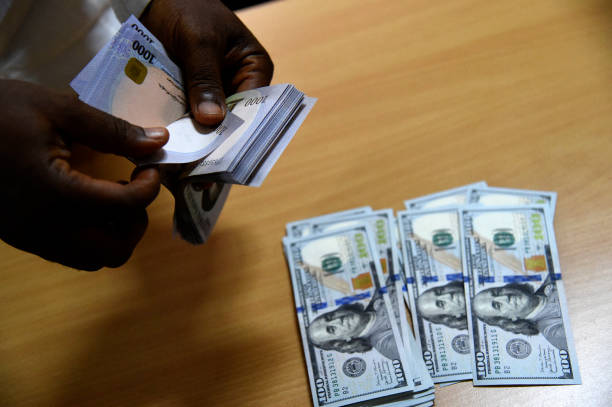
Reports reaching Nairametrics indicate the Central Bank of Nigeria (CBN) has given commercial banks and dealers in the forex market the green light to sell forex freely which is at a market-determined rate.
This is in line with the promise of President Bola Tinubu to unify the multiple exchange rate in the market.
The initial understanding of this message is that banks can now sell forex at market-determined rates, suggesting Nigeria is now operating a freely floating exchange rate.
Nairametrics confirmed this from multiple sources at the CBN and from traders with knowledge of the matter.
Also Read
However, official confirmation will have to come later in the day when data from the FMDQ is available. Nairametrics also understands official confirmation will be issued by the central bank.
Sources also report trades are now going for as high as N750/$1. Meanwhile, in the black market, the exchange rate traded for as high as N773/$1 for “inflows” which represent dollars or other currencies sold over the wires.
Back story
The move to allow market-determined forex rates is seen as a major step towards currency reforms in Nigeria, which has been plagued by a chronic shortage of foreign exchange and multiple exchange rates.
According to analysts, a unified and flexible exchange rate regime will help boost investor confidence, increase foreign inflows, reduce import costs, and ease pressure on the naira.
The capital market reacted positively to a slew of economic news including the planned unification of the naira with the all-share index rising by 3.3% after gaining 3.99% a day earlier.
Just like a day earlier, over 10 stocks gained 10% as investors continue to bet big on an inflow of demand in Nigeria’s stock market.
Pressure on CBN
The central bank has been under pressure from the International Monetary Fund (IMF) and other stakeholders to adopt a more transparent and market-based exchange rate policy.
- The IMF had recently approved a $3.4 billion emergency loan for Nigeria to cope with the impact of the Covid-19 pandemic and low oil prices.
- One of the conditions for the loan was that Nigeria should work towards unifying its exchange rates and eliminating restrictions on access to foreign exchange.
The forex market in Nigeria consists of various segments, including the official window, where the central bank sells dollars to authorized dealers, the investors and exporters window (I&E), where foreign investors and exporters trade dollars, and the parallel market, where unofficial transactions take place.
Back Story
The central bank has been trying to bridge the gap between these segments by adjusting its official rate periodically and injecting liquidity into the I&E window.
However, the parallel market rate has remained significantly higher than the official rate, reflecting the strong demand for dollars and the scarcity of supply.
The latest development suggests that the central bank may be ready to let go of its tight control over the forex market and allow market forces to determine the value of the naira.



Now, the important question is whether the CBN will maintain its capital control rules or if they will make the process of bringing back money easier and clearer for investors and multinational companies.
Oh, what are capital control rules?
In Nigeria, there are rules about how much money can be taken out of the country as capital and profits. These rules are made by the CBN and can change depending on the kind of investment, the industry, and how the economy is doing. A good example of this is the situation faced by international airline companies operating in Nigeria. They are having trouble taking out $812 million in earnings that they have made in Nigeria because the CBN is refusing to allow them to convert profits generated in Naira into dollars. This is more money than any other country owes the airline industry globally and almost half of the total worldwide of the industry’s un-repatriated funds.
Thank you, i get the explanation
Can anybody help know what the impact of this will be in the long and short term? Will the naira depreciate and howfar will it do so? How long before we see an appreciation of the Naira, 2024?
macro and micro economic factors in the CBN policies that are direct determinants of the FX liquidity and availability, are more important in my own view. After all, if the providers of the FX liquidity remain the same, it goes without saying that they’ll dictate the rates. This ‘green light’ will end up ‘liberalizing’ the merchants and not market.
The macro and micro economic factors in the CBN policies that are direct determinants of the FX liquidity and availability, are more important in my own view. After all, if the providers of the FX liquidity remain the same, it goes without saying that they’ll dictate the rates. This ‘green light’ will end up ‘liberalizing’ the merchants and not market.